

The Raw Reality: What Comes Out of an Offshore Well
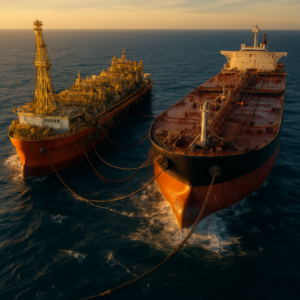 When a drill bit finally breaches the reservoir thousands of feet beneath the seabed, what rushes to the surface isn’t the glossy black liquid we picture when we think of oil. Instead, offshore wells disgorge a chaotic, pressurized cocktail of hydrocarbons, water, solids, and chemicals—a raw, untamed mixture that bears little resemblance to the refined products that eventually fuel our cars or heat our homes. This is the unfiltered reality of petroleum extraction: a volatile, corrosive, and often unpredictable stream that demands immediate attention before it can even begin its journey through the refining process.
The composition of this fluid varies wildly from well to well, but it typically includes the following key components:
- Crude Oil: The primary target, but far from pure. Crude oil itself is a complex blend of hydrocarbons—ranging from light, volatile compounds like methane to heavy, tar-like asphaltenes. Its viscosity can swing from a thin, watery consistency to something closer to molasses, depending on the reservoir’s temperature, pressure, and geological history. For example, the crude from Norway’s Johan Sverdrup field is relatively light and sweet (low in sulfur), making it easier to process, while the heavy, sour crudes of Venezuela’s Orinoco Belt require extensive upgrading just to be transportable.
- Natural Gas: Often dissolved in the crude under high reservoir pressures, this gas—primarily methane, but also ethane, propane, and butane—begins to bubble out as the fluid rises and pressure drops. In some wells, gas can make up over 50% of the total output by volume. The Prelude FLNG project off the coast of Australia, for instance, is designed to process wells where gas dominates the output, liquefying it directly at sea for export. But in conventional oil fields, this gas is either flared (burned off) as a byproduct, reinjected to maintain reservoir pressure, or captured for sale—each option presenting its own logistical and environmental challenges.
- Produced Water: A byproduct that often outweighs the oil itself. This isn’t just seawater; it’s a briny, mineral-laden fluid that has been trapped in the reservoir for millions of years, sometimes at temperatures exceeding 200°F (93°C). It can contain dissolved salts, heavy metals like mercury or lead, and even naturally occurring radioactive materials (NORMs). In mature fields, water can account for 90% or more of the total fluid extracted—a staggering ratio that turns oil production into a water-management problem. The Thunder Horse platform in the Gulf of Mexico, for example, handles over 250,000 barrels of water per day, which must be treated and either discharged or reinjected to avoid contaminating the marine environment.
- Sand and Solids: Tiny particles of rock, clay, and reservoir sediment that get swept up in the flow. These abrasive solids can erode pipelines, valves, and pumps at an alarming rate. In some fields, like those off the coast of Nigeria, sand production is so severe that operators must install sand-control systems (such as gravel packs or screens) downhole to prevent equipment damage. Even then, sand can still make its way to the surface, clogging separators and requiring frequent maintenance.
- Chemical Additives: The unsung heroes (and sometimes villains) of offshore production. These include:
- Corrosion Inhibitors: Injected to protect steel pipelines and equipment from the highly corrosive mix of saltwater, CO₂, and H₂S (hydrogen sulfide). Without them, a pipeline could fail in a matter of months.
- Scale Inhibitors: Prevent the buildup of mineral deposits (like barium sulfate or calcium carbonate) that can choke off flowlines. In the North Sea, scale buildup has been known to reduce production by 30% or more in a matter of weeks if left unchecked.
- Emulsion Breakers: Help separate oil and water, which naturally form stubborn emulsions under the high shear forces of pumps and chokes. Some emulsions are so stable that they require heat, chemicals, and time to break—adding complexity to the separation process.
- Hydrate Inhibitors: Methanol or glycol injected to prevent the formation of ice-like gas hydrates, which can form under high pressure and low temperature, blocking pipelines. The Elgin-Franklin field in the North Sea famously suffered a hydrate blockage in 2012 that took six months and $3 billion to resolve.
The challenges posed by this raw output are as varied as its composition. Here’s why this initial stage is so critical—and so fraught with difficulty:
More information on Life at Sea: Internet & Food Realities on LPG Ships
The Pressure Problem
Reservoir fluids don’t rise to the surface gently. They’re propelled by pressures that can exceed 10,000 psi (pounds per square inch)—enough to turn a droplet of water into a bullet. When this pressurized mix hits the surface, it must be carefully “choked” back to manageable levels. Too sudden a pressure drop, and dissolved gases can flash violently, causing equipment to vibrate or even rupture. In 2016, a blowout preventer failure on the Macondo well (Deepwater Horizon) was partly attributed to the uncontrolled release of high-pressure gas, which overwhelmed the system and led to catastrophe.
The Corrosive Cocktail
Saltwater, H₂S, and CO₂ don’t just sit politely in the fluid—they actively attack metal. H₂S, in particular, is a silent killer: it can cause sulfide stress cracking, a form of corrosion that weakens steel until it fails without warning. In 2013, a pipeline rupture in the North Sea was traced back to H₂S-induced corrosion, resulting in a spill that took weeks to contain. Operators combat this with corrosion-resistant alloys, chemical inhibitors, and constant monitoring—but the battle is never-ending.
The Separation Imperative
This chaotic mixture can’t be stored, transported, or refined in its raw form. Immediate separation is non-negotiable, and it’s a race against time. If oil and water aren’t separated quickly, emulsions can form that are nearly impossible to break later. If gas isn’t removed, it can create dangerous pressure buildups in storage tanks. And if sand isn’t filtered out, it can settle in pipelines or damage pumps. The Gullfaks C platform in the North Sea, for example, processes up to 300,000 barrels of fluid per day, with separation systems running 24/7 to ensure that only stabilized crude is sent to shore.
Real-World Variability: One Well, Many Personalities
No two wells are alike, and even a single well can change its output dramatically over time. Consider these real-world examples:
- The Aging Well: In the Britannia field (UK North Sea), early production was dominated by light oil and gas. But as the field matured, water cut (the percentage of water in the output) rose from 10% to over 80%, forcing operators to install additional water-handling facilities and even consider artificial lift methods to keep the oil flowing.
- The High-Pressure, High-Temperature (HPHT) Nightmare: The Elgin-Franklin field mentioned earlier operates at pressures up to 16,000 psi and temperatures of 390°F (200°C). At these extremes, fluids behave unpredictably: gas can dissolve into oil, water can vaporize, and chemicals can degrade. The field’s operators had to develop entirely new materials and processes to handle these conditions.
- The Heavy Oil Challenge: Offshore fields like Brazil’s Marlim produce heavy, viscous oil that barely flows at room temperature. To get it to the surface, operators inject steam or chemicals to reduce viscosity, but this adds another layer of complexity to the separation process. The oil’s density can be so close to water’s that separating the two becomes a delicate, energy-intensive operation.
This variability is why the initial stage of offshore production is so critical. A misstep here—whether it’s a separator failure, a chemical dosing error, or a sand-control breakdown—can cascade into costly downtime, environmental incidents, or even safety disasters. The raw output from an offshore well isn’t just a product; it’s a high-stakes puzzle that must be solved in real time, every single day.