

Friday, June 19
Shadow

Gas Carriers

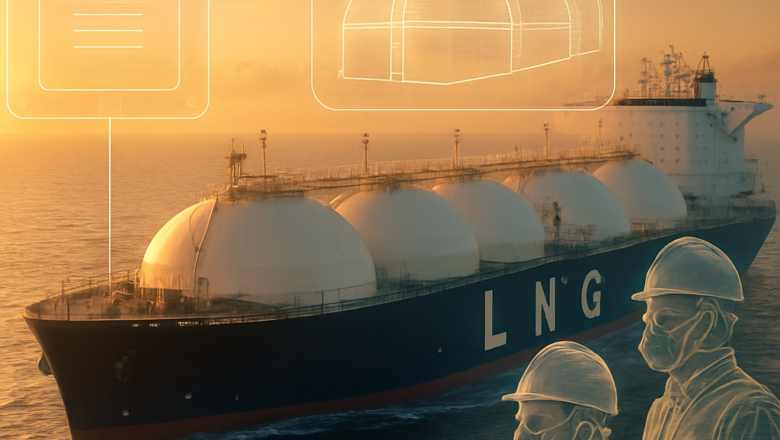
Welcome to the GAS CARRIERS section at SEAMEN.ES, your specialized hub dedicated to one of the most dynamic and high-tech segments of the maritime industry. We provide in-depth analysis, expert reports, and the latest news covering the transportation of Liquefied Natural Gas (LNG), Liquefied Petroleum Gas (LPG), and other specialized gas cargoes.

Why explore our Gas Carrier resources?

Advanced Technology & Innovation: Discover the latest developments in containment systems, cargo handling equipment, and propulsion technologies used in modern gas shipping.

Operational Excellence: Learn from industry experts about the technical nuances of managing gas carriers, including cargo operation procedures and maintenance best practices.

Safety & Environmental Standards: Stay informed on the rigorous safety protocols (SIGTTO guidelines, etc.) and environmental regulations essential for the carriage of hazardous gas cargoes.

Market Trends: Gain insights into the global LNG/LPG market, key industry players, and the future outlook of the energy shipping sector.

Our mission is to bridge the gap between technical expertise and industry intelligence. Whether you are a crew member looking to expand your technical knowledge or a professional following market developments, our Gas Carriers section offers the critical data you need.

Stay at the forefront of the gas shipping industry. Follow our GAS CARRIERS section to keep up with the technical and operational advancements shaping the future of energy transportation.

Dual-Fuel Engines: The Future of Maritime Power

Dual-Fuel Engines: The Future of Maritime Power

Gas Carriers
The Rise of Dual-Fuel: Why the Industry Is Switching Let’s be honest—no one in shipping wakes up one morning and decides to overhaul their entire fleet just for fun. The shift to dual-fuel engines, particularly systems like MAN B&W’s ME-LGIP, isn’t a trend. It’s a survival strategy. And if you’re a marine engineer still betting on traditional heavy fuel oil (HFO), you might want to pay attention. The rules of the game have changed, and the industry is moving fast—whether you’re ready or not. So, what’s really driving this push toward dual-fuel? It’s not just one thing. It’s a perfect storm of regulations, economics, and operational necessity. Let’s break it down. The Regulatory Hammer: IMO 2030, 2050, and the Alphabet Soup of Compliance If you’ve been in shipping long enough, you know ...
Beware of Fake Crewing Scams on Telegram & WhatsApp

Beware of Fake Crewing Scams on Telegram & WhatsApp

Gas Carriers
How Scammers Target Seafarers on Messaging Apps For seafarers scrolling through Telegram or WhatsApp after a long shift, an unexpected message from a recruiter can feel like a lifeline—especially when the offer sounds too good to ignore. Fraudsters know this. They’ve turned messaging apps into a hunting ground, exploiting the isolation of life at sea, the desperation for better contracts, and the anonymity these platforms provide. Unlike email scams, which often get buried in spam folders, a direct message on WhatsApp or Telegram feels personal, immediate, and harder to dismiss. And once they’ve got your attention, the psychological manipulation begins. The Initial Contact: Too Good to Be True Most seafarers have been there: a notification pops up from an unknown number, often with a name ...
Permanent Contracts: Pros and Cons of 3/3 & 4/2 Systems

Permanent Contracts: Pros and Cons of 3/3 & 4/2 Systems

Gas Carriers
What Are Permanent Contracts in Shipping? For most of maritime history, seafaring was a job defined by uncertainty. Sailors signed on for a single voyage, a few months at sea, or a fixed-term contract—then returned home with no guarantee of the next paycheck. But in the last decade, a different model has taken root, one that promises something rare in shipping: stability. Permanent contracts, particularly those with structured rotations like 3 months on/3 months off (3/3) or 4 months on/2 months off (4/2), have become a lifeline for seafarers tired of the feast-or-famine cycle. Yet, as with anything in this industry, the reality is more nuanced than the brochure. At its core, a permanent contract in shipping is exactly what it sounds like—an ongoing employment agreement between a seafarer...
LPG Career Start: Old Ships to New Horizons

LPG Career Start: Old Ships to New Horizons

Gas Carriers
The Reality of ‘Firewood’ Ships In the maritime world, they call them "firewood" for a reason. These aren’t just old ships—they’re floating relics, vessels that have long outlived their prime, kept afloat by sheer stubbornness, duct tape, and the desperation of crews willing to endure almost anything for a shot at a better career. Typically pushing 20 to 30 years—or more—these ships are the maritime equivalent of a rusted-out pickup truck held together by hope and a prayer. And yet, for many seafarers, especially those trying to break into more lucrative sectors like the gas fleet, they’re an unavoidable rite of passage. The moment you step onboard, the reality hits you like the stench of diesel and damp metal. The deck is a patchwork of rust, with paint flaking off in sheets like sunburn...
Starting a Maritime Career: Cadet Programs & Junior Roles

Starting a Maritime Career: Cadet Programs & Junior Roles

Gas Carriers
Why Gas Carriers Offer Unique Career Opportunities The maritime industry has always been a cornerstone of global trade, but few sectors within it offer the same blend of stability, innovation, and long-term growth as gas carriers. For young professionals weighing their options—whether to sail on container ships, bulk carriers, or tankers—gas carriers stand out as a compelling choice. And here’s why. The Unshakable Demand: Why Gas Carriers Are Here to Stay Let’s start with the big picture. The world isn’t just moving toward cleaner energy—it’s racing there. Liquefied Natural Gas (LNG) and Liquefied Petroleum Gas (LPG) have become critical players in the global energy transition, bridging the gap between traditional fossil fuels and renewable sources. Unlike oil, which faces volatile price s...
Switching from LPG to LNG: Is It Possible and How?

Switching from LPG to LNG: Is It Possible and How?

Gas Carriers
Key Similarities and Differences Between LPG and LNG Vessels At first glance, LPG (liquefied petroleum gas) and LNG (liquefied natural gas) carriers might seem nearly identical—both transport cryogenic cargoes, rely on sophisticated containment systems, and demand rigorous safety standards. But beneath the surface, the operational realities of these vessels diverge in ways that shape everything from crew training to emergency response. For officers and engineers transitioning from LPG to LNG, understanding these nuances isn’t just academic; it’s the difference between a smooth adaptation and a steep learning curve. The Cargo: More Than Just a Different Gas The most obvious distinction lies in the cargo itself. LPG—primarily propane and butane—is stored at temperatures around -42°C to -0.5°...
Elite LPG Leadership: Master & CE Perks Unveiled

Elite LPG Leadership: Master & CE Perks Unveiled

Gas Carriers
The Interview Gauntlet: How LPG Companies Vet Masters and CEs Earning a seat at the table—or in this case, the bridge or engine control room—of a top-tier LPG company isn’t just about logging sea time. It’s about surviving a multi-stage interview process so rigorous it feels like running an obstacle course blindfolded. For Masters and Chief Engineers eyeing positions at companies like BW, MOL, or Navigator Gas, the vetting process is designed to separate the merely competent from the truly exceptional. And it starts long before you step into the interview room. The Stages: A Marathon, Not a Sprint Unlike entry-level interviews, which often focus on basic technical knowledge and seafaring fundamentals, the process for senior officers is a multi-layered gauntlet that can stretch over months....
Sanctions at Sea: The Hidden Risks of ‘Gray’ Cargo Jobs

Sanctions at Sea: The Hidden Risks of ‘Gray’ Cargo Jobs

Gas Carriers
The Allure of High-Risk, High-Reward Shipping Jobs There’s a reason why the maritime industry has always had its share of gamblers—men and women willing to roll the dice on jobs that promise big payouts but come with even bigger risks. For some seafarers, the decision to sign onto a sanctioned vessel isn’t born out of ignorance or desperation, but a calculated bet on the chance to earn in a few months what others make in a year. The ships may fly under false flags, the cargo manifests might be forged, and the ports of call could be in nations under heavy sanctions, but the money? That’s very, very real. Take the Ullswater, for example—a vessel that’s become something of a legend in certain circles. Officially, it’s just another gas carrier plying its trade in the Mediterranean. Unofficial...
VLAC & VLEC Ships: The Next Wave in Gas Transport

VLAC & VLEC Ships: The Next Wave in Gas Transport

Gas Carriers
The Rise of VLAC and VLEC: Why Now? The maritime industry is no stranger to evolution, but the sudden surge in Very Large Ammonia Carriers (VLACs) and Very Large Ethane Carriers (VLECs) feels less like a gradual shift and more like a full-throttle sprint toward the future. These aren’t just bigger ships—they’re vessels built for a world that’s rapidly redefining what it means to move energy. So why now? The answer lies in a perfect storm of market forces, geopolitical upheavals, and an urgent global push toward decarbonization. Let’s break it down. The Ammonia Revolution: More Than Just a Fertilizer For decades, ammonia was the quiet workhorse of the agricultural industry—a critical component in fertilizers, but hardly the stuff of maritime headlines. That’s changed. Today, ammonia is bein...
Life at Sea: Internet & Food Realities on LPG Ships

Life at Sea: Internet & Food Realities on LPG Ships

Gas Carriers
The Digital Divide: Internet Access Across LPG Fleets For seafarers, the ocean isn’t just a workplace—it’s a temporary home. And in 2024, home isn’t home without the internet. Yet, when it comes to connectivity on LPG vessels, the gap between the haves and have-nots is as vast as the waters these ships traverse. Some companies treat Wi-Fi like a basic necessity, while others ration it like a scarce commodity, leaving crews to navigate a frustrating digital divide that shapes everything from morale to mental health. Take Dorian LPG, for example. Their decision to equip vessels with Starlink—offering crews 2–3 GB of data per day—has been a game-changer. For the first time, sailors can video-call their families without buffering, stream a movie after a long shift, or even attend an online co...