

The Myth of Inherent Danger: Why LNG Shipping Defies Expectations
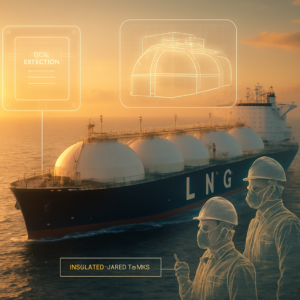 Walk into any port city where liquefied natural gas (LNG) tankers dock, and you’ll likely hear the same hushed concerns: “Isn’t that stuff dangerous?” “What if it explodes?” “Aren’t we one accident away from disaster?” These fears aren’t baseless—they’re just misplaced. The public imagination has long conflated LNG with the catastrophic imagery of oil spills, chemical fires, or industrial explosions. But here’s the uncomfortable truth for doomsayers: LNG shipping doesn’t just meet safety expectations—it shatters them.
For an industry that moves a cargo chilled to -162°C—a temperature at which steel becomes brittle and human flesh freezes in seconds—LNG shipping boasts a safety record so pristine it borders on the surreal. Zero major cargo losses. Zero fatalities directly attributed to LNG in its entire operational history. Not one. That’s not luck. That’s design, discipline, and a refusal to accept that “dangerous” is an inherent trait of the cargo itself.
More information on Gas Fleet Salaries 2024-2026: Who Pays the Most?
The Perception Gap: Why LNG Gets a Bad Rap
Public perception is a stubborn thing. It latches onto vivid, emotional narratives—like the Exxon Valdez oil spill or the Deepwater Horizon disaster—and extrapolates those risks onto entirely different industries. LNG, with its invisible vapors and cryogenic temperatures, fits neatly into the mental category of “things that can go horribly wrong.” But this ignores a critical distinction: LNG is not oil. It’s not a volatile chemical. It’s not even a toxic substance.
Consider the facts:
- Non-toxic: Unlike ammonia or chlorine, LNG vapors won’t poison you. Inhale them, and the worst you’ll experience is lightheadedness—because they displace oxygen, not because they’re chemically harmful.
- Non-corrosive: LNG doesn’t eat away at pipelines, tanks, or ship hulls. It’s inert, meaning it doesn’t react with the materials it touches.
- Non-explosive in open air: LNG itself doesn’t explode. For an ignition to occur, the gas must first vaporize, mix with air in a precise 5-15% concentration, and then encounter an ignition source. Even then, the resulting flame burns upward, not outward like a bomb.
“People hear ‘natural gas’ and think of the gas lines in their homes,” says Dr. Elena Vasquez, a maritime safety researcher at the International Maritime Organization (IMO). “But LNG is a completely different beast. The risks are real, but they’re manageable—and we’ve been managing them for decades.”
The IGC Code: The Unsung Hero of LNG Safety
If LNG shipping were a patient, the International Code for the Construction and Equipment of Ships Carrying Liquefied Gases in Bulk (IGC Code) would be its meticulous medical chart. Adopted by the IMO in 1986 and updated regularly, this set of regulations is the reason LNG tankers don’t just survive their voyages—they thrive in an environment where failure isn’t an option.
The IGC Code doesn’t just set standards; it anticipates failure. Every aspect of an LNG carrier’s design—from the double-hulled structure to the insulation that keeps the cargo at cryogenic temperatures—is built with redundancy in mind. Key provisions include:
- Double-hull construction: Unlike single-hulled oil tankers, LNG carriers have an inner and outer hull separated by a void space. Even if the outer hull is breached, the inner hull remains intact, preventing cargo release.
- Secondary containment: The cargo tanks themselves are surrounded by a secondary barrier—often a membrane or a separate tank—designed to hold the LNG for at least 15 days in the event of a leak.
- Gas detection systems: Since LNG is odorless, ships are equipped with sensors that detect even trace amounts of methane in the air. Alarms trigger at concentrations as low as 1%—well below the 5% lower flammability limit.
- Emergency shutdown systems: In the event of a leak or fire, automated systems can isolate cargo tanks, stop pumps, and activate inert gas systems to smother potential flames.
- Crew training: LNG crews undergo rigorous, ongoing training in emergency response, firefighting, and cryogenic safety. Simulators replicate everything from minor leaks to full-scale disasters, ensuring no scenario is met with panic.
“The IGC Code isn’t just a checklist—it’s a culture,” says Captain Rajiv Mehta, a veteran LNG tanker master with over 20 years in the industry. “You don’t just follow the rules; you internalize them. Every valve you turn, every inspection you perform, is done with the understanding that lives depend on it.”
Why LNG’s Properties Make It Safer Than You Think
Here’s a counterintuitive truth: LNG’s most “dangerous” traits are also its greatest safeguards. Take its cryogenic temperature. Yes, -162°C is cold enough to cause instant frostbite—but that same coldness means LNG doesn’t linger. When spilled on water, it boils off rapidly, leaving little to no residue. Unlike oil, which can spread into a slick, LNG vaporizes and dissipates, reducing the risk of long-term environmental damage.
Then there’s the matter of flammability. While it’s true that LNG vapors can ignite, the conditions required are so specific that accidental fires are exceedingly rare. “You need the right mix of gas and air, plus an ignition source—all at the same time,” explains Dr. Vasquez. “In open environments, like on deck or in a well-ventilated engine room, the gas disperses too quickly to reach flammable concentrations. It’s only in confined spaces, like a poorly ventilated cargo hold, that you’d have a problem—and those spaces are designed to prevent that scenario.”
Even the industry’s approach to leaks is built around LNG’s unique behavior. Because the gas is lighter than air, it rises and disperses rather than pooling like oil. This means that in the rare event of a spill, the primary risk isn’t fire—it’s asphyxiation in enclosed areas where the gas displaces oxygen. But here, too, the industry has adapted. Crews are trained to evacuate low-lying areas immediately, and ships are equipped with oxygen monitors that sound alarms long before levels become dangerous.
The Human Factor: Why Culture Beats Technology
No amount of regulation or engineering can eliminate risk entirely. That’s where the human element comes in—and in LNG shipping, it’s the difference between a near-perfect safety record and a litany of close calls. “Technology is only as good as the people operating it,” says Captain Mehta. “You can have the best sensors in the world, but if your crew isn’t trained to respond, they’re useless.”
LNG companies don’t just train their crews—they drill them. Monthly emergency simulations cover everything from minor leaks to full-scale fires. Crews practice donning protective gear in under 30 seconds, isolating cargo tanks under duress, and coordinating with shore-based emergency teams. The goal isn’t just competence; it’s automaticity—the ability to act without thinking when seconds count.
This culture of safety extends beyond the ship. Ports that handle LNG are subject to their own stringent regulations, including exclusion zones, emergency response plans, and real-time monitoring of air quality. “It’s a chain of safety,” says Dr. Vasquez. “From the moment the LNG leaves the liquefaction plant to the moment it’s regasified at its destination, every link in that chain is designed to fail safely.”
Learning from the Unthinkable: How the Industry Prepares for the Worst
If you ask an LNG professional about their biggest fear, they won’t mention explosions or fires. They’ll talk about complacency. “The moment you think you’ve mastered safety is the moment you become vulnerable,” warns Captain Mehta. That’s why the industry invests heavily in near-miss reporting—a system where even the smallest anomalies are documented, analyzed, and shared across the fleet.
Take the case of a 2018 incident in which a minor leak was detected in a cargo tank’s insulation space. The ship was safely unloaded, and the tank was inspected. The cause? A hairline crack in a weld, invisible to the naked eye but detectable through routine pressure monitoring. “That’s the kind of thing that could have gone unnoticed for years,” says Dr. Vasquez. “But because the crew reported it, we were able to update our inspection protocols fleet-wide.”
This relentless focus on improvement is why LNG shipping’s safety record isn’t just good—it’s getting better. New technologies, like advanced leak detection systems and AI-driven predictive maintenance, are being integrated into the industry’s already robust framework. “We’re not resting on our laurels,” says Captain Mehta. “Every year, we find new ways to make this safer. That’s the standard we hold ourselves to.”
Debunking the Myth, One Voyage at a Time
So why does the myth of LNG’s inherent danger persist? Partly because fear is easier to sell than facts. Partly because the industry’s success is its own worst enemy—when nothing goes wrong, people assume nothing can go wrong. But the truth is far more interesting: LNG shipping isn’t safe despite its risks—it’s safe because of them.
The cryogenic temperatures, the flammable vapors, the need for constant vigilance—these aren’t weaknesses. They’re the very things that force the industry to innovate, to regulate, and to cultivate a culture where safety isn’t just a priority, but a precondition. In a world where “dangerous” is often conflated with “uncontrollable,” LNG shipping stands as a testament to what happens when an industry refuses to accept that label.
“We don’t move LNG because it’s easy,” says Captain Mehta. “We move it because we’ve proven, time and time again, that we can do it right.” And for an industry with a safety record this flawless, that’s not just a boast—it’s a promise.