
The Boil-Off Gas Dilemma: Turning Waste into Power
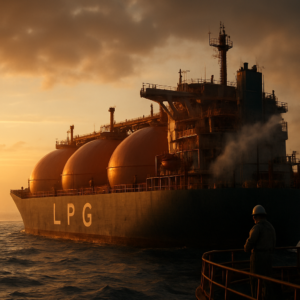 Picture this: a 300-meter-long LNG carrier slicing through tropical waters, its insulated tanks filled with methane chilled to -162°C. Despite the best efforts of engineers, the laws of physics refuse to be ignored. Even in the most advanced containment systems, heat from the outside world—whether it’s the relentless sun beating down on the deck or the warmer seawater lapping against the hull—slowly infiltrates the cargo holds. This thermal intrusion triggers an inevitable process: boil-off gas (BOG). Methane, the primary component of LNG, begins to evaporate, transitioning from a dense liquid into a lighter-than-air vapor. Left unchecked, this evaporation would turn the tanks into pressure cookers, with the gas expanding and threatening the structural integrity of the vessel.
The phenomenon isn’t just a nuisance; it’s a thermodynamic inevitability. LNG carriers operate in a delicate balance between the cryogenic temperatures required to keep methane in its liquid state and the ambient heat of the environment. Even the most advanced insulation—like the membrane or spherical Moss-type tanks—can’t completely eliminate heat transfer. The result? A constant, low-level boil-off rate of about 0.1% to 0.15% of the cargo per day, depending on the ship’s design, insulation quality, and external conditions. For a Q-Max vessel like the Mozah, which carries up to 266,000 cubic meters of LNG, that translates to roughly 260 to 400 cubic meters of methane vaporizing daily—enough to fill a small Olympic swimming pool.
The Historical Headache: Venting, Flaring, and Wasted Energy
In the early days of LNG shipping, boil-off gas was treated as little more than a hazardous byproduct. Engineers had few options to manage it, and none were particularly elegant. The simplest solution? Venting—releasing the excess gas directly into the atmosphere. While effective at relieving pressure, this method was an environmental disaster. Methane is a potent greenhouse gas, with a global warming potential 28 to 36 times greater than CO₂ over a 100-year period. Venting also represented a colossal waste of energy; after all, methane is a highly efficient fuel, and letting it escape was akin to tossing barrels of oil overboard.
By the 1970s, the industry shifted toward a slightly less wasteful approach: flaring. Instead of releasing raw methane, the gas was burned off in a controlled manner, converting it into CO₂ and water vapor. While flaring reduced the immediate climate impact, it still squandered a valuable resource. More critically, it introduced new risks. Flaring systems required constant monitoring to prevent unburned methane from escaping, and the open flames posed a fire hazard in an environment already saturated with flammable vapors. Ships like the Methane Princess, one of the first purpose-built LNG carriers, relied on flaring as a stopgap measure, but it was clear that the industry needed a better solution.
The real breakthrough came in the late 20th century, when engineers began to view boil-off gas not as a problem to be mitigated, but as an opportunity to be harnessed. The key was integrating BOG into the ship’s propulsion system. Early experiments involved retrofitting steam turbines to burn the gas, but these systems were inefficient and required significant modifications to existing vessels. The game-changer arrived with the advent of dual-fuel engines, which could seamlessly switch between burning heavy fuel oil (HFO) and natural gas. Suddenly, boil-off gas wasn’t just a nuisance—it was free fuel.
From Hazard to Resource: The Modern BOG Revolution
Today, the management of boil-off gas has evolved into a sophisticated dance of thermodynamics, engineering, and efficiency. Modern LNG carriers employ a multi-pronged approach to turn BOG from a liability into an asset, with dual-fuel engines and reliquefaction systems leading the charge.
- Dual-Fuel Engines: The Workhorse of BOG UtilizationThe most common solution today is the use of low-speed, two-stroke dual-fuel engines, which can burn both HFO and natural gas. These engines, developed by manufacturers like MAN Energy Solutions and Wärtsilä, are designed to handle the low-pressure methane vapor produced by boil-off. The process is remarkably efficient: BOG is drawn from the cargo tanks, compressed to the required pressure, and injected into the engine’s combustion chambers alongside air. The result? A propulsion system that can run on up to 90% natural gas, drastically reducing emissions of sulfur oxides (SOₓ), nitrogen oxides (NOₓ), and particulate matter compared to traditional marine fuels.Take the Mozah, the first of the Q-Max class of LNG carriers. With a cargo capacity of 266,000 cubic meters, the Mozah generates enough boil-off gas to power its 74,000 horsepower engines for the majority of its voyage. During a typical 20-day journey from Qatar to Japan, the ship might consume 3,000 to 4,000 cubic meters of BOG per day, covering up to 70% of its fuel needs. The remaining energy comes from HFO, but the environmental and economic benefits are undeniable. By burning BOG, the Mozah reduces its CO₂ emissions by 20-25% compared to a conventional oil-fueled vessel, while also cutting fuel costs—a win-win for operators and the planet.
- Reliquefaction: Turning Vapor Back into LiquidWhile dual-fuel engines are the most common solution, they aren’t always the most efficient—especially on shorter voyages or during periods of low boil-off. That’s where reliquefaction systems come into play. These onboard plants use a combination of compression, cooling, and the Joule-Thomson effect to convert BOG back into liquid form, allowing it to be returned to the cargo tanks. The process is energy-intensive, but it’s a game-changer for ships that don’t consume enough BOG to justify burning it all.The Joule-Thomson effect, a cornerstone of cryogenic engineering, describes how a gas cools when it expands without doing work. In a reliquefaction system, BOG is first compressed to a high pressure, then rapidly expanded through a valve or turbine. This expansion causes the gas to cool dramatically, often to temperatures below -160°C, at which point it condenses back into a liquid. The now-liquefied methane is then pumped back into the cargo tanks, effectively recycling the boil-off and minimizing waste.
Modern reliquefaction systems, like those developed by Hamworthy (now part of Wärtsilä) and Air Liquide, can recover up to 90% of the BOG generated during a voyage. These systems are particularly valuable for ships operating in regions with strict emissions regulations, such as the Emission Control Areas (ECAs) in Northern Europe and North America. By reliquefying BOG, vessels can avoid flaring or venting, further reducing their environmental footprint.
More information on Switching to LPG Tankers: A Starter’s Roadmap
The Thermodynamics Behind the Magic
At the heart of BOG management lies a deep understanding of thermodynamics, particularly the behavior of methane at cryogenic temperatures. The challenge begins with the heat ingress—the unavoidable transfer of thermal energy from the environment into the cargo tanks. Even the most advanced insulation, such as the perlitic or polyurethane foam used in membrane tanks, can’t eliminate this heat transfer entirely. Instead, engineers focus on minimizing it through a combination of materials science and design innovation.
The Joule-Thomson effect plays a dual role in BOG management. On one hand, it’s the enemy: as methane boils off and expands, it cools the remaining liquid, creating a self-perpetuating cycle of evaporation. On the other hand, it’s the ally: in reliquefaction systems, the same effect is harnessed to cool and condense the vapor back into liquid. The key is controlling the pressure and temperature conditions to tip the balance in favor of condensation.
Another critical factor is the specific heat capacity of LNG. Methane has a relatively low heat capacity, meaning it requires less energy to raise its temperature compared to other substances. This property makes LNG highly sensitive to even small amounts of heat ingress, which is why insulation is so critical. The secondary barrier in membrane tanks, for example, isn’t just a backup in case of leaks—it’s an additional layer of thermal protection, designed to slow the rate of heat transfer and reduce boil-off.
Finally, there’s the role of pressure management. LNG tanks are designed to operate at near-atmospheric pressure, but even small increases in pressure can accelerate boil-off. Modern vessels use a combination of pressure relief valves, gas compressors, and control systems to maintain optimal conditions. For instance, if the pressure in a tank begins to rise, the system can automatically divert BOG to the engines or reliquefaction plant, keeping the cargo stable and the ship safe.
Real-World Impact: How BOG Powers the LNG Fleet
The transformation of boil-off gas from a hazard to a resource has had a profound impact on the LNG shipping industry. Today, nearly all new LNG carriers are equipped with dual-fuel engines or reliquefaction systems, and older vessels are being retrofitted to keep up with the times. The results speak for themselves:
- Emissions Reductions: By burning BOG instead of HFO, LNG carriers can cut their CO₂ emissions by 20-30%, while virtually eliminating SOₓ and particulate matter. This makes them one of the cleanest large-scale marine vessels in operation today.
- Fuel Cost Savings: BOG is essentially free fuel, as it’s a byproduct of the cargo itself. For a Q-Max vessel like the Mozah, this can translate to millions of dollars in savings per year, depending on fuel prices and voyage length.
- Operational Flexibility: Dual-fuel engines allow ships to switch between gas and oil, providing a hedge against fuel price volatility. In regions with strict emissions regulations, they can operate entirely on BOG, avoiding costly fines or the need for alternative fuels.
- Cargo Integrity: By actively managing BOG, vessels can maintain more stable tank conditions, reducing the risk of pressure-related incidents and ensuring the cargo arrives at its destination in optimal condition.
Perhaps the most compelling example of BOG’s potential is the Q-Max fleet, operated by Qatar Gas. These behemoths, the largest LNG carriers in the world, were designed from the ground up to maximize the use of boil-off gas. Each Q-Max vessel is equipped with two dual-fuel engines, capable of burning BOG, HFO, or marine diesel oil (MDO). During a typical voyage, the ships consume 3,000 to 5,000 cubic meters of BOG per day, covering up to 80% of their fuel needs. The remaining energy comes from HFO, but the reliance on BOG has slashed operating costs and emissions, making the Q-Max fleet one of the most efficient in the world.
For shorter voyages or ships with lower boil-off rates, reliquefaction systems offer an equally compelling solution. The Arctic Princess, a 147,000 cubic meter LNG carrier operated by Teekay, is equipped with a Hamworthy reliquefaction plant that recovers nearly all of its BOG. During a recent voyage from Norway to Japan, the system reliquefied over 95% of the boil-off, returning it to the cargo tanks and eliminating the need for flaring or venting. The result? A near-zero emissions profile for the voyage, with minimal fuel waste.
The boil-off gas dilemma, once a thorn in the side of LNG shipping, has become a testament to the industry’s ingenuity. What was once a hazardous byproduct is now a valuable resource, powering the very ships that transport it. Through a combination of dual-fuel engines, reliquefaction systems, and thermodynamic innovation, engineers have turned a challenge into an opportunity—proving that even in the cold, unforgiving world of cryogenic shipping, waste can be transformed into power.