

Understanding the Role of Solenoid Valves in Separator Operation
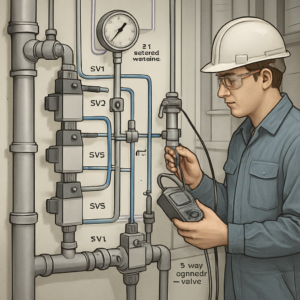 At the heart of every separator’s smooth operation lies a trio of unsung heroes: the solenoid valves SV1, SV2, and SV5. These electromechanically operated valves don’t just regulate the flow of control water—they dictate the very rhythm of the separator’s opening and closing cycles. When they work in harmony, the system hums along effortlessly. But when one falters, even slightly, the entire process can grind to a halt. Let’s break down how each valve pulls its weight—and what happens when they don’t.
SV1: The Gatekeeper of Full Opening
When the separator needs to fully open—whether to discharge accumulated sludge or prepare for a new batch of dirty oil—SV1 takes center stage. This valve is responsible for directing control water to the operating slide, which in turn forces the bowl to open completely. Think of it as the “all-clear” signal: when SV1 energizes, it allows pressurized water to flow into the hydraulic system, pushing the piston that unlocks the bowl’s locking ring. The result? A clean, unobstructed discharge of solids.
But what if SV1 fails? The consequences are immediate and frustrating. If the valve sticks in the closed position, the separator won’t open at all—no matter how many times you trigger the cycle. The bowl remains stubbornly shut, and sludge builds up until the system either alarms or, worse, forces an emergency shutdown. On the flip side, if SV1 leaks or fails to close properly after activation, you might see incomplete opening. The bowl cracks open just enough to cause turbulence but not enough to fully eject the solids. Over time, this leads to poor separation efficiency, increased wear on the bowl components, and even contamination of the cleaned oil.
Real-world example: A refinery in Rotterdam once traced persistent sludge carryover to a corroded SV1. The valve’s internal seals had degraded, allowing control water to bypass the piston. The bowl would open partially, then snap shut prematurely, leaving behind a layer of sludge that fouled the disc stack. The fix? Replacing the valve—and implementing a stricter maintenance schedule for control water filtration.
SV2: The Closing Command
Where SV1 opens the door, SV2 slams it shut. This valve’s job is to redirect control water to the closing side of the operating slide, resealing the bowl after discharge. When SV2 energizes, it cuts off the water supply to the opening side and sends pressure to the closing chamber, forcing the piston back into its locked position. The bowl snaps shut with a hydraulic certainty, ready for the next cycle.
Failure here is equally disruptive but manifests differently. If SV2 refuses to open, the separator won’t close. The bowl stays ajar, and the system either alarms or—if the interlocks are bypassed—continues running in a dangerous, unsealed state. This isn’t just inefficient; it’s a safety hazard. Uncontrolled oil flow can lead to spills, while an open bowl under pressure risks mechanical damage to the disc stack or even catastrophic failure of the bowl itself.
Conversely, if SV2 leaks or fails to hold pressure, the bowl might close too slowly or not at all. Picture this: A food-grade oil processor in Malaysia noticed their separator was taking twice as long to reset between cycles. The culprit? A worn SV2 that couldn’t maintain the necessary pressure to fully seat the bowl. The result was a gradual loss of separation efficiency, as the bowl’s sealing surfaces wore unevenly from repeated partial closures. The solution involved not just replacing the valve but also recalibrating the control water pressure to ensure it stayed within the 0.5–0.9 MPa sweet spot.
SV5: The Precision Adjuster for Partial Opening
Not every cycle requires a full discharge. For partial opening—used during desludging or when adjusting to varying feed conditions—SV5 steps in. This valve modulates the flow of control water to achieve a controlled, limited opening of the bowl. It’s the separator’s way of “tapping the brakes,” allowing a measured release of sludge without fully disrupting the separation process.
When SV5 malfunctions, the effects are subtler but no less problematic. If the valve sticks open, the bowl might open wider than intended, leading to excessive oil loss or even air ingestion into the system. If it sticks closed, the separator loses the ability to fine-tune its operation, forcing operators to rely solely on full discharges—a wasteful and inefficient workaround. In one case, a biodiesel plant in Brazil struggled with inconsistent product quality until they discovered SV5’s solenoid coil was intermittently failing. The valve would sporadically refuse to open, causing the separator to either skip partial discharges or default to full openings, throwing off the entire production balance.
The Critical Dance of Sequencing
Here’s the thing about solenoid valves: they don’t work in isolation. Their power lies in sequencing—the precise order and timing of their activation. For the separator to function, SV1, SV2, and SV5 must follow a choreographed routine:
- Full opening cycle: SV1 energizes → control water flows to the opening side → bowl unlocks and opens fully → SV1 de-energizes → SV2 energizes to close the bowl.
- Partial opening cycle: SV5 energizes → control water flows to achieve limited opening → SV5 de-energizes → SV2 energizes to close the bowl.
Misalignment in this sequence is like a drummer missing a beat—it throws the whole band off. For example, if SV2 energizes before SV1 fully de-energizes, the bowl might attempt to close while still opening, creating a hydraulic conflict. The result? A stalled cycle, a tripped alarm, and a very frustrated operator. Similarly, if SV5 activates out of turn, the separator might attempt a partial opening when it should be fully closed, leading to uncontrolled sludge discharge or even damage to the bowl’s locking mechanism.
Real-world sequencing failures often trace back to faulty PLC programming or worn valve actuators. In a marine application, a ship’s fuel separator once began randomly opening mid-cycle. The issue? A corroded SV1 actuator that delayed its de-energization, causing SV2 to trigger too early. The fix required not just replacing the actuator but also adding a 0.5-second delay in the PLC logic to account for valve response time.
Why It All Matters
Solenoid valves are the nervous system of the separator. They translate electrical signals into mechanical action, turning abstract commands into tangible results. When they work, the separator operates like a well-oiled machine—literally. When they don’t, the consequences ripple through the entire system: lost product, increased maintenance, and unplanned downtime.
The key takeaway? Don’t treat these valves as afterthoughts. Regularly test their response times, monitor control water quality (contaminants are a leading cause of valve failure), and ensure the PLC logic accounts for real-world wear and tear. Because in the world of separators, a millisecond of hesitation—or a valve that’s just a little too slow—can mean the difference between smooth operation and a costly shutdown.
I can relate to the Rotterdam refinery example. Corroded SV1 valves are a nightmare. Maintaining clean control water and checking the filtration system is just as important as the valves themselves.