

Why Your Samgong SJ Separator Vibrates Excessively
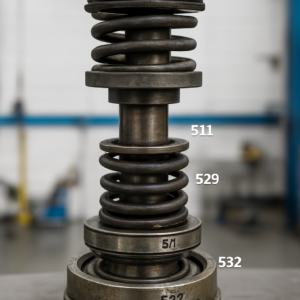 Let’s be honest—when your Samgong SJ separator starts shaking like it’s possessed, it’s not just annoying. It’s a red flag. Excessive vibration isn’t just a nuisance; it’s your machine screaming for help before something really bad happens. And more often than not, the culprit lies in a handful of critical components: the vertical shaft, its bearings, and those all-important springs. If you’ve ever ignored a strange rattle or dismissed a slight wobble, this is where things start to unravel.
So, why does your separator vibrate like it’s auditioning for a heavy metal band? Let’s break it down.
The Vertical Shaft: The Backbone That Can’t Afford to Wobble
Think of the vertical shaft as the spine of your separator. It’s what keeps everything aligned, balanced, and running smoothly. But when that shaft starts to falter—whether from wear, misalignment, or outright damage—it throws the entire system into chaos. Here’s how:
- Misalignment: If the shaft isn’t perfectly vertical (and we mean perfectly), even a tiny deviation can amplify vibrations. Over time, this misalignment can warp the shaft itself, turning a minor issue into a full-blown mechanical nightmare. You might notice the separator pulling to one side or struggling to maintain a consistent speed—both telltale signs that the shaft isn’t happy.
- Wear and Tear: The shaft isn’t invincible. Constant rotation, especially under heavy loads, can wear down its surface, creating uneven spots that disrupt balance. If you’ve ever felt a “thump-thump-thump” rhythm while the machine runs, that’s likely the shaft telling you it’s seen better days.
- Corrosion or Damage: In harsh environments—think saltwater, chemicals, or extreme temperatures—the shaft can corrode or develop pits. Even a small nick or rust spot can throw off the balance, leading to vibrations that grow worse with every rotation.
Real-world example? Picture this: A processing plant ignored a slight vibration in their SJ separator for months. One day, the shaft snapped mid-operation, sending metal fragments flying and taking out a nearby motor. The repair bill? Five figures. The downtime? Even worse. All because someone assumed “it’s just a little shake.”
More information on The Giant Thermos: Engineering LNG Storage
The Bearings: Small Parts, Big Problems
Now, let’s talk about the bearings—parts 511, 529, and 532. These tiny components bear the brunt of the shaft’s rotation, and when they fail, they don’t go quietly. Here’s what happens when they start to wear out:
- Grinding or Squealing: If your separator sounds like it’s chewing on gravel, that’s a classic sign of bearing failure. As the bearings wear down, their smooth rotation turns into a gritty, uneven grind. The noise might start faint but will grow louder (and more alarming) over time.
- Increased Friction: Worn bearings create more resistance, forcing the motor to work harder. You might notice the separator struggling to reach its usual speed or overheating during operation. That extra friction doesn’t just cause vibration—it accelerates wear on the entire system.
- Play in the Shaft: If you can wiggle the shaft by hand when the machine is off, that’s a huge red flag. Excessive play means the bearings are shot, and the shaft is no longer held firmly in place. At this point, vibration isn’t just a symptom—it’s a ticking time bomb.
Here’s a scenario you don’t want to live through: A fish processing facility noticed a faint squeal from their separator but chalked it up to “normal wear.” A few weeks later, the bearing seized completely, locking up the shaft and causing the motor to burn out. The result? A week of downtime, a rushed order for replacement parts, and a very unhappy maintenance team.
The Springs: The Unsung Heroes of Smooth Operation
Now, let’s talk about the springs—specifically, the six upper springs (R18) and the lower spring (R21/539). These might seem like minor players, but they’re actually the first line of defense against vibration. Their job? To absorb shocks and keep the shaft stable. When they fail, the entire system goes haywire. Here’s how:
- Uneven Tension: The six upper springs work in unison to distribute load evenly. If even one of them weakens or breaks, the balance is thrown off. Suddenly, the shaft isn’t just rotating—it’s wobbling like a top about to fall over. You’ll feel this as a pronounced vibration, often accompanied by a metallic “clank” as the shaft shifts under load.
- Lower Spring Failure: The lower spring (R21/539) acts as the final cushion between the shaft and the base. If it wears out or snaps, the shaft loses its last bit of support, leading to violent vibrations that can rattle the entire machine. This is often the point where operators start to panic—because at this stage, the vibration isn’t just annoying; it’s destructive.
- Visible Wear: Springs don’t fail overnight. You’ll usually see signs of trouble first—rust, deformation, or even cracks. If you’re doing regular inspections (and you should be), you might catch a failing spring before it causes real damage. But if you ignore it? That’s when things get expensive.
Take this example: A dairy processing plant noticed their SJ separator vibrating more than usual but assumed it was just “part of the job.” Then, one of the upper springs snapped during operation. The sudden imbalance caused the shaft to whip violently, damaging the bearings and warping the shaft. What started as a $50 spring replacement turned into a $5,000 repair job. All because someone didn’t take the vibration seriously.
How Neglect Turns Vibration Into Catastrophe
Here’s the hard truth: Vibration doesn’t just go away on its own. It’s a symptom of a problem that’s only going to get worse. And the longer you ignore it, the more damage it does. Here’s how things escalate:
- From Vibration to Misalignment: Minor vibrations can cause the shaft to shift slightly out of alignment. Over time, that misalignment puts extra stress on the bearings, accelerating their wear. Before you know it, you’re dealing with a shaft that’s bent, bearings that are shot, and a machine that’s on the verge of failure.
- From Wear to Seizure: Worn bearings create more friction, which generates heat. That heat can cause the bearings to expand, seize, or even weld themselves to the shaft. At that point, you’re not just looking at a repair—you’re looking at a full replacement.
- From Noise to Breakdown: That faint squeal or rattle? It’s not just annoying—it’s a warning. Ignore it long enough, and you’ll be dealing with a machine that’s completely inoperable. And in industries where downtime means lost revenue, that’s a risk you can’t afford to take.
So, what’s the takeaway? Vibration isn’t just a nuisance—it’s a cry for help. The vertical shaft, bearings, and springs are all critical components that work together to keep your separator running smoothly. When one of them starts to fail, the entire system suffers. The good news? Most of these issues are preventable with regular inspections and timely maintenance. The bad news? If you ignore the signs, you’re setting yourself up for a world of hurt.
Next time your Samgong SJ separator starts shaking, don’t just turn up the radio and hope it goes away. Listen to what it’s telling you. Because in the world of industrial machinery, a little vibration today can mean a lot of downtime tomorrow.