

Why Liquefy Gases for Transport?
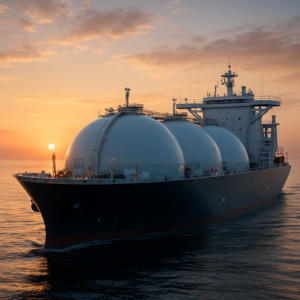 The decision to liquefy gases before loading them onto ships isn’t just a matter of convenience—it’s a game-changer for the entire energy industry. At its core, liquefaction solves one of the most fundamental challenges of gas transport: volume. Gases, by their nature, occupy vast amounts of space at standard temperature and pressure. Take methane, the primary component of natural gas. In its gaseous state, one cubic meter of methane at room temperature and atmospheric pressure would require a container roughly the size of a small car to hold just 0.7 kilograms of the substance. But when cooled to -162°C (-260°F), that same cubic meter of liquefied natural gas (LNG) can hold a staggering 450 kilograms of methane—a volume reduction of about 600 times. For liquefied petroleum gas (LPG), which includes propane and butane, the reduction is even more dramatic, often exceeding 700 times when liquefied under pressure or at low temperatures.
This drastic compression isn’t just a neat scientific trick; it’s the backbone of the global gas trade. Without liquefaction, transporting gases over long distances would be economically unviable. Imagine trying to ship gaseous methane from a liquefaction plant in Qatar to a regasification terminal in Japan using conventional methods. A single cargo of LNG that fits into a standard Q-Flex vessel (one of the largest LNG carriers, with a capacity of around 210,000 cubic meters) would require a fleet of over 120,000 standard 40-foot shipping containers if transported in its gaseous form. The logistics alone—let alone the cost—would make such a trade impossible. By liquefying the gas, the same volume can be transported in a single ship, slashing fuel consumption, port fees, and transit times.
The Physics Behind Liquefaction: Cooling, Compression, and Everything In Between
So how exactly do we turn a gas into a liquid? The process hinges on manipulating two key variables: temperature and pressure. Gases liquefy when their molecules are forced close enough together that intermolecular forces take over, pulling them into a liquid state. This can be achieved through:
- Cooling: Lowering the temperature of a gas reduces the kinetic energy of its molecules, slowing them down until they condense into a liquid. For methane, this means chilling it to cryogenic temperatures—below -160°C. The cooling process typically involves a series of heat exchangers and refrigeration cycles, often using the gas itself as a refrigerant in a closed-loop system. This is the primary method for producing LNG.
- Compression: Increasing the pressure on a gas squeezes its molecules together, effectively forcing them into a liquid state. This is the go-to method for LPG, where gases like propane and butane are pressurized at ambient temperatures (or slightly below) to keep them liquid. A propane tank you might use for a backyard grill is a perfect example—under pressure, the gas remains liquid until released, at which point it vaporizes.
- A Combination of Both: Some gases, particularly those with higher critical temperatures (the temperature above which a gas cannot be liquefied by pressure alone), require both cooling and compression. Ethylene, for instance, is often transported as a refrigerated liquid at around -104°C under moderate pressure.
The choice of method depends on the gas in question and the economics of the process. Cooling is energy-intensive but necessary for gases like methane, which have very low boiling points. Compression, on the other hand, is more straightforward but requires robust containment systems to handle the high pressures involved. In either case, the goal is the same: transform a gas into a dense, transportable liquid without losing its energy potential.
The Economic Engine of Liquefaction: Why It Makes Global Trade Possible
The economic benefits of liquefying gases for maritime transport are impossible to overstate. Before liquefaction became widespread, gas markets were largely regional, confined to areas where pipelines could reach. Today, LNG and LPG are traded globally, connecting producers in the Middle East, Australia, and the U.S. with consumers in Asia, Europe, and beyond. This shift has had profound implications:
- Market Flexibility: Liquefaction allows gas to be treated like any other commodity. Instead of being tied to a fixed pipeline route, LNG can be redirected to the highest bidder. During the 2022 energy crisis in Europe, for example, LNG cargoes originally destined for Asia were rerouted to European ports to meet surging demand, demonstrating the liquidity and adaptability of the LNG market.
- Economies of Scale: The volume reduction achieved through liquefaction enables massive cargo sizes, which in turn drive down the per-unit cost of transport. A single membrane-type LNG carrier can hold enough gas to power a city of 100,000 people for an entire year. The larger the vessel, the lower the cost per ton of gas transported—an advantage that pipelines, with their fixed capacities, simply can’t match.
- Access to Remote Resources: Some of the world’s largest gas reserves are located in remote or offshore locations where building pipelines is impractical or prohibitively expensive. Liquefaction plants in places like Papua New Guinea or Mozambique allow these resources to be monetized by converting the gas into LNG, which can then be shipped to markets thousands of miles away.
- Price Arbitrage: Gas prices vary significantly between regions due to differences in supply, demand, and infrastructure. Liquefaction enables producers to exploit these price differentials. For instance, the U.S. has become a major LNG exporter in recent years, capitalizing on its abundant shale gas reserves to supply markets in Asia, where prices are often two to three times higher than in North America.
Consider the journey of an LNG cargo from a liquefaction plant in Sabine Pass, Louisiana, to a regasification terminal in Tianjin, China. The gas, extracted from shale formations in Texas, is piped to the plant, where it’s cooled to -162°C and loaded onto a carrier. After a 20-day voyage across the Pacific, the LNG is offloaded, warmed back into a gas, and injected into China’s pipeline network. Without liquefaction, this 12,000-kilometer journey would be logistically and financially impossible. Instead, it’s a routine transaction that underpins the global energy economy.
More information on Yanmar SCR:A Complete Guide to Selective Catalytic Reduction
The Hidden Costs: Energy, Infrastructure, and the Challenges of Liquefaction
Of course, liquefaction isn’t without its challenges. The process is energy-intensive, consuming roughly 8–12% of the gas’s energy content to cool it to cryogenic temperatures. For a large LNG plant, this can translate to hundreds of megawatts of power—enough to supply a small city. The refrigeration cycles used in liquefaction plants are complex and require precise engineering to maintain efficiency. Any inefficiencies in the process can significantly increase costs, making the difference between a profitable operation and a financial burden.
Then there’s the infrastructure. Liquefaction plants are among the most expensive industrial facilities in the world, with price tags often exceeding $10 billion for large-scale projects. These plants require specialized equipment, such as cryogenic heat exchangers, compressors, and storage tanks capable of withstanding extreme cold. On the receiving end, regasification terminals are equally complex, equipped with vaporizers that use seawater or other heat sources to warm the LNG back into a gas. Building and maintaining this infrastructure is a massive undertaking, one that requires long-term commitments from producers, consumers, and investors.
Safety is another critical consideration. LNG and LPG are highly flammable, and their transport involves navigating a web of regulations designed to minimize risks. LNG carriers, for instance, are built with double hulls and insulated cargo tanks to prevent leaks and maintain the low temperatures required to keep the gas liquid. The industry has an excellent safety record, but the potential consequences of an accident—such as a spill or fire—are severe enough to warrant rigorous oversight.
Despite these challenges, the benefits of liquefaction far outweigh the costs. The ability to transport gases in liquid form has revolutionized the energy sector, turning what was once a local resource into a globally traded commodity. It’s a testament to human ingenuity—taking a substance that, in its natural state, is too diffuse and unwieldy to transport efficiently and transforming it into a dense, manageable liquid that can be shipped across oceans. In doing so, liquefaction hasn’t just made gas transport possible; it’s made it indispensable to the modern world.
Author: Ch.Engineer