
Saturday, August 29
Shadow

Author: Дмитрий

Accelerated Arctic Oil Shipments: Russia Boosts Crude Exports to Asia

Latest
Russia Intensifies Arctic Oil Exports to Asian MarketsRussia has significantly increased its crude oil shipments via the Arctic sea route in 2024, outpacing last year’s export volumes. According to trade sources and LSEG shipping data, seven cargoes—totaling approximately 6 million barrels of crude—are already en route to Asia.Northern Sea Route Gains Strategic ImportanceThe Northern Sea Route (NSR), a critical Arctic shipping corridor, has seen heightened activity as Russia seeks alternative export pathways amid shifting global trade dynamics. The route offers a shorter transit time to Asian markets compared to traditional southern routes, reducing both costs and logistical challenges.Seafarers navigating the NSR must remain vigilant due to the region’s unpredictable ice conditions, limit...

U.S. Naval Forces Disable Panama-Flagged Vessel for Alleged Iran Blockade Breach

Latest
Incident OverviewU.S. naval forces conducted a targeted operation on Tuesday to disable a Panama-flagged cargo vessel after it reportedly failed to comply with multiple orders to halt while attempting to breach the U.S. maritime blockade of Iranian ports.CENTCOM StatementU.S. Central Command (CENTCOM) confirmed the engagement, stating that the vessel ignored repeated warnings from U.S. forces enforcing the restrictions. The ship was rendered inoperable following precision strikes to minimize collateral damage and ensure the safety of the crew.Operational ContextThe incident underscores the ongoing enforcement of maritime sanctions and the U.S. Navy’s commitment to upholding international restrictions in the region. No casualties were reported, and the vessel’s crew is being assessed for fu...

Rhine River Low Water Levels: Operational Challenges for Maritime and Industrial Sectors

Latest
Critical Water Levels on the Rhine Impact German Industry and Shipping Operations The Rhine River, a vital artery for European inland waterway transport, has reached critically low water levels, posing significant operational challenges for maritime logistics and industrial production across Germany. Industry leaders in chemical manufacturing, energy utilities, steel production, and agricultural commodities are reporting escalating disruptions. Key Impacts on Maritime and Industrial Operations Increased Transport Costs: Reduced water depths have forced vessels to operate with significantly lower cargo loads, increasing the number of trips required and driving up fuel and operational expenses. Logistical Bottlenecks: Congestion at key transshipment hubs, including Duisburg and R...

ABS Grants First U.S.-Built LFP Marine Battery System Classification Approval to Fleetzero

Latest
ABS Approves Fleetzero’s Leviathan Battery Energy Storage SystemThe American Bureau of Shipping (ABS) has awarded a Product Design Assessment (PDA) to Fleetzero for its Leviathan Battery Energy Storage System, the first lithium iron phosphate (LFP) marine battery system manufactured in the United States to secure classification approval.This milestone underscores the growing adoption of LFP technology in maritime applications, offering enhanced safety, thermal stability, and extended cycle life compared to conventional lithium-ion alternatives. The system is engineered to meet rigorous maritime standards, ensuring compliance with ABS rules for electrical and fire safety.Key Features of the Leviathan SystemDomestically produced LFP battery technology, reducing reliance on international supp...

MSC Shipmanagement Hit with $6M Penalty Following Charleston ‘Runaway Ship’ Incident

Latest
Court Imposes Heavy Fine and Probation on MSC Shipmanagement MSC Shipmanagement Limited has been ordered to pay a $6 million fine and placed under a four-year probation following the 2024 incident involving the MSC Michigan VII, a 13,000 TEU containership, in Charleston, South Carolina. The vessel lost propulsion and steering control, narrowly avoiding a catastrophic collision with the Arthur Ravenel Jr. Bridge. Key Details of the Incident Vessel Involved: MSC Michigan VII (IMO: 9807318, built 2019) Location: Charleston Harbor, South Carolina Date: February 2024 Outcome: Loss of propulsion and steering, requiring emergency tug assistance Regulatory Findings and Penalties The U.S. Department of Justice and the U.S. Coast Guard determined that the incident resulted from f...

Fratelli Cosulich Strengthens Fleet for Multi-Fuel Transition Amid Market Shifts

Latest
Strategic Investments in Next-Generation TonnageThe Fratelli Cosulich Group has navigated the challenges of 2025 with its financial performance remaining robust, underscoring its commitment to expanding a fleet tailored for the evolving marine fuels landscape. This forward-looking approach is spearheaded by the delivery of Maya Cosulich, the first in a series of vessels engineered to operate on multiple fuel types.Adapting to Regulatory and Operational DemandsAs the maritime industry accelerates its shift toward decarbonization, Fratelli Cosulich is prioritizing flexibility in fuel compatibility. The newbuilds are designed to accommodate LNG, methanol, ammonia, and biofuels, ensuring compliance with tightening emissions regulations while future-proofing operations against fuel supply volat...

Lloyd’s Register Bolsters Offshore Energy Team with Strategic Appointment

Latest
Wouter Pattynama Takes Helm as Executive Client Solutions Manager for Offshore SectorLloyd’s Register (LR) has reinforced its offshore energy capabilities with the appointment of Wouter Pattynama as Executive Client Solutions Manager for the Offshore division. The move underscores LR’s commitment to delivering specialised technical and operational support to the offshore sector across Australia, New Zealand, and the broader Asia-Pacific region.Pattynama will be based in Perth, Western Australia, a strategic hub for offshore energy operations. In his new role, he will lead client engagement initiatives, driving tailored solutions that address the evolving challenges of offshore asset integrity, regulatory compliance, and operational efficiency. His appointment reflects LR’s focus on deepeni...

Anschütz Unveils Latest SYNAPSIS Software Enhancement for Maritime Navigation Systems

Latest
Advanced Navigation Capabilities with SYNAPSIS UpdateAnschütz has launched the newest iteration of its SYNAPSIS software, introducing a suite of operational improvements tailored for professional seafarers. This update refines critical navigation applications, including Radar, ECDIS, and Conning systems, to enhance onboard decision-making.Key EnhancementsRadar Performance: Optimized target detection and tracking algorithms improve clarity in high-traffic and adverse weather conditions, reducing false alarms while maintaining precision.ECDIS Integration: Streamlined chart management and route planning tools support compliance with the latest IMO regulations, ensuring seamless voyage execution.Conning System: Real-time data fusion from multiple sensors delivers a consolidated operational ove...

UK P&I Club Strengthens Leadership with Appointment of Jeong-Sook Kim as Senior Underwriting Director

Latest
Strategic Leadership Expansion in LondonThe UK P&I Club has appointed Jeong-Sook Kim as Senior Underwriting Director, marking a significant step in reinforcing its underwriting leadership. Kim will operate from the Club’s London headquarters, collaborating directly with Chief Underwriting Officer William Beveridge to enhance service delivery and risk assessment capabilities.Focus on the Korean Maritime SectorKim’s initial mandate centers on the Korean market, where she will leverage her expertise to deepen client relationships and tailor P&I solutions to regional needs. Her appointment underscores the Club’s commitment to strengthening its presence in key Asian shipping hubs while maintaining global underwriting standards.With a career spanning senior roles in marine insurance and ...
Mastering Samgong Timing to Prevent Fuel Loss

Mastering Samgong Timing to Prevent Fuel Loss

Blogs
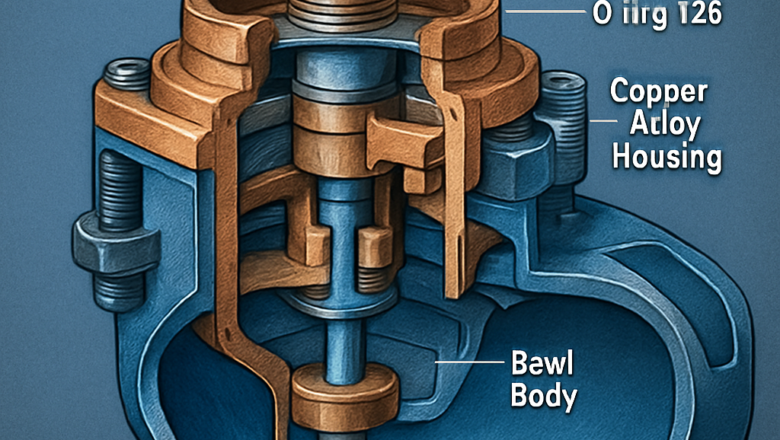
The Samgong control panel doesn’t just flip switches—it orchestrates a tightly synchronized ballet of water and pressure, where every millisecond counts. At the heart of this operation lies the timing chart, a precise sequence of three interdependent phases that dictate how the separator bowl opens, clears, and reseals. Misjudge even one of these intervals, and the system either fails to discharge sludge properly or—worse—dumps perfectly good fuel into the waste tank. Let’s break down how these phases work, why their timing is non-negotiable, and how they map to the physical mechanics of the separator. The Three-Phase Sequence: A Chain Reaction of Precision The FSH-1P-TR’s timing chart is built around three core parameters: T603 (Sealing Water), T602 (Replacement Water), and T601 (Discharg...