

How Scammers Target Seafarers on Messaging Apps
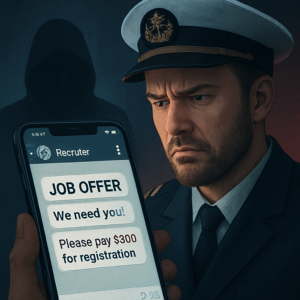 For seafarers scrolling through Telegram or WhatsApp after a long shift, an unexpected message from a recruiter can feel like a lifeline—especially when the offer sounds too good to ignore. Fraudsters know this. They’ve turned messaging apps into a hunting ground, exploiting the isolation of life at sea, the desperation for better contracts, and the anonymity these platforms provide. Unlike email scams, which often get buried in spam folders, a direct message on WhatsApp or Telegram feels personal, immediate, and harder to dismiss. And once they’ve got your attention, the psychological manipulation begins.
The Initial Contact: Too Good to Be True
Most seafarers have been there: a notification pops up from an unknown number, often with a name like “Captain Alex – Malin Group Recruitment” or “HR Manager – VLEC Opportunities”. The message is almost always the same—polite, professional, and just vague enough to pique curiosity. Here’s how a typical conversation starts:
- “Good day, sailor! We have an urgent opening for a 3rd Engineer on a VLEC vessel—$6,500/month, 4 months on/2 off. Are you available?”
- “Hello! Our client is looking for an experienced Chief Officer for a gas carrier. Salary negotiable, immediate deployment. Interested?”
- “Dear seafarer, Malin Group has a last-minute replacement for a 2nd Mate position. Only serious candidates, please reply ASAP.”
Notice the patterns: urgency (“immediate deployment,” “last-minute replacement”), high pay (salaries well above market rate), and exclusivity (“only serious candidates”). These aren’t accidental choices. Fraudsters study job boards, crewing agencies’ websites, and even LinkedIn profiles to mimic real recruitment language. They know that after months at sea, the promise of a quick, lucrative contract is irresistible—and that’s exactly what they’re counting on.
Fake Profiles: Stolen Faces and Generic Names
One of the easiest ways to spot a scammer is by their profile. A quick reverse image search often reveals that their “professional” photo is actually a stock image or a stolen picture from a real seafarer’s social media. Common red flags include:
- Overly generic names: “Captain Alex,” “HR David,” “Malin Group Recruiter” (real recruiters use full names and company emails).
- No verifiable online presence: No LinkedIn profile, or a profile with zero connections and a recent creation date.
- Inconsistent details: A “Malin Group” recruiter messaging from a Gmail or Yahoo account (e.g., oilonka@yahoo.com) instead of a company domain.
- Too-good-to-be-true credentials: A “senior recruiter” who can’t name the last vessel they staffed or fumbles basic maritime terminology.
In one documented case, a scammer used the photo of a real Malin Group employee—lifted from the company’s own website—while messaging seafarers from a WhatsApp number registered in Nigeria. When confronted, the fraudster claimed their “company phone was broken” and insisted on communicating via WhatsApp. By the time victims realized the deception, the scammer had already moved on to the next target.
More information on Switching to LPG Tankers: A Starter’s Roadmap
Exploiting the Maritime Job Market’s Desperation
The maritime industry is notorious for its volatility. Contracts end abruptly, crewing agencies ghost candidates, and the competition for good positions is fierce. Scammers prey on this uncertainty, positioning themselves as the solution to a seafarer’s financial or career woes. They’ll often:
- Target junior officers or ratings: Less experienced seafarers are more likely to jump at “guaranteed” opportunities, especially if they’re struggling to find work.
- Leverage industry jargon: Terms like “VLEC,” “gas carrier,” or “flag of convenience” are dropped to sound legitimate, even if the scammer doesn’t fully understand them.
- Play on family pressures: “Your wife mentioned you’ve been looking for a better contract—this is the one!” (A tactic that exploits the guilt of being away from home for months.)
One seafarer, a 3rd Engineer from the Philippines, shared his experience: “The guy said he was from Malin Group and had a ‘direct client’ in Europe offering $7,000 a month. He even sent me a fake contract with a real company’s letterhead. When I asked for a video call, he said the ‘client’ was in a meeting. Then he asked for $500 for a ‘medical clearance’ with ‘their doctor.’ That’s when I knew.”
The Psychological Playbook: Urgency, Fear, and False Scarcity
Messaging apps are the perfect tool for scammers because they allow for real-time manipulation. Unlike email, where victims might take time to verify details, a WhatsApp or Telegram chat creates a false sense of intimacy and immediacy. Here’s how they reel you in:
- “This offer expires in 24 hours.”Fraudsters know that hesitation kills their scam. By imposing a tight deadline, they pressure victims into making impulsive decisions—like paying a “processing fee” or “visa deposit” before “losing the spot.”
- “We only work with a few trusted seafarers.”Exclusivity is a powerful motivator. If a seafarer believes they’re part of a “select group,” they’re less likely to question the offer’s legitimacy. Scammers will even invent fake testimonials: “Your colleague, John D., just signed with us last week—he’s already on board!”
- “The client is very strict—no delays!”By framing the scammer as a “middleman” who’s “bending the rules” to help you, they create a sense of indebtedness. “I’m risking my job to get you this contract,” they might say, making it harder for the victim to back out.
- “Your current agency is overcharging you.”Some scammers pose as “independent recruiters” who can “cut out the middleman.” They’ll badmouth legitimate crewing agencies to erode trust in real employers, making their own offer seem like the better deal.
In one particularly cruel variation, scammers target seafarers who’ve recently been laid off or are between contracts. They’ll monitor job boards or Facebook groups for posts like “Looking for a vessel” and slide into DMs within minutes. The message? “I saw your post—lucky for you, I have a last-minute opening. But you’ll need to act fast.”
Real-World Example: The “Malin Group” WhatsApp Scam
In 2023, a wave of scams impersonating Malin Group swept through WhatsApp and Telegram. Here’s how it unfolded:
- The Hook: Seafarers received messages from numbers like +44 7418 3 (a UK number, but the scammer was likely operating from West Africa or Eastern Europe). The profile name was “Malin Group HR,” and the photo was a stock image of a smiling “recruiter.”
- The Offer: “We have an urgent opening for a 2nd Officer on a VLEC vessel. Salary: $5,800/month, 4 months contract. Immediate deployment from Rotterdam. Are you available?”
- The Catch: After expressing interest, the “recruiter” would ask for:
- A “refundable” $300 “visa processing fee” (to be paid via Western Union or cryptocurrency).
- A “mandatory” medical exam with “their doctor” in Manila or Mumbai (cost: $200–$500).
- A “security deposit” to “hold the position” (because “the client is very strict”).
- The Disappearance: Once the money was sent, the scammer would either:
- Ghost the victim entirely.
- Send a fake “boarding pass” and then demand more money for “last-minute paperwork.”
- Pass the victim to a “colleague” (another scammer) who’d invent new fees.
By the time victims realized they’d been scammed, the WhatsApp number was already disconnected, and the “recruiter” had moved on to the next target. Malin Group later issued a warning on their website, clarifying that they never recruit via WhatsApp or ask for upfront payments.
Why Messaging Apps Are the Perfect Scam Tool
Fraudsters love Telegram and WhatsApp for three key reasons:
- Anonymity:Creating a WhatsApp account takes minutes and requires no ID verification. Scammers use burner SIM cards or virtual numbers, making it nearly impossible to trace them. Telegram’s “secret chats” and self-destructing messages add another layer of protection.
- Global Reach:A scammer in Lagos can message a seafarer in Manila with the same ease as a legitimate recruiter. Messaging apps erase geographical barriers, allowing fraudsters to cast a wide net.
- Psychological Leverage:The “typing…” indicator, read receipts, and voice notes create a false sense of connection. Victims feel like they’re talking to a real person, not a faceless scammer. This makes them more likely to trust—and pay.
One cybersecurity expert who tracks maritime fraud put it bluntly: “Email scams are like fishing with a net. Messaging app scams are like spearfishing. The scammer picks their target, studies their habits, and strikes when they’re most vulnerable.”
What Happens When You Engage
If you reply to a scammer’s message—even just to ask a question—you’ve already taken the bait. Here’s what typically follows:
- Phase 1: The HoneymoonThe scammer is all smiles. They’ll call you “brother,” “cap,” or “sir,” and assure you that this is “the easiest contract you’ll ever get.” They might send you a fake contract, a photoshopped “boarding pass,” or even a voice note from a “satisfied client” (who is, of course, another scammer).
- Phase 2: The AskThis is where the excuses start. “The client needs a deposit to secure your spot.” “Our doctor in Dubai is the only one approved for this vessel.” “The visa office is closed tomorrow—you need to pay today.” The amounts are always “small” ($100–$500) compared to the promised salary, making them seem like a minor inconvenience.
- Phase 3: The Vanishing ActOnce the money is sent, the scammer’s tone changes. Messages take longer to reply to. Excuses get flimsier (“My boss is asking for more documents”). Eventually, they stop responding entirely. If you’re lucky, they’ll block you. If you’re unlucky, they’ll pass you to a “colleague” who’ll try to extract more money.
A Chief Officer from Ukraine shared his story: “I paid $400 for a ‘medical exam’ with their ‘approved doctor’ in Odessa. The doctor’s office was real, but the clinic had no idea what I was talking about. The scammer sent me a fake certificate, and when I asked for a refund, he said, ‘The client already canceled the contract. No refunds.’ I lost the money and the job.”
The Red Flags You Can’t Ignore
Scammers are good, but they’re not perfect. Here’s what to watch for in every message:
- Generic greetings: “Dear seafarer” or “Hello sailor” instead of your name.
- Poor grammar or odd phrasing: “We have a vessel for you to join very urgent.”
- Requests for money: Any upfront payment—whether it’s for “training,” “medicals,” or “visa processing”—is a scam. Legitimate agencies deduct fees from your first salary.
- Pressure to act fast: “This offer is only valid for 24 hours.”
- Inconsistent details: A “Malin Group” recruiter using a Gmail address or a Nigerian phone number.
- No video call: Scammers avoid face-to-face interaction. If they refuse a WhatsApp call or Zoom meeting, it’s a red flag.
- Too-good-to-be-true salaries: A $7,000/month offer for a 3rd Engineer on a bulk carrier? Unlikely.
If even one of these applies, stop engaging. Verify the recruiter’s identity through official company channels—never trust a WhatsApp number or a free email address.
Author: Ch.Engineer