

The Anatomy of a Maritime Titan
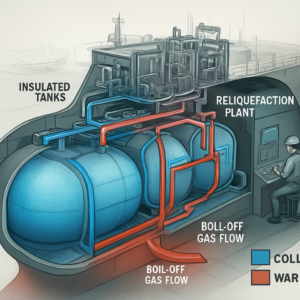 At first glance, a semi-submersible heavy-lift vessel looks like something plucked from the pages of a sci-fi novel—less a ship than a floating industrial fortress. Unlike conventional cargo vessels, which are designed to slice through waves with sleek, streamlined hulls, these maritime titans prioritize raw strength and adaptability over speed or hydrodynamic elegance. Their architecture is a study in controlled contradiction: massive yet precise, rigid yet flexible, built to defy the ocean’s whims while carrying payloads that would make most ships sink like stones. To understand how they function, you must first dissect their three defining structural components—the superstructure, the cargo deck, and the buoyancy towers—each a marvel of engineering in its own right.
The Superstructure: Command Center of the Deep
Perched at the bow like the bridge of a starship, the superstructure is where human ingenuity meets the vast, unpredictable sea. This is no mere cabin; it’s a self-contained nerve center, housing the navigation bridge, crew quarters, control rooms, and the critical systems that govern the vessel’s ballast, propulsion, and stability. Unlike the low-profile wheelhouses of container ships or tankers, the superstructure of a semi-submersible is elevated—sometimes rising six or seven stories above the waterline—to provide unobstructed visibility over the colossal cargo deck stretching behind it.
But height isn’t just for show. The elevated position serves a practical purpose: when the vessel submerges to load or unload cargo, the superstructure remains above water, ensuring the crew retains control even as the deck disappears beneath the waves. The design also incorporates reinforced bulkheads and shock-absorbing materials to withstand the immense forces generated when the ship “sinks” into the sea. Think of it as the brain of the operation—small in relative size, but indispensable to the vessel’s survival.
More information on Handling Hazardous Cargo: VCM, Butadiene & Ammonia Risks
The Cargo Deck: A Floating Football Field of Steel
If the superstructure is the brain, then the cargo deck is the brawn—a vast, unbroken expanse of high-strength steel that serves as the stage for some of the heaviest lifts in maritime history. On a vessel like the Dockwise Vanguard, this deck spans over 93,600 square feet, roughly the size of two NFL football fields laid end to end. Yet despite its sheer scale, the deck is anything but a simple slab of metal.
The secret to its strength lies beneath the surface. The deck is constructed from thin but ultra-high-strength steel plates, often no thicker than a few inches, supported by a lattice of welded beams—a skeletal framework that distributes weight evenly and prevents catastrophic deformation. This design is a delicate balancing act: the deck must be light enough to avoid unnecessary drag when the ship is in transit, yet rigid enough to support payloads exceeding 100,000 metric tons—the equivalent of two Eiffel Towers stacked on top of one another.
Engineers face a unique challenge here: how do you maintain structural integrity when the deck is essentially an open-air platform with no internal supports? The solution lies in the grillage system—a grid of intersecting beams that act like the ribs of a ship, absorbing and dispersing stress. Without this framework, the deck would buckle under its own weight, let alone the crushing forces of a multi-ton oil rig. It’s a bit like building a suspension bridge on water, where every bolt, weld, and steel plate must work in perfect harmony to prevent disaster.
And then there’s the matter of flexibility. The ocean is never still, and a rigid deck would crack under the constant motion of waves. To counter this, the steel plates are designed to bend slightly—just enough to absorb the sea’s energy without compromising strength. It’s a paradox: the deck must be both unyielding and pliable, a contradiction that defines the very essence of semi-submersible engineering.
The Buoyancy Towers: The Unsung Heroes of Stability
At the stern, rising like twin skyscrapers from the water, stand the buoyancy towers—the unsung heroes of the semi-submersible’s design. These colossal structures, often over 100 feet tall, serve a single, critical purpose: keeping the ship upright when it’s partially submerged. Without them, the vessel would capsize the moment it took on water, its center of gravity shifting unpredictably as the deck vanished beneath the waves.
Each tower is essentially a hollow, watertight column, packed with compartments that can be flooded or emptied to fine-tune the ship’s buoyancy. When the vessel submerges to load cargo, the towers remain above water, acting as counterweights to the flooded hull. Their sheer size isn’t just for show—it’s a necessity. The towers must displace enough water to generate buoyant force, counteracting the weight of the cargo and preventing the ship from tipping like a seesaw.
But their role goes beyond mere balance. The towers also house critical machinery, including the vessel’s thrusters—powerful propellers mounted on rotating pods that allow the ship to maneuver with surgical precision. This is no small feat: positioning a semi-submersible within inches of its target (say, an offshore platform or a damaged vessel) requires dynamic positioning systems that can counteract wind, waves, and currents in real time. The towers, in effect, are the ship’s stabilizers, thrusters, and lifelines rolled into one.
To visualize their importance, imagine trying to balance a fully loaded semi-truck on a seesaw. The towers are the weights on the opposite end, ensuring the entire system doesn’t tip over. Without them, the cargo deck—no matter how strong—would be useless, because the ship would never stay level long enough to load or unload its payload.
The Engineering Tightrope: Strength vs. Weight vs. Flexibility
Designing a semi-submersible vessel is an exercise in compromise. Every decision—from the thickness of the steel plates to the height of the buoyancy towers—is a trade-off between strength, weight, and flexibility. Too heavy, and the ship loses efficiency; too light, and it risks structural failure. Too rigid, and it cracks under the ocean’s relentless motion; too flexible, and it becomes unstable.
Consider the cargo deck again. Its open design is both its greatest strength and its biggest vulnerability. Unlike a conventional ship, which has internal bulkheads to reinforce the hull, a semi-submersible’s deck is exposed to the elements, subject to torsional forces (twisting) and bending moments (flexing) that would tear a lesser vessel apart. Engineers mitigate this by using high-tensile steel—a material so strong that a plate just an inch thick can support the weight of a fully loaded dump truck. Yet even this isn’t enough. The deck must also be stress-relieved through heat treatment, a process that removes microscopic weaknesses in the metal, ensuring it can endure decades of abuse.
The buoyancy towers, meanwhile, must be light enough to avoid dragging the ship down but strong enough to resist the crushing pressure of the deep. Their hollow design is a masterclass in efficiency: by filling certain compartments with air and others with water, the crew can adjust the ship’s metacentric height (a measure of stability) in real time, ensuring it remains upright whether it’s fully loaded or empty.
And then there’s the ballast system, the hidden circulatory system of the vessel. When the ship needs to submerge, pumps flood the tanks in a carefully choreographed sequence, lowering the deck beneath the waves. When it’s time to surface, compressed air forces the water out, and the ship rises like a leviathan breaking the surface. This process isn’t just about sinking and floating—it’s about controlling the ship’s center of gravity with millimeter precision, ensuring it never tips or rolls uncontrollably.
In the end, the anatomy of a semi-submersible is a testament to human ingenuity—a machine built to do what no other ship can. It’s a floating paradox: a vessel that must be both heavy enough to sink and light enough to float, rigid enough to carry mountains of steel and flexible enough to dance with the waves. And at the heart of it all is a simple, awe-inspiring truth: these maritime titans don’t just defy the ocean—they rewrite the rules of what’s possible on water.