

The Deadly Chemistry: Why VCM and Butadiene Are Cancer Risks
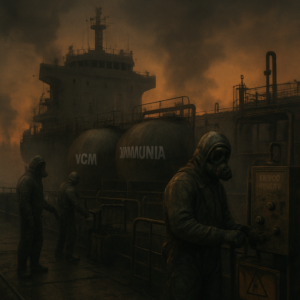 There’s a reason why some chemicals earn the label “silent killers.” They don’t announce their danger with immediate burns or choking fumes—no, they work quietly, insidiously, rewriting the body’s blueprint cell by cell until years later, the damage surfaces in ways no one saw coming. Vinyl chloride monomer (VCM) and 1,3-butadiene are two such chemicals. Both are cornerstones of the petrochemical industry, shipped in vast quantities across oceans, yet their true cost isn’t measured in barrels or profits, but in the lives of the workers who handle them. To understand why these substances are so feared, you have to start with their chemistry—and how it turns them into ticking time bombs for human health.
The Molecular Menace: How VCM and Butadiene Attack the Body
VCM (C2H3Cl) is a colorless gas at room temperature, with a faintly sweet odor that does little to betray its toxicity. It’s the building block of polyvinyl chloride (PVC), the ubiquitous plastic found in everything from pipes to medical devices. But before it becomes a stable polymer, VCM exists in its monomer form—a volatile, reactive molecule that doesn’t just pass through the body harmlessly. When inhaled, it’s metabolized in the liver by enzymes like cytochrome P450, which transform it into highly reactive epoxides. These compounds don’t just damage DNA; they alkylate it, forming covalent bonds that disrupt normal cell replication. The result? Mutations that, over time, can lead to angiosarcoma of the liver, a rare and aggressive cancer almost exclusively linked to VCM exposure. The latency period can stretch for decades, meaning a worker might retire before the first symptoms—jaundice, abdominal pain, unexplained weight loss—ever appear.
Butadiene (C4H6), meanwhile, is a different kind of threat. A colorless gas with a mild gasoline-like odor, it’s a key ingredient in synthetic rubber production. Like VCM, it’s metabolized into reactive intermediates—specifically, epoxybutene and diepoxybutane—which are even more potent carcinogens. These metabolites don’t just target the liver; they wreak havoc on the bone marrow, increasing the risk of leukemia and lymphoma. Studies on workers in butadiene production plants have shown elevated rates of these cancers, with some research suggesting that even low-level, chronic exposure can double or triple the risk. And unlike VCM, which has a somewhat predictable target organ, butadiene’s effects are more systemic. It doesn’t just cause cancer—it’s also linked to neurological damage, with exposed workers reporting chronic headaches, dizziness, and cognitive decline. In high concentrations, it can act as a central nervous system depressant, leading to unconsciousness or even death within minutes.
More information on Toxic Voyages: The Hidden Dangers of VCM and Butadiene
How Exposure Happens: The Invisible Threats on Board
On paper, shipping VCM and butadiene seems straightforward: load the cargo, seal the tanks, and transport. But in reality, the risks are everywhere, and they don’t always announce themselves. Exposure can happen in ways that are as mundane as they are dangerous.
- Inhalation: The most common route of exposure. Both VCM and butadiene are gases at ambient temperatures, meaning any leak—whether from a faulty valve, a cracked pipe, or an improperly sealed hatch—can release invisible plumes into the air. On a ship, where ventilation is often limited and confined spaces are the norm, these gases can accumulate quickly. A study by the International Maritime Organization (IMO) found that even minor leaks during loading or unloading could expose workers to concentrations exceeding occupational exposure limits (OELs) within minutes. And because both chemicals have low odor thresholds (meaning you might not smell them until concentrations are already hazardous), workers can inhale dangerous levels without realizing it.
- Skin Contact: While inhalation is the primary concern, skin absorption is a real—if often overlooked—risk. Liquid VCM (which can form if the gas is compressed or cooled) is a potent skin irritant, capable of causing chemical burns. More insidiously, it can be absorbed through the skin, where it enters the bloodstream and follows the same metabolic pathway as inhaled VCM. Butadiene, though less studied in this regard, is also lipophilic (fat-soluble), meaning it can penetrate the skin and accumulate in fatty tissues. Workers who handle contaminated equipment or come into contact with residual liquid in tanks or pipelines are at risk, even if they’re wearing gloves—because not all gloves are created equal. Nitrile, for example, offers some protection, but it degrades quickly when exposed to VCM, leaving skin vulnerable.
- Leaks and Catastrophic Failures: The worst-case scenario. A ruptured tank, a failed gasket, or a sudden pressure surge can release massive quantities of gas in seconds. In 2019, a chemical tanker off the coast of Rotterdam suffered a catastrophic VCM leak when a cargo tank’s pressure relief valve failed. The gas spread rapidly through the ship’s ventilation system, exposing the crew to concentrations high enough to cause immediate dizziness and nausea. Two crew members collapsed and had to be airlifted to a hospital, where they were treated for acute poisoning. The incident wasn’t fatal, but it underscored how quickly things can go wrong—and how little margin for error there is when dealing with these chemicals.
Then there’s the issue of chronic, low-level exposure. Not every risk comes from a dramatic leak. Many maritime workers are exposed to trace amounts of VCM or butadiene over years, whether through routine maintenance, tank cleaning, or even residual fumes in the air. These exposures might not cause immediate symptoms, but they add up. A 2018 study published in the Journal of Occupational Medicine tracked a group of chemical tanker workers over 15 years and found that those with the highest cumulative exposure to VCM had a fivefold increased risk of liver cancer compared to unexposed workers. For butadiene, the risk of leukemia rose in tandem with exposure duration, even among workers who had never experienced a major incident.
Real-World Tragedies: When the Chemistry Turns Deadly
History is littered with examples of what happens when VCM and butadiene are mishandled—and the maritime industry has its share of cautionary tales.
- The “VCM Disaster” of 1974 (Louisville, Kentucky): While not a maritime incident, this case sent shockwaves through the chemical shipping world. A plant producing VCM suffered a massive explosion, releasing a toxic cloud that drifted over the city. Hundreds of workers and nearby residents were exposed, and in the years that followed, an alarming number developed angiosarcoma of the liver. The incident led to the first major regulatory crackdown on VCM, but it also served as a grim reminder of what could happen if the same chemical were mishandled at sea. If a land-based plant could cause such devastation, what would a similar leak on a ship—where evacuation isn’t an option—look like?
- The Stolt Commitment Incident (2005): A chemical tanker carrying butadiene suffered a cargo tank rupture in the English Channel. The leak wasn’t catastrophic, but it released enough gas to force the evacuation of the crew. Several workers reported symptoms of acute exposure, including severe headaches, nausea, and respiratory distress. While no one died, the incident highlighted the lack of preparedness for butadiene emergencies. The ship’s safety data sheets (SDS) were outdated, and the crew had not been adequately trained on the specific risks of butadiene. The aftermath saw lawsuits from affected workers, many of whom later reported chronic health issues, including persistent neurological symptoms.
- The Bow Mariner Explosion (2004): Though primarily a methanol carrier, the Bow Mariner was also transporting VCM when it exploded off the coast of Virginia, killing 21 crew members. Investigators later determined that a combination of poor maintenance, inadequate safety protocols, and human error led to the disaster. The VCM tanks were not properly inerted (filled with nitrogen to prevent explosive mixtures), and a spark during routine operations ignited the gas. The explosion was so powerful that it tore the ship in half. While the immediate cause of death was the blast, the long-term health impacts on survivors—many of whom were exposed to VCM fumes in the aftermath—remain a concern. Some later developed respiratory issues, and at least one crew member was diagnosed with early-stage liver disease, though it’s impossible to definitively link it to the incident.
These cases aren’t just historical footnotes; they’re warnings. And yet, despite the known risks, VCM and butadiene continue to be shipped in massive quantities, often with minimal changes to safety protocols. Why? Because the industry operates on a razor’s edge of cost and risk, and because the true toll of these chemicals is often invisible until it’s too late.
Regulatory Roulette: Why Oversight Struggles to Keep Up
Given the dangers, you’d think VCM and butadiene would be among the most tightly regulated chemicals in maritime transport. And in some ways, they are. The IMO’s International Maritime Dangerous Goods (IMDG) Code classifies both as highly toxic and carcinogenic, requiring special packaging, labeling, and handling procedures. The International Labour Organization (ILO) and Occupational Safety and Health Administration (OSHA) have set strict exposure limits—1 part per million (ppm) for VCM and 2 ppm for butadiene (8-hour time-weighted average)—with even lower limits for short-term exposure. But here’s the problem: regulations on paper don’t always translate to safety in practice.
- Monitoring Gaps: On land, factories and refineries use sophisticated air monitoring systems to track exposure levels in real time. On a ship? Not so much. Most chemical tankers rely on portable gas detectors, which are only as good as the person using them. If a crew member forgets to check a tank’s atmosphere before entry, or if a detector is calibrated incorrectly, exposure can go unnoticed until symptoms appear. And because VCM and butadiene can linger in confined spaces long after a leak is “fixed,” workers can be exposed without realizing it.
- Inconsistent Enforcement: The maritime industry is global, and regulations vary wildly from one flag state to another. A ship registered in a country with lax oversight might cut corners on safety equipment, training, or maintenance, putting its crew at risk. Even when regulations exist, enforcement is often reactive rather than proactive. Inspections typically happen after an incident, not before. And because many chemical tankers operate under flags of convenience, holding operators accountable can be nearly impossible.
- The “Out of Sight, Out of Mind” Problem: Unlike land-based workers, maritime crews don’t have the luxury of walking away from a hazardous environment. If a leak occurs mid-voyage, they’re stuck with it—often for days or weeks—until the ship reaches port. This isolation makes it harder to track long-term exposure. A worker might log a single high-exposure event, but what about the cumulative effect of years spent breathing trace amounts of VCM or butadiene? That data is rarely collected, let alone analyzed.
- Training Deficits: Not all crews receive adequate training on the specific risks of VCM and butadiene. Generic “hazardous materials” courses might cover the basics, but they often gloss over the nuances—like the fact that VCM can permeate certain types of protective gear, or that butadiene’s metabolites are more carcinogenic than the parent compound. Without this knowledge, workers might take unnecessary risks, like entering a tank without proper respiratory protection or assuming that a “clean” air reading means the space is safe (when in reality, the gas might have settled in low-lying areas).
The result? A system where the risks are known, the regulations exist, but the protection is often incomplete, inconsistent, or ignored. And for the workers who pay the price, the consequences can be lifelong.
The Long Shadow: Life After Exposure
For most people, a cancer diagnosis is a bolt from the blue—a sudden, terrifying disruption. For maritime workers exposed to VCM or butadiene, it’s often the end of a long, slow unraveling. The latency period for these chemicals means that by the time symptoms appear, the damage has been done. And because the cancers they cause are rare in the general population, they’re often misdiagnosed or dismissed as unrelated to occupational exposure.
- Angiosarcoma of the Liver: The “VCM cancer.” This aggressive tumor originates in the blood vessels of the liver and is almost always fatal. It’s so strongly linked to VCM that its presence in a patient with a history of exposure is considered diagnostic. Treatment options are limited—surgery is rarely an option due to the tumor’s diffuse nature, and chemotherapy offers only modest benefits. Most patients die within a year of diagnosis.
- Leukemia and Lymphoma: Butadiene’s calling card. Acute myeloid leukemia (AML) and non-Hodgkin lymphoma are the most common, but other forms, like chronic lymphocytic leukemia (CLL), have also been linked to exposure. These cancers are treatable, but the prognosis depends on early detection—and for maritime workers, who often lack regular medical monitoring, that’s a big “if.”
- Neurological Damage: Both VCM and butadiene can cross the blood-brain barrier, leading to long-term cognitive and motor impairments. Workers exposed to high levels report chronic headaches, memory loss, and difficulty concentrating. In severe cases, exposure can cause peripheral neuropathy, a condition where the nerves outside the brain and spinal cord are damaged, leading to numbness, pain, and muscle weakness. Unlike cancer, these symptoms might not be life-threatening, but they can be life-ruining, making it impossible to work or even perform daily tasks.
- Reproductive Harm: Emerging research suggests that VCM and butadiene may also pose risks to reproductive health. Animal studies have shown that VCM exposure can lead to reduced sperm count and motility in males, while butadiene has been linked to miscarriages and birth defects in females. Human data is limited, but given the chemicals’ ability to damage DNA, the potential for transgenerational harm is a growing concern.
And then there’s the psychological toll. A diagnosis of a VCM- or butadiene-related illness isn’t just a medical crisis; it’s an existential one. Many workers struggle with survivor’s guilt—why them and not their shipmates? Others face financial ruin, as medical bills pile up and their ability to work evaporates. And because these diseases often take years to manifest, proving that they’re work-related can be a legal nightmare. Insurance companies and employers frequently dispute claims, arguing that other factors—smoking, diet, genetics—could be to blame. For the workers, it’s a cruel irony: they spent their careers handling chemicals that were slowly killing them, only to be told, years later, that no one is responsible.
This is the reality of shipping VCM and butadiene. It’s not just about the immediate dangers of a leak or an explosion. It’s about the long game—the way these chemicals insinuate themselves into the body, rewriting its code until, one day, the bill comes due. And for the maritime workers who handle them, that bill is often paid in years stolen, in lives cut short, in futures that were never allowed to unfold.
Author: Ch.Eng