

VCM: The Silent Carcinogen in Maritime Transport
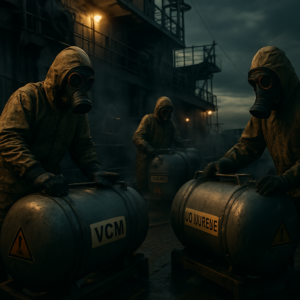 At first glance, vinyl chloride monomer (VCM) is just another chemical in the long list of hazardous cargoes shipped across the world’s oceans. Colorless, with a faintly sweet odor, it doesn’t announce its danger like ammonia’s pungent sting or the visible fumes of benzene. But beneath its unassuming appearance lies one of the most insidious threats in maritime transport—a Group 1 carcinogen, as classified by the International Agency for Research on Cancer (IARC), meaning there is no doubt it causes cancer in humans. For seafarers who handle it, VCM isn’t just a job hazard; it’s a ticking time bomb, one that can detonate without warning in the form of explosions, leaks, or—far worse—slow, irreversible damage to the body.
The Chemistry of a Killer
VCM (C2H3Cl) is a volatile organic compound, a gas at room temperature but typically transported under pressure as a liquefied gas. Its primary use? The production of polyvinyl chloride (PVC), the third-most widely produced plastic in the world. But before it becomes the rigid pipes, medical tubing, or vinyl flooring we encounter daily, it exists in a far more dangerous form—one that demands extreme caution.
- Highly flammable: VCM has a wide flammability range (3.6% to 33% in air), meaning even a small leak can create an explosive atmosphere. Its autoignition temperature is a mere 472°C (882°F), low enough to be triggered by hot surfaces, electrical sparks, or even static discharge.
- Toxic at low concentrations: The Occupational Safety and Health Administration (OSHA) sets the permissible exposure limit (PEL) for VCM at just 1 part per million (ppm) over an 8-hour workday. For comparison, that’s 100 times lower than the PEL for carbon monoxide. At concentrations above 500 ppm, VCM can cause dizziness, nausea, and loss of consciousness within minutes.
- Polymerization hazard: Under certain conditions—particularly when exposed to heat, light, or contaminants—VCM can undergo spontaneous polymerization, a violent, exothermic reaction that generates intense heat and pressure. If unchecked, this can rupture tanks, turning a cargo hold into a bomb.
But the most terrifying property of VCM isn’t its volatility or flammability—it’s its ability to rewrite human DNA. When inhaled, VCM metabolizes in the liver into compounds like chloroethylene oxide and chloroacetaldehyde, which bind to DNA, causing mutations. Over time, these mutations accumulate, leading to a rare and aggressive form of liver cancer called angiosarcoma. Unlike other occupational cancers, which may take decades to develop, angiosarcoma can emerge after just a few years of exposure. It’s a disease with a grim prognosis: most patients die within a year of diagnosis.
More information on Switching to LPG Tankers: A Starter’s Roadmap
Why the IARC Classifies VCM as a Group 1 Carcinogen
The IARC’s classification of VCM as a Group 1 carcinogen—the same category as asbestos, tobacco smoke, and plutonium—isn’t based on animal studies alone. It’s rooted in decades of human tragedy.
In the 1970s, workers at PVC manufacturing plants in the U.S. and Europe began dying from angiosarcoma at rates 400 times higher than the general population. Investigations revealed that many had been exposed to VCM without adequate protection, often working in environments where concentrations exceeded 1,000 ppm. One infamous case involved a worker at a B.F. Goodrich plant in Louisville, Kentucky, who developed angiosarcoma after just four years of exposure. His death, and those of his colleagues, forced the industry to acknowledge the link between VCM and cancer—a link that had been suspected (and ignored) for years.
Today, the evidence is undeniable. The IARC’s 2012 monograph on VCM states:
“There is sufficient evidence in humans for the carcinogenicity of vinyl chloride. Vinyl chloride causes angiosarcoma of the liver and hepatocellular carcinoma. It also causes cancer of the lung, brain, and hematolymphatic system.”
For seafarers, this means that every breath taken near a VCM cargo—whether during loading, unloading, or even routine inspections—carries a risk. And unlike factory workers, who might spend years in the same environment, maritime crews rotate frequently, making long-term exposure harder to track but no less dangerous.
Health Risks: More Than Just Cancer
While angiosarcoma is the most infamous consequence of VCM exposure, it’s far from the only one. The chemical’s toxicity extends to nearly every system in the body, with effects that can manifest immediately or decades later.
- Neurological damage: Acute exposure to high concentrations of VCM can cause vinyl chloride disease, a condition marked by dizziness, headaches, and numbness in the extremities. Chronic exposure has been linked to peripheral neuropathy, a degenerative nerve disorder that can lead to permanent loss of sensation and motor control.
- Liver toxicity: Even at low levels, VCM damages the liver, leading to fibrosis (scarring) and cirrhosis. Workers exposed to VCM have been found to have elevated liver enzymes, a sign of ongoing organ damage.
- Reproductive harm: Animal studies suggest VCM may cause miscarriages and birth defects, though human data is limited. However, given its DNA-damaging properties, reproductive risks cannot be ruled out.
- Immune system suppression: Some research indicates that VCM exposure weakens the immune system, making workers more susceptible to infections and possibly increasing cancer risk.
The insidious part? Many of these effects are cumulative. A seafarer might not notice symptoms after a single voyage, but over years of handling VCM, the damage adds up—often irreversibly.
Real-World Disasters: When VCM Turns Deadly
VCM’s dangers aren’t theoretical. History is littered with incidents where the chemical has turned ships, trains, and storage facilities into disaster zones. Some of the most harrowing examples serve as stark reminders of what happens when safety protocols fail.
The 2023 Ohio Train Derailment: A Wake-Up Call for the Industry
On February 3, 2023, a Norfolk Southern train derailed in East Palestine, Ohio, releasing a toxic plume of VCM and other chemicals into the air. The immediate aftermath was chaos: 1,500 residents were evacuated, and a controlled burn of the VCM—intended to prevent an explosion—sent a black cloud billowing over the town. In the weeks that followed, residents reported headaches, rashes, and dead fish floating in local streams. Independent testing found elevated levels of dioxins—highly toxic compounds formed when VCM is burned—in the soil and water.
But the Ohio derailment wasn’t just a land-based disaster. It exposed a critical flaw in how hazardous cargoes like VCM are transported: the lack of standardized emergency response protocols. Local firefighters, untrained in handling VCM, were left to improvise. The decision to burn the chemical—while preventing an immediate explosion—created a secondary environmental catastrophe. For maritime crews, the lesson was clear: If a VCM leak happens at sea, help may not arrive in time.
The Alva Cape Disaster (1966): A Maritime Nightmare
One of the deadliest VCM incidents in maritime history occurred on June 16, 1966, when the tanker Alva Cape collided with another vessel in New York Harbor. The impact ruptured the ship’s VCM tanks, releasing a cloud of gas that ignited in a massive fireball. 33 crew members died, many from burns or asphyxiation. The explosion was so powerful that it shattered windows a mile away.
The Alva Cape disaster led to major changes in how VCM was transported, including stricter tank design standards and the mandatory use of inert gas systems to prevent polymerization. But even today, seafarers who work on VCM carriers describe a lingering unease. As one chief officer, who requested anonymity, put it:
“You look at the tanks, and you know what’s inside. One wrong move—a valve left open, a gasket failing—and suddenly, you’re in the middle of a fireball. We drill for this, but when it happens for real, there’s no room for error.”
The Bow Mariner Explosion (2004): A Preventable Tragedy
In February 2004, the chemical tanker Bow Mariner was offloading VCM in the Chesapeake Bay when a spark—likely from static electricity—ignited the cargo. The resulting explosion tore the ship apart, killing 21 of the 27 crew members. Investigators later found that the ship’s inert gas system, designed to flood the tanks with nitrogen to prevent polymerization, had been disabled to save time during offloading.
The Bow Mariner disaster was a stark reminder that human error—not just mechanical failure—is often the weak link in VCM transport. It also highlighted a troubling industry trend: the pressure to cut corners. As one survivor recounted:
“We were behind schedule. The charterer wanted the cargo offloaded fast. So the chief officer made the call to skip the nitrogen purge. He didn’t think it would matter. That decision cost 21 lives.”
The Challenges of Transporting VCM: A Seafarer’s Perspective
For the crews who transport VCM, the job is a constant balancing act between speed, safety, and survival. The chemical’s properties demand specialized equipment, rigorous protocols, and a level of vigilance that can be exhausting over long voyages. Yet, despite the risks, many seafarers feel that the industry still doesn’t take VCM seriously enough.
1. Volatility and Flammability: The Ever-Present Threat
VCM’s low flash point (-78°C / -108°F) means it can ignite from the slightest spark—even from static electricity generated by the cargo itself. To mitigate this, ships use:
- Inert gas systems: Nitrogen is pumped into the cargo tanks to displace oxygen, reducing the risk of explosion. But these systems require constant monitoring. A single failure in the nitrogen supply can turn a tank into a bomb.
- Static-dissipative coatings: Tanks are lined with materials that prevent static buildup, but these coatings degrade over time, requiring regular inspection.
- Explosion-proof equipment: All electrical systems in VCM cargo areas must be intrinsically safe, meaning they can’t produce sparks. Even a faulty light switch can be deadly.
Yet, despite these precautions, accidents still happen. In 2019, a VCM carrier in the Port of Rotterdam experienced a near-miss when a static discharge ignited vapors during tank cleaning. The crew managed to extinguish the fire, but the incident underscored how thin the margin for error really is.
2. Polymerization: The Invisible Time Bomb
VCM’s tendency to polymerize is perhaps its most unpredictable hazard. When it does, the reaction generates heat and pressure, which can rupture tanks. To prevent this, ships use:
- Inhibitors: Chemicals like phenol are added to VCM to slow polymerization, but they’re not foolproof. If the inhibitor depletes or the cargo is contaminated, the reaction can still occur.
- Temperature control: VCM must be kept below 30°C (86°F) to minimize polymerization risk. This requires constant cooling, which adds to operational costs.
- Pressure relief systems: Tanks are equipped with safety valves to vent excess pressure, but if the system fails, the results can be catastrophic.
One third officer, who has worked on VCM carriers for a decade, described the anxiety of monitoring these systems:
“You’re constantly checking the temperature, the pressure, the inhibitor levels. If something starts to go wrong, you’ve got minutes—maybe seconds—to react. And if you’re in the middle of the ocean, there’s no one to call for help.”
3. Personal Protective Equipment (PPE): A False Sense of Security?
Seafarers who handle VCM are required to wear PPE, including:
- Chemical-resistant suits: Typically made of materials like Tyvek or butyl rubber, these suits are designed to protect against liquid and vapor exposure.
- Self-contained breathing apparatus (SCBA): For high-risk operations like tank entry or emergency response, crews must wear SCBA, which provides clean air from a tank.
- Gas detectors: Portable monitors alert crews to VCM leaks, but they’re only as good as their calibration. A faulty detector can give a false sense of security.
Yet, many seafarers question whether PPE is enough. A survey of 200 maritime workers conducted by the International Transport Workers’ Federation (ITF) in 2022 found that:
- 68% of respondents felt their PPE was inadequate for VCM handling.
- 45% reported experiencing symptoms of VCM exposure (headaches, dizziness, nausea) despite wearing PPE.
- 32% admitted to removing PPE during operations to “get the job done faster.”
One able seaman, who asked not to be named, explained the dilemma:
“The suits are hot, they’re bulky, and they make it hard to move. When you’re working a 12-hour shift in the tropics, you start to sweat, the mask fogs up, and you just want to take it off for a second. But that second is all it takes.”
Regulatory Gaps: Why the Industry Is Still Playing Catch-Up
Despite the well-documented risks, the maritime industry’s approach to VCM transport remains reactive rather than proactive. Regulations exist, but they’re often inconsistently enforced, and loopholes allow companies to prioritize profit over safety.
1. The IMO’s VCM Standards: A Minimum, Not a Maximum
The International Maritime Organization (IMO) sets global standards for VCM transport under the International Bulk Chemical Code (IBC Code). These include:
- Requirements for double-hulled tankers to prevent leaks in collisions.
- Mandates for inert gas systems and temperature control.
- Guidelines for PPE and emergency response.
But the IBC Code is a minimum standard. Many countries—and companies—go no further. For example:
- The U.S. Coast Guard requires VCM carriers to have emergency response plans, but these plans are often generic, with little specific guidance for VCM incidents.
- The European Union’s REACH regulations classify VCM as a substance of very high concern, but enforcement varies by country.
- In some developing nations, VCM is transported with little to no oversight, putting crews at even greater risk.
2. The Nitrogen Purge Debate: Cost vs. Safety
One of the most contentious issues in VCM transport is the use of nitrogen purging. The process involves flooding cargo tanks with nitrogen to prevent polymerization and explosions, but it’s expensive and time-consuming. Some companies argue that modern inhibitors make nitrogen purging unnecessary, while safety advocates insist it’s non-negotiable.
A 2021 report by the Oil Companies International Marine Forum (OCIMF) found that:
- 30% of VCM carriers did not use nitrogen purging during loading/unloading.
- 15% of ships had inert gas systems that were not properly maintained.
- 22% of crews reported being pressured to skip nitrogen purging to save time.
One chief engineer, who has worked on VCM carriers for 15 years, described the industry’s attitude:
“The companies know the risks, but they also know that nitrogen costs money. So they do the bare minimum. They’ll say, ‘We’ve never had a problem before,’ right up until the day they do.”
3. The Lack of Long-Term Health Monitoring
Perhaps the most glaring regulatory gap is the absence of mandatory health monitoring for seafarers exposed to VCM. Unlike workers in PVC plants, who are often subject to regular medical screenings, maritime crews receive little to no follow-up after handling VCM.
A 2020 study published in the Journal of Occupational Medicine found that:
- Less than 20% of seafarers who had worked with VCM had ever been screened for liver cancer or neurological damage.
- Over 50% of crews reported that their companies did not provide information on the long-term health risks of VCM.
- Only 12% of ships had protocols for tracking crew exposure over time.
This lack of oversight means that many seafarers won’t know they’ve been harmed until it’s too late. As one retired captain, who was diagnosed with liver fibrosis after decades of VCM transport, put it:
“I spent 30 years on those ships, and no one ever told me I should get checked. By the time I found out, the damage was done. The industry treats us like we’re disposable. And maybe we are.”
Industry Debates: Can Stricter Standards Prevent the Next Disaster?
The Ohio derailment and other high-profile VCM incidents have reignited debates over whether current safety standards are sufficient—or even relevant in an era of larger ships, faster turnarounds, and increasing pressure to cut costs. Some of the most contentious questions include:
1. Should VCM Be Banned from Maritime Transport?
Environmental groups like Greenpeace and the Basel Action Network have called for a global ban on VCM shipping, arguing that the risks outweigh the benefits. They point to alternatives like bio-based plastics and argue that the PVC industry should invest in safer production methods.
However, the maritime and chemical industries counter that:
- VCM is essential for modern infrastructure (PVC is used in pipes, medical devices, and construction materials).
- A ban would disrupt global supply chains, leading to shortages and higher costs.
- With proper safeguards, VCM can be transported safely.
The debate often comes down to a simple question: How many lives is VCM worth?
2. Should Nitrogen Purging Be Mandatory?
As mentioned earlier, the use of nitrogen purging is one of the most divisive issues in VCM transport. Proponents argue that it’s the only reliable way to prevent polymerization and explosions. Opponents say it’s too expensive and that modern inhibitors make it unnecessary.
A 2022 proposal by the National Institute for Occupational Safety and Health (NIOSH) recommended making nitrogen purging mandatory for all VCM operations. The proposal was met with fierce resistance from shipping companies, who argued that the costs would be prohibitive.
One industry consultant, who works with major chemical shippers, offered a blunt assessment:
“The companies don’t want to spend the money. They’ll say, ‘We’ve been doing this for decades without nitrogen, and we’ve never had a problem.’ But that’s like saying, ‘I’ve been driving without a seatbelt for 20 years, and I’ve never crashed.’ Eventually, your luck runs out.”
3. Should Crews Receive Hazard Pay for VCM Transport?
Given the risks, some seafarers’ unions have pushed for hazard pay for crews who handle VCM. The argument is simple: if the job is dangerous, the workers should be compensated accordingly.
However, many shipping companies resist this idea, fearing it would:
- Increase operational costs.
- Set a precedent for other hazardous cargoes.
- Discourage crews from taking VCM assignments (which are already hard to fill).
A 2023 survey by the Nautilus International union found that:
- 78% of seafarers believed they should receive hazard pay for VCM transport.
- Only 12% of companies currently offer any form of additional compensation.
- 40% of crews said they would refuse a VCM assignment if given the choice.
One second officer, who has worked on VCM carriers for eight years, summed up the frustration:
“We’re the ones taking the risk. We’re the ones who could end up with cancer 20 years from now. But the companies act like we’re just another cargo. Hazard pay wouldn’t make the job safer, but at least it would show they give a damn.”
The Human Cost: Stories from the Front Lines
Behind the statistics, regulations, and industry debates are the real people who transport VCM—people who have seen its dangers firsthand and live with the consequences every day.
“I Still Dream About the Smell” – A Chief Officer’s Story
Captain Elias M., a 45-year-old chief officer from the Philippines, has worked on VCM carriers for 18 years. In 2017, his ship experienced a minor leak during a voyage from Rotterdam to Singapore. The crew followed protocol, donning PPE and sealing the area, but Elias was exposed to VCM vapors for less than a minute before the leak was contained.
“I didn’t think much of it at the time,” he says. “I had a headache for a few days, but that was it. Then, about a year later, I started feeling off. My hands would go numb. I’d get dizzy for no reason. I went to the doctor, and they ran some tests. That’s when they found the liver damage.”
Elias was diagnosed with early-stage liver fibrosis, a condition that can progress to cirrhosis or cancer. He’s now on medication and undergoes regular screenings, but the experience has left him with a deep sense of unease.
“I still dream about the smell of VCM. It’s sweet, almost like perfume. But now, every time I smell it, I think, Is this the time it kills me?”
Elias no longer works on VCM carriers. He now transports less hazardous cargoes, but he worries about the crews who still do.
“The companies will tell you it’s safe if you follow the rules. But the rules are written by people who’ve never set foot on a ship. They don’t know what it’s like to work with this stuff day in and day out. They don’t know what it’s like to wonder if today is the day you get sick.”
“We Were Lucky” – A Survivor’s Account of the Bow Mariner Explosion
In 2004, Able Seaman Carlos R. was one of the six survivors of the Bow Mariner explosion. He was off-duty in his cabin when the blast occurred, but the force of the explosion threw him against a bulkhead, fracturing his arm and ribs.
“I remember the heat first,” he says. “It was like standing in front of an oven, but a thousand times worse. Then the smoke—thick, black, choking. I couldn’t see anything. I just started running, but I didn’t know where I was going. I thought I was going to die.”
Carlos managed to reach a lifeboat and was rescued by a passing vessel. Of the 21 crew members who died, some were his closest friends.
“We were lucky,” he says, though his tone suggests he doesn’t believe it. “Lucky to be alive. But what about the next crew? What about the next ship? The industry doesn’t learn. They just move on.”
Carlos left the maritime industry after the disaster. He now works as a safety instructor, teaching crews how to handle hazardous cargoes. But he admits that even with all the training in the world, some risks can’t be eliminated.
“You can have all the PPE, all the drills, all the nitrogen purging in the world. But at the end of the day, VCM is a killer. And one day, it’s going to kill again.”
The Road Ahead: Can the Industry Change?
For all its dangers, VCM isn’t going away. The global PVC market is projected to grow by 3.5% annually through 2030, driven by demand in construction, healthcare, and consumer goods. This means more VCM will be shipped, more crews will be exposed, and—unless something changes—more disasters will occur.
The question is: What will it take for the industry to act?
Some possible steps include:
- Stricter enforcement of existing regulations: Many VCM incidents occur because companies cut corners. Stronger penalties and more frequent inspections could help.
- Mandatory nitrogen purging: The technology exists to make VCM transport safer. The industry just needs to use it.
- Better health monitoring for crews: Seafarers exposed to VCM should receive regular medical screenings, paid for by their employers.
- Hazard pay and better training: If companies won’t eliminate the risks, they should at least compensate crews for taking them.
- Investment in alternatives: The long-term solution may be to reduce reliance on VCM altogether, through bio-based plastics or other innovations.
But real change will require something more fundamental: a shift in mindset. For too long, the maritime industry has treated VCM—and other hazardous cargoes—as just another commodity. The crews who transport it have been treated as disposable. Until that changes, the silent carcinogen will continue to claim lives, one voyage at a time.
As Captain Elias put it:
“We’re not machines. We’re not expendable. We’re human beings. And we deserve better than to be poisoned for a paycheck.”