

Crude vs. Product Tankers: The Two Faces of Oil Shipping
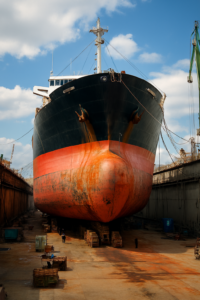 At first glance, all oil tankers might seem alike—massive, slow-moving vessels hauling liquid energy across the world’s oceans. But beneath the surface, the differences between crude tankers and product tankers are as stark as the cargo they carry. One transports the raw, unrefined lifeblood of the global economy; the other delivers the finished fuels that power cars, planes, and industries. Their roles, designs, and even their routes couldn’t be more distinct. Let’s break down what sets them apart—and why both are indispensable to the oil trade.
The Cargo: Black Gold vs. Refined Fuels
The most fundamental difference lies in what these ships carry. Crude tankers are built to transport unprocessed crude oil—the thick, dark, and often sulfurous liquid extracted straight from oil fields. This cargo is a complex mix of hydrocarbons, impurities, and varying densities, which means it requires minimal handling during transit. Once loaded, crude oil is simply stored in vast tanks until it reaches a refinery, where it’s transformed into usable products like gasoline, diesel, or jet fuel.
Product tankers, on the other hand, carry the end results of that refining process. Their cargo is already processed, purified, and ready for consumption—think gasoline for your car, diesel for trucks, jet fuel for airplanes, or even heating oil for homes. Unlike crude, these products are highly specialized. Gasoline, for example, has different octane ratings, while diesel comes in various sulfur content levels (ultra-low sulfur diesel, or ULSD, is now the global standard). This means product tankers must handle multiple types of cargo simultaneously, often on the same voyage, without any cross-contamination.
To put it simply: crude tankers move the ingredient; product tankers deliver the finished product.
More information on Handling Hazardous Cargo: VCM, Butadiene & Ammonia Risks
Size and Capacity: Why Crude Tankers Dominate the Seas
If you’ve ever seen a tanker so large it dwarfs the ships around it, chances are it was a crude carrier. These vessels are the heavyweight champions of the maritime world, designed to move millions of barrels of oil in a single trip. Their size isn’t just for show—it’s a matter of economics. Transporting crude oil over long distances is only cost-effective if you move it in massive quantities, which is why crude tankers are built to be as big as physically possible.
Here’s a quick breakdown of the size classes, measured in deadweight tonnage (DWT)—a term that refers to the total weight a ship can carry, including cargo, fuel, and supplies:
- Crude Tankers:
- VLCC (Very Large Crude Carrier): 200,000–320,000 DWT. These are the workhorses of the crude trade, capable of carrying around 2 million barrels of oil. A famous example is the TI Class supertankers, some of the largest ships ever built, with lengths exceeding 380 meters (longer than the Empire State Building is tall).
- Suezmax: 120,000–200,000 DWT. Named for their ability to transit the Suez Canal fully loaded, these tankers typically carry 1 million barrels of crude.
- Aframax: 80,000–120,000 DWT. Smaller but more versatile, these tankers are often used in regions where ports can’t accommodate larger vessels, such as the Black Sea or the Caribbean.
- Product Tankers:
- LR2 (Long Range 2): 80,000–120,000 DWT. The largest product tankers, often used for long-haul voyages of refined fuels.
- MR (Medium Range): 40,000–55,000 DWT. The most common type, handling regional distribution of products like gasoline and diesel.
- Handysize: 15,000–40,000 DWT. Small, nimble, and able to access shallow ports, these tankers are the “delivery trucks” of the oil world, often serving coastal or island markets.
Why the size disparity? Crude oil is typically produced in massive, centralized locations—think the oil fields of Saudi Arabia, the U.S. Permian Basin, or offshore platforms in the North Sea. Moving it efficiently requires economies of scale, which is why VLCCs and ULCCs exist. Product tankers, meanwhile, distribute smaller, more varied cargoes to hundreds of ports worldwide, many of which can’t handle a 300,000 DWT behemoth. Their smaller size allows them to navigate rivers, shallow harbors, and even inland waterways.
Operational Routes: Long-Haul Giants vs. Regional Workhorses
The routes these tankers take reflect their very different roles in the oil supply chain.
Crude tankers are built for long-haul, high-volume voyages. Their primary mission is to transport oil from production hubs to refineries, often crossing entire oceans. Some of the world’s busiest crude routes include:
- Middle East to Asia: The single most important crude trade route, with VLCCs carrying Saudi, Iraqi, and Iranian oil to refineries in China, India, and Japan. A typical voyage from Ras Tanura (Saudi Arabia) to Ningbo (China) takes about 20 days.
- West Africa to Europe/Asia: Nigerian and Angolan crude often heads to European refineries or, increasingly, to India and China.
- U.S. Gulf Coast to Asia: With the U.S. now a major oil exporter, VLCCs load crude in Houston or Louisiana and sail through the Panama Canal to Asia.
These voyages are predictable and repetitive. A VLCC might spend its entire 25-year lifespan shuttling between the same two ports, loading crude in the Persian Gulf and unloading it in Asia, over and over again.
Product tankers, by contrast, operate on shorter, more flexible routes. Their job is to distribute refined fuels from refineries to markets, often within the same region. Some key product trade flows include:
- U.S. Gulf Coast to Latin America: The U.S. is the world’s top exporter of refined products, with MR and Handysize tankers carrying gasoline and diesel to Mexico, Brazil, and the Caribbean.
- Europe to Africa: European refineries supply gasoline and jet fuel to West African nations, where local refining capacity is limited.
- Singapore to Southeast Asia: Singapore’s massive refineries act as a regional hub, with product tankers supplying fuels to Indonesia, Malaysia, and Vietnam.
Unlike crude tankers, product carriers rarely stick to a single route. A Handysize tanker might load gasoline in Houston, deliver it to Jamaica, then pick up diesel in Trinidad for a voyage to Guyana—all within a month. Their schedules are dynamic and demand-driven, responding to regional fuel shortages, seasonal demand (like heating oil in winter), or even geopolitical disruptions.
Design Adaptations: Why Product Tankers Are the Swiss Army Knives of Shipping
The differences in cargo and routes lead to fundamental design differences between crude and product tankers.
Crude tankers are, in many ways, simpler ships. Their primary design consideration is volume. Since they carry a single type of cargo (or occasionally two compatible grades of crude), their tanks are large and few. A VLCC might have just 15 to 20 massive tanks, each holding hundreds of thousands of barrels. The focus is on maximizing capacity while keeping construction costs low. Crude tankers also have less sophisticated pumping systems—after all, you don’t need precision when you’re moving millions of barrels of the same sticky black liquid.
Product tankers, however, are built for versatility. Their defining feature is segregated tanks—a term that simply means the ship has multiple, completely separate compartments to carry different types of cargo at the same time. Why? Because a single voyage might require transporting:
- Gasoline (high octane, low sulfur)
- Diesel (ultra-low sulfur, or ULSD)
- Jet fuel (highly refined, with strict contamination limits)
- Heating oil (a different grade of diesel)
Mixing these products—even in tiny amounts—can ruin an entire cargo. That’s why product tankers have dozens of smaller tanks (an MR tanker might have 30 or more), each with its own dedicated piping and pumping system. This segregation allows a single ship to serve multiple customers in different ports, dropping off gasoline in one location and diesel in another, all on the same trip.
Another key adaptation is coating and cleaning. Crude oil is relatively forgiving—it doesn’t react with steel, and minor contamination isn’t a dealbreaker. Refined products, however, are highly sensitive. Jet fuel, for example, must be completely free of water or impurities, or it could clog an airplane’s engines. To prevent contamination, product tankers often have epoxy-coated tanks (a smooth, non-reactive surface) and advanced cleaning systems to purge residues between cargoes.
Economic and Logistical Roles: How Each Fits Into the Global Oil Machine
Crude and product tankers aren’t just different ships—they play completely different roles in the global oil supply chain, each with its own economic logic.
Crude tankers are the arteries of the oil world. Their job is to move raw material from where it’s abundant (and cheap) to where it’s needed (and can be processed into higher-value products). This trade is highly centralized—a handful of countries (Saudi Arabia, Russia, the U.S., Iraq) produce most of the world’s crude, while a few key refinery hubs (U.S. Gulf Coast, Rotterdam, Singapore, India) process it. The economics are straightforward: the bigger the tanker, the lower the cost per barrel. That’s why VLCCs dominate long-haul routes—every extra barrel they carry reduces the per-unit shipping cost, making the entire supply chain more efficient.
Take the TI Class supertankers, for example. These 440,000 DWT giants can carry 3.1 million barrels of crude in a single voyage from the Middle East to Asia. At current freight rates (around $10 per barrel for a VLCC), that’s $31 million in revenue per trip. Even after accounting for fuel, crew, and port fees, the economics are compelling—especially when you consider that a single VLCC can make 10-12 round trips per year.
Product tankers, on the other hand, are the capillaries of the oil trade. Their role is to distribute the finished products from refineries to the end users—gas stations, airports, power plants, and industrial facilities. This trade is decentralized and demand-driven. A refinery in Houston might produce gasoline for Mexico, diesel for Brazil, and jet fuel for Europe, all of which need to be delivered to different ports at different times. Product tankers thrive on this complexity, acting as floating warehouses that can adapt to shifting market needs.
The economics here are different, too. Product tankers earn higher freight rates per ton than crude carriers, but their voyages are shorter and more variable. An MR tanker might earn $25-$35 per ton for a gasoline voyage from the U.S. Gulf to Latin America, but it might only carry 40,000 tons at a time. The real money comes from utilization—keeping the ship moving, with minimal downtime between cargoes. A well-run product tanker might complete 20-30 voyages per year, compared to a VLCC’s 10-12.
Another key difference is volatility. Crude tanker rates are tied to long-term contracts and the overall health of the oil market. When oil prices are high, producers ship more, and rates rise. Product tanker rates, however, are more sensitive to regional imbalances. A hurricane in the U.S. Gulf might disrupt refinery output, sending gasoline prices (and tanker demand) soaring in Latin America. A cold winter in Europe could spike demand for heating oil, creating a sudden need for product tankers to redistribute supplies. This unpredictability makes product tanker markets more speculative—and potentially more profitable for those who can navigate the chaos.
Finally, there’s the geopolitical dimension. Crude tankers are often caught in the crosshairs of international politics. Sanctions on Iran or Venezuela, for example, can suddenly remove millions of barrels from the market, forcing tankers to reroute. The Suez Canal blockage in 2021 stranded dozens of VLCCs, causing freight rates to spike. Product tankers, while less exposed to such disruptions, are still affected by localized crises. A refinery fire in Singapore, for instance, could create a shortage of jet fuel in Southeast Asia, sending product tankers scrambling to fill the gap.
In the end, crude and product tankers are two sides of the same coin—one moves the raw material, the other delivers the final product. Neither could exist without the other, and together, they form the invisible backbone of the modern energy economy. Whether it’s a VLCC stretching the limits of naval engineering or a Handysize tanker threading its way through a crowded Caribbean port, each plays a role that no other ship can fill.