

The Composition of LNG: What’s Inside?
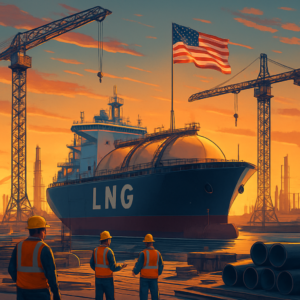 At first glance, liquefied natural gas (LNG) might seem like a simple, uniform substance—just another fuel in a world full of energy sources. But peel back the layers, and you’ll find a carefully engineered liquid with a surprisingly precise chemical makeup. Unlike crude oil, which is a messy cocktail of hydrocarbons, or coal, which is essentially compressed carbon with impurities, LNG is remarkably clean and consistent. That’s no accident. The process of turning natural gas into LNG is as much about purification as it is about cooling, and the result is a fuel that’s 95% methane—with a few key supporting players that make all the difference.
The Core: Methane’s Dominance
If LNG had a star ingredient, it would be methane (CH4). This simple molecule—a single carbon atom bonded to four hydrogen atoms—is the lightest and most abundant hydrocarbon in natural gas. When we say LNG is 95% methane, we’re not rounding up; in many cases, the concentration is even higher, sometimes reaching 97% or more in premium-grade LNG. Why does methane take center stage? A few reasons:
- Energy efficiency: Methane packs a serious punch. Pound for pound, it delivers more energy than heavier hydrocarbons like propane or butane, making it ideal for large-scale energy needs.
- Clean combustion: When methane burns, it produces mostly water vapor (H2O) and carbon dioxide (CO2), with virtually no soot or sulfur oxides. That’s a far cry from diesel or coal, which release a laundry list of pollutants.
- Physical properties: Methane’s low boiling point (-161.5°C or -258.7°F at atmospheric pressure) makes it uniquely suited for liquefaction. Unlike heavier hydrocarbons, it doesn’t require extreme pressures to stay liquid at cryogenic temperatures.
But here’s the thing: raw natural gas straight from the well is nothing like LNG. In its natural state, it’s a gas mixture that can include everything from water vapor and hydrogen sulfide to heavier hydrocarbons like ethane, propane, and butane. Before it can become LNG, it has to go through a rigorous purification process—one that strips away impurities and leaves behind a product that’s almost pure methane.
More information on Dual-Fuel Engines: The Future of Maritime Power
The Supporting Cast: Trace Hydrocarbons and Inert Gases
While methane rules the roost, LNG isn’t a one-molecule show. The remaining 5% (or less) of its composition is a mix of other hydrocarbons and inert gases, each playing a role in the fuel’s behavior. Here’s what else you’ll find inside a tank of LNG:
- Ethane (C2H6): Typically making up 2–5% of LNG, ethane is the next-lightest hydrocarbon after methane. It’s often left in the mix because removing it entirely would add unnecessary cost to the liquefaction process. Ethane also has a slightly higher energy content than methane, so its presence can actually boost the fuel’s overall calorific value.
- Propane (C3H8) and Butane (C4H10): These heavier hydrocarbons usually appear in trace amounts (less than 1%). They’re more valuable as standalone fuels (think propane tanks for grills or butane lighters), so they’re often extracted during processing. However, small quantities may remain in LNG, particularly if the gas comes from fields with higher concentrations of these compounds.
- Nitrogen (N2): An inert gas that doesn’t burn, nitrogen is usually present in less than 1% of LNG. It’s not harmful, but it doesn’t contribute to energy output either. In fact, too much nitrogen can dilute the fuel’s energy density, which is why processors aim to minimize it.
- Trace impurities: Even after purification, LNG might contain minuscule amounts of carbon dioxide (CO2), oxygen (O2), or even helium (He). These are usually in the parts-per-million range and don’t affect performance, but they’re monitored closely to ensure the fuel meets strict quality standards.
This blend of hydrocarbons and inert gases isn’t random. It’s the result of a delicate balance between cost, efficiency, and practicality. Remove too many of the heavier hydrocarbons, and you’re left with a fuel that’s less energy-dense. Leave too many in, and you risk operational issues—like higher boiling points or increased emissions when the LNG is burned.
From Gas to Liquid: The Purification and Liquefaction Process
Turning raw natural gas into LNG is a bit like distilling fine whiskey—it’s all about removing the unwanted and preserving the essential. The journey from wellhead to LNG tanker involves several critical steps, each designed to refine the gas into its purest, most compact form.
Step 1: Pre-Treatment – Removing the “Dirty” Stuff
Before natural gas can even think about becoming LNG, it has to be scrubbed clean. Raw natural gas is often laced with impurities that would wreak havoc on the liquefaction process or, worse, damage equipment. These include:
- Water vapor: Even small amounts of moisture can form ice crystals at cryogenic temperatures, clogging pipelines and valves. The gas is dried using glycol dehydration or molecular sieves to remove every last drop.
- Hydrogen sulfide (H2S) and carbon dioxide (CO2): These acidic gases are corrosive and can freeze into solids during liquefaction. They’re typically removed using amine treating, a chemical process that absorbs them into a solvent.
- Mercury: Yes, mercury. Some natural gas fields contain trace amounts of this toxic metal, which can damage aluminum heat exchangers. It’s removed using activated carbon filters or specialized adsorbents.
- Heavier hydrocarbons: While ethane and propane might stay in the final LNG mix, pentane (C5H12) and larger molecules are usually stripped out. These can be sold separately as natural gas liquids (NGLs) or used as feedstocks for petrochemical plants.
By the time the gas leaves the pre-treatment stage, it’s 99% methane and ethane, with only the lightest hydrocarbons and inert gases remaining. Now, it’s ready for the main event: liquefaction.
Step 2: Cooling to Cryogenic Temperatures
Liquefying natural gas isn’t just about cooling it down—it’s about cooling it down a lot. Methane doesn’t turn into a liquid until it hits -162°C (-260°F) at atmospheric pressure. To put that in perspective, that’s colder than the surface of Pluto. Achieving these temperatures requires a multi-stage refrigeration process, typically using one of three methods:
- The Cascade Process: The oldest and most straightforward method, this involves using three separate refrigeration cycles (usually with propane, ethylene, and methane as refrigerants) to gradually cool the gas in stages. It’s energy-intensive but reliable.
- The Mixed Refrigerant (MR) Process: A more modern approach, this uses a single blend of refrigerants (like methane, ethane, propane, and nitrogen) to cool the gas in a continuous cycle. It’s more efficient than the cascade process but requires precise control over the refrigerant mix.
- The Expander Cycle: This method relies on turboexpanders—devices that rapidly expand high-pressure gas to cool it down. It’s often used for smaller-scale liquefaction plants or as a supplement to other processes.
Regardless of the method, the goal is the same: remove heat from the gas until it condenses into a liquid. As the temperature drops, the methane molecules slow down, their kinetic energy decreases, and they pack together tightly—transforming from a diffuse gas into a dense, transportable liquid.
Step 3: Storage and Transportation – The Payoff
Once liquefied, LNG is stored in cryogenic tanks—heavily insulated vessels designed to maintain its ultra-low temperature. These tanks are essentially giant thermoses, with double-walled construction and a vacuum layer to minimize heat transfer. From there, LNG can be loaded onto specialized tankers for shipment across oceans or stored in onshore terminals for later regasification and distribution.
But why go through all this trouble? The answer lies in volume reduction. When natural gas is liquefied, it shrinks to 1/600th of its original volume. That means a single LNG tanker can carry the same amount of energy as 600 tankers of compressed natural gas (CNG). For countries that rely on imported gas, this is a game-changer. It turns a fuel that was once tied to pipelines into one that can be shipped anywhere in the world.
Raw Natural Gas vs. LNG: A Tale of Two Fuels
To truly appreciate LNG, it helps to compare it to its gaseous predecessor. Raw natural gas and LNG might come from the same source, but they’re fundamentally different beasts. Here’s how they stack up:
| Characteristic | Raw Natural Gas | Liquefied Natural Gas (LNG) |
|---|---|---|
| State | Gas (at standard temperature and pressure) | Liquid (at -162°C / -260°F) |
| Volume | 600x larger than LNG (for the same energy content) | 1/600th the volume of raw gas |
| Energy Density | Low (requires compression for transport) | High (600x more energy per unit volume) |
| Composition | Variable (methane + impurities like CO2, H2S, water, heavier hydrocarbons) | Highly purified (95%+ methane, trace ethane, propane, nitrogen) |
| Transport | Pipeline-dependent (limited by infrastructure) | Shippable globally (via LNG tankers) |
| Safety | Flammable, disperses quickly if leaked | Non-flammable as a liquid (must vaporize to burn), evaporates rapidly if spilled |
This transformation isn’t just about convenience—it’s about unlocking the full potential of natural gas. Raw natural gas is limited by geography. It can only travel as far as pipelines allow, and even then, it’s subject to geopolitical tensions or infrastructure bottlenecks. LNG, on the other hand, is borderless. It can be produced in Qatar, shipped to Japan, regasified, and fed into a power plant—all without a single pipeline connecting the two countries.
Why Methane’s Properties Make It Ideal for Liquefaction
Not all hydrocarbons are created equal when it comes to liquefaction. Methane’s unique properties make it uniquely suited for this process. Here’s why:
- Low boiling point: Methane’s boiling point (-161.5°C) is lower than any other hydrocarbon in natural gas. This means it can be liquefied at temperatures that are achievable with industrial refrigeration, unlike heavier hydrocarbons that would require even colder (and more expensive) conditions.
- High energy-to-weight ratio: Methane is lightweight but energy-dense. A single molecule of methane (CH4) contains four hydrogen atoms for every carbon atom, giving it a high hydrogen-to-carbon ratio. This translates to more energy per unit of CO2 emitted when burned—a win for both efficiency and emissions.
- Stability at cryogenic temperatures: Unlike some hydrocarbons that can solidify or become viscous at low temperatures, methane remains a free-flowing liquid at -162°C. This makes it easy to pump, store, and transport without worrying about clogs or equipment failures.
- Non-toxic and non-corrosive: Methane is chemically inert in its liquid state. It doesn’t react with metals or other materials, which means LNG can be stored in standard cryogenic tanks without risk of corrosion or contamination.
These properties don’t just make methane easy to liquefy—they make it practical. Heavier hydrocarbons like propane or butane can be liquefied too, but they require higher pressures or lower temperatures, which adds complexity and cost. Methane, by contrast, strikes the perfect balance: easy to liquefy, easy to transport, and easy to use.
In the end, LNG’s composition is a testament to human ingenuity. It takes a fuel that’s abundant but geographically constrained and turns it into a global commodity. And at the heart of it all is methane—a simple molecule with extraordinary potential.