

The Rise of Dual-Fuel Technology in Shipping
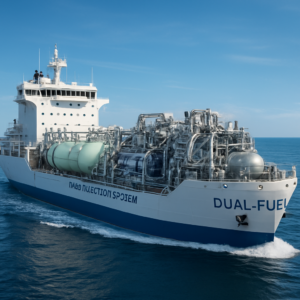 The maritime industry is undergoing one of its most significant transformations in over a century. The once-dominant roar of heavy fuel oil (HFO) engines is gradually being replaced by the quieter, cleaner hum of dual-fuel (DF) systems—a shift driven not just by innovation, but by necessity. As the world tightens its grip on emissions regulations and the clock ticks toward 2030 and 2050 deadlines, shipowners and operators are racing to adopt engines capable of running on both conventional fuels and cleaner alternatives like liquefied petroleum gas (LPG), ethane, and ammonia. This isn’t just a trend; it’s a fundamental reimagining of how ships are powered.
The Push for Cleaner Fuels: Environmental and Regulatory Drivers
The writing has been on the wall for years, but the International Maritime Organization’s (IMO) 2030 and 2050 emissions targets turned that writing into an ultimatum. By 2030, the IMO mandates a 40% reduction in carbon intensity compared to 2008 levels, with a 70% cut by 2050. The long-term goal? Net-zero greenhouse gas (GHG) emissions by or around 2050. For an industry that has historically relied on some of the dirtiest fuels on the planet, these targets are nothing short of revolutionary.
HFO, the lifeblood of shipping for decades, is now public enemy number one. Its high sulfur content and carbon footprint have made it a prime target for regulators. The IMO 2020 sulfur cap, which slashed the allowable sulfur content in marine fuels from 3.5% to 0.5%, was just the first domino to fall. Now, the focus has shifted to carbon emissions, and that’s where dual-fuel engines come into play. These systems offer a bridge between the old world of HFO and the future of zero-carbon fuels, allowing ships to operate on cleaner alternatives without stranding assets in the process.
The environmental case for dual-fuel technology is compelling. LPG, for instance, can reduce sulfur oxide (SOx) emissions by up to 90% and particulate matter by 90-95% compared to HFO. Ethane, another emerging alternative, offers similar benefits, while ammonia—though still in its infancy as a marine fuel—promises zero carbon emissions when produced using renewable energy. These aren’t just incremental improvements; they’re game-changers for an industry under immense pressure to clean up its act.
More information on Toxic Voyages: The Hidden Dangers of VCM and Butadiene
The Numbers Don’t Lie: The Rapid Adoption of Dual-Fuel Vessels
If the regulatory and environmental drivers are the spark, the market’s response is the wildfire. The adoption of dual-fuel engines is accelerating at a pace few could have predicted even five years ago. According to Clarksons Research, as of mid-2024, there are over 1,200 dual-fuel vessels in operation globally, with another 1,500+ on order. That’s a staggering 220% increase in the dual-fuel fleet since 2020, and the numbers keep climbing.
Break it down by fuel type, and the trends become even more revealing:
- LNG (Liquefied Natural Gas): The current frontrunner, with over 900 dual-fuel LNG vessels in operation and 1,200+ on order. LNG’s maturity as a fuel, combined with its widespread availability and existing infrastructure, has made it the go-to choice for early adopters.
- LPG: A rising star, particularly for very large gas carriers (VLGCs) and product tankers. There are now over 200 LPG dual-fuel vessels in operation, with 300+ on order. The ability to use cargo as fuel has made LPG an attractive option for gas carriers, offering both cost savings and emissions reductions.
- Ethane: A niche but growing segment, primarily driven by the ethylene trade. There are around 50 ethane dual-fuel vessels in operation, with 70+ on order. Ethane’s lower carbon footprint compared to HFO makes it an appealing transitional fuel.
- Ammonia: The wildcard. While no ammonia dual-fuel vessels are yet in operation, over 100 are on order, with the first expected to hit the water by 2026. Ammonia’s potential as a zero-carbon fuel has captured the industry’s imagination, even if the technology is still in its early stages.
The sheer volume of orders speaks to the industry’s confidence in dual-fuel technology. Shipowners are no longer asking if they should adopt these systems; they’re asking how fast they can get them on board. And with over 60% of newbuild orders in 2024 specifying dual-fuel engines, the transition is well underway.
The Engine Makers Leading the Charge
Behind every great technological shift, there are the innovators making it happen. In the world of dual-fuel engines, two names stand out: MAN Energy Solutions and WinGD. These manufacturers aren’t just keeping pace with the industry’s demands—they’re setting the agenda.
MAN Energy Solutions, the German-Danish powerhouse, has been at the forefront of dual-fuel innovation for over a decade. Its MAN B&W ME-GI and ME-LGIP engines are among the most widely adopted dual-fuel systems in the world, capable of running on LNG, LPG, ethane, and methanol. The ME-GI engine, in particular, has become the gold standard for LNG carriers, with over 500 engines in operation or on order. MAN’s latest breakthrough, the ME-GA engine, offers a simpler, more cost-effective alternative to the ME-GI, further lowering the barrier to entry for dual-fuel adoption.
Meanwhile, WinGD, the Swiss engine designer, has carved out its own niche with its X-DF and X-EL dual-fuel engines. WinGD’s X-DF engines, which run on LNG and soon ammonia, are designed with simplicity and reliability in mind, making them a popular choice for container ships and bulk carriers. The company’s X-EL engines, which can operate on ethanol and methanol, are also gaining traction as the industry explores a wider range of alternative fuels. With over 300 X-DF engines in operation and 500+ on order, WinGD is proving that dual-fuel technology isn’t just for gas carriers—it’s for the entire maritime fleet.
These manufacturers aren’t just selling engines; they’re selling a vision of the future. And as the industry races to meet IMO targets, their role as enablers of this transition cannot be overstated. Without their innovation, the dual-fuel revolution would still be a pipe dream.
A Transition in Progress
The rise of dual-fuel technology isn’t just about replacing one fuel with another. It’s about rethinking the entire energy ecosystem of shipping—from fuel production and distribution to engine design and vessel operation. The shift from HFO to cleaner alternatives is messy, expensive, and fraught with challenges, but it’s also inevitable. The question isn’t whether dual-fuel engines will dominate the maritime industry; it’s how quickly they’ll get there.
For shipowners, the message is clear: adapt or risk being left behind. For engine manufacturers, the opportunity is unprecedented. And for the planet? It’s a rare chance to turn one of the world’s dirtiest industries into a leader in the fight against climate change. The dual-fuel revolution has only just begun, and its impact will be felt for decades to come.