

The Engines: Built for Endurance and Efficiency
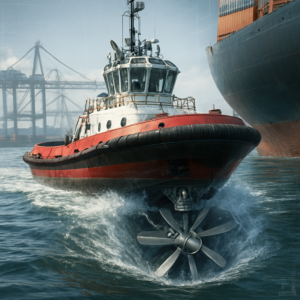 When you step into the engine room of a modern tugboat, the first thing that strikes you is the sheer controlled chaos of it all—pipes snaking overhead, the deep thrum of machinery vibrating through the deck plates, and the sharp tang of diesel in the air. But beneath that industrial symphony lies something far more deliberate: a pair of engines designed not just to work, but to endure. These aren’t the high-revving, temperamental powerplants you’d find in a sports car. Tugboat engines are built like heavyweight boxers—slow, methodical, and devastatingly effective when it counts.
Why Four-Stroke, Medium-Speed Diesels Rule the Tug World
If you’ve ever wondered why tugboats almost universally rely on four-stroke, medium-speed diesel engines, the answer lies in a simple truth: they’re the perfect compromise. Unlike their two-stroke cousins—once common in massive container ships—four-stroke engines offer a far better balance of fuel efficiency, durability, and power delivery. Here’s why they’ve become the industry standard:
- Fuel Efficiency: Four-stroke engines burn fuel more completely, meaning less waste and lower operating costs. For a tug that might spend 300 days a year idling, pushing, or pulling, every drop of diesel counts.
- Durability: These engines are built to run for decades. With proper maintenance, a well-designed tug engine can log 80,000+ hours before needing a major overhaul—that’s nearly nine years of continuous operation.
- Power Band: Medium-speed diesels (typically running between 400–1,000 RPM) deliver torque where it matters most—at low to mid-range speeds. Tugs don’t need to hit 30 knots; they need grunt at 5 knots, and these engines deliver it in spades.
- Maintenance Accessibility: Unlike high-speed diesels, which are packed into tight spaces, medium-speed engines are designed with human-scale maintenance in mind. Their larger components are easier to inspect, repair, and replace—critical when you’re working in a remote port with limited resources.
Take, for example, the MAN 32/44CR, a workhorse engine found in tugs worldwide. This 320mm bore, 440mm stroke beast is a masterclass in engineering trade-offs. It’s not the most compact engine on the market, nor the most powerful per liter of displacement. But it is one of the most reliable, with a reputation for shrugging off the kind of abuse that would cripple lesser machines. Or consider the Wärtsilä 31, which holds the Guinness World Record for the most efficient four-stroke diesel engine. It’s not just about raw power—it’s about squeezing every ounce of performance out of every gallon of fuel.
More information on Handling Hazardous Cargo: VCM, Butadiene & Ammonia Risks
Power Output: Where Horsepower Meets Bollard Pull
Let’s talk numbers. A modern tug engine typically falls in the 2,000–4,000 kW (2,700–5,400 HP) range per unit. For context, that’s roughly the same power output as three of the largest semi-trucks on the road. But here’s the thing about tugboat power: it’s not about speed. It’s about bollard pull—the force a tug can exert when pulling against a fixed point (like a dock or another ship).
So how does engine power translate to real-world pulling strength? The relationship isn’t linear, but as a rough rule of thumb:
- A single 2,700 kW (3,600 HP) engine might produce around 60–70 tons of bollard pull in a well-designed tug.
- Double that with a twin-engine setup, and you’re looking at 120–140 tons—enough to muscle a fully loaded Panamax container ship into a tight berth.
But raw power is only part of the equation. The real magic happens in how that power is delivered. Tug engines spend most of their lives operating at 20–80% load, with sudden spikes when a captain needs to make a split-second maneuver. That’s why these engines are designed with broad torque curves—they need to respond instantly, whether they’re idling at 400 RPM or surging to 900 RPM to fend off a drifting vessel.
Fuel and Emissions: Clean Power Without Compromising Performance
Gone are the days when tugboat engines could belch black smoke with impunity. Today, the maritime industry is under intense pressure to reduce emissions, and tugs—despite their relatively small size—are no exception. The IMO Tier III regulations, which came into full effect in 2021, set strict limits on nitrogen oxides (NOx), sulfur oxides (SOx), and particulate matter. Meeting these standards without sacrificing performance is no small feat, but modern tug engines have risen to the challenge.
Here’s how they do it:
- Selective Catalytic Reduction (SCR): This is the heavy hitter in the emissions-reduction arsenal. SCR systems inject a urea-based solution (AdBlue) into the exhaust stream, where it reacts with NOx to form harmless nitrogen and water. The result? Up to 90% reduction in NOx emissions. The trade-off? You need to carry extra tanks for AdBlue, and the system adds complexity—but for operators in emission-control areas (ECAs), it’s non-negotiable.
- Exhaust Gas Recirculation (EGR): By recirculating a portion of the exhaust gases back into the combustion chamber, EGR systems lower peak combustion temperatures, which in turn reduces NOx formation. It’s a simpler solution than SCR, but it can increase fuel consumption slightly—a trade-off some operators are willing to make for lower upfront costs.
- Fuel Quality: Modern tug engines are designed to run on ultra-low-sulfur diesel (ULSD), which contains no more than 15 parts per million (ppm) of sulfur. This not only cuts SOx emissions but also extends the life of engine components by reducing corrosive byproducts.
Take the Wärtsilä 31, for example. This engine isn’t just efficient—it’s clean. When paired with an SCR system, it can meet Tier III standards while still delivering class-leading fuel economy. That’s a big deal for operators who need to balance environmental compliance with the harsh realities of tugboat economics. After all, a tug that can’t pull its weight isn’t much use, no matter how green it is.
Redundancy and Reliability: Why Two Engines Are Better Than One
Imagine you’re the captain of a tug, and you’re about to guide a 200,000-ton oil tanker into a crowded port. The wind is howling, the current is against you, and the tanker’s captain is nervously watching the clock. Now imagine your only engine suddenly sputters and dies. That’s not just a bad day—it’s a career-ending disaster.
That’s why dual-engine setups are the gold standard in modern tug design. Redundancy isn’t just a nice-to-have—it’s a lifeline. Here’s why:
- Safety: If one engine fails, the other can keep the tug operational—critical when you’re in the middle of a high-stakes maneuver. In some cases, a single engine can even provide enough power to limp home or complete a job, albeit at reduced capacity.
- Operational Flexibility: Tugs often need to switch between high-power modes (e.g., escorting a ship) and low-power modes (e.g., idling at the dock). With two engines, you can run one at full load while the other idles, saving fuel and reducing wear.
- Maintenance: Dual-engine setups allow for rotating maintenance. You can take one engine offline for repairs or overhauls while the other keeps the tug in service. For operators who can’t afford downtime, this is a game-changer.
- Counter-Rotating Propellers: When two engines are configured to rotate in opposite directions, they cancel out the torque effect that can make a single-engine tug pull to one side. This makes the vessel more stable and easier to control—especially in tight spaces.
Consider the MAN 32/44CR in a dual-engine setup. These engines are designed to share the load seamlessly. If one engine is running at 80% load, the other can pick up the slack without missing a beat. And because they’re medium-speed diesels, they can handle the kind of stop-start operation that would destroy a high-speed engine. That’s not just reliability—it’s peace of mind.
Of course, redundancy comes at a cost. Dual-engine setups are heavier, more complex, and more expensive to maintain than single-engine designs. But for tug operators, the trade-off is worth it. Because when you’re pushing a ship that costs hundreds of millions of dollars, failure isn’t an option.