
The Rise of VLAC and VLEC: Why Now?
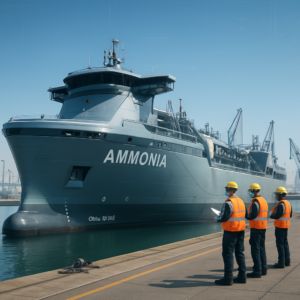 The maritime industry is no stranger to evolution, but the sudden surge in Very Large Ammonia Carriers (VLACs) and Very Large Ethane Carriers (VLECs) feels less like a gradual shift and more like a full-throttle sprint toward the future. These aren’t just bigger ships—they’re vessels built for a world that’s rapidly redefining what it means to move energy. So why now? The answer lies in a perfect storm of market forces, geopolitical upheavals, and an urgent global push toward decarbonization. Let’s break it down.
The Ammonia Revolution: More Than Just a Fertilizer
For decades, ammonia was the quiet workhorse of the agricultural industry—a critical component in fertilizers, but hardly the stuff of maritime headlines. That’s changed. Today, ammonia is being recast as one of the most promising hydrogen carriers in the clean energy transition, and the numbers tell the story.
- Global ammonia demand is exploding. According to the International Energy Agency (IEA), ammonia could account for up to 50% of global hydrogen trade by 2050, with production expected to triple by 2030. This isn’t just about replacing fossil fuels; it’s about creating an entirely new energy ecosystem where ammonia acts as a stable, transportable form of hydrogen—one that doesn’t require cryogenic temperatures or extreme pressure to move.
- Japan and South Korea are leading the charge. Both countries have set aggressive targets for ammonia co-firing in coal power plants, with Japan aiming for 3 million tons per year by 2030 and South Korea targeting 5 million tons. These aren’t distant goals; they’re already driving orders for VLACs, with ports like Yokohama and Pyeongtaek scrambling to upgrade infrastructure to handle the influx.
- The Middle East is betting big. Saudi Arabia’s NEOM Green Fuels project—a $5 billion initiative to produce green ammonia—is just one example of how oil-rich nations are pivoting. ADNOC, for instance, isn’t just ordering VLACs; it’s positioning itself as a global hub for blue and green ammonia, with plans to export 1 million tons annually by 2025 and scale up to 6 million tons by 2030.
But here’s the kicker: ammonia isn’t just a fuel—it’s a bridge. Unlike hydrogen, which requires entirely new supply chains, ammonia can leverage existing infrastructure. Ports, pipelines, and storage tanks built for LPG can be adapted for ammonia with relatively minor modifications. That’s a game-changer for an industry that’s notoriously slow to adopt new technologies.
Ethane: The Unsung Hero of the Petrochemical Boom
If ammonia is the rising star of the energy transition, ethane is the quiet powerhouse fueling the petrochemical industry’s growth. As the primary feedstock for ethylene—used in everything from plastics to synthetic rubber—ethane’s demand has skyrocketed, and VLECs are the vessels making it possible to move this volatile cargo efficiently.
- The U.S. shale revolution changed everything. The surge in ethane production from U.S. shale plays like the Permian Basin and Marcellus turned the country into the world’s largest ethane exporter almost overnight. In 2023 alone, the U.S. exported 1.2 million barrels per day of ethane—nearly double the volume from just five years prior. And where there’s supply, there’s demand: China and India are snapping up U.S. ethane to feed their booming petrochemical industries, with China’s ethylene production capacity expected to double by 2027.
- Europe’s energy crisis accelerated the shift. With Russian gas supplies disrupted, European petrochemical plants have turned to ethane as a cheaper, more reliable alternative to naphtha. Companies like INEOS and Borealis are investing billions in ethane crackers, and VLECs are the linchpin in this new supply chain. Capital Gas, for example, has placed orders for six VLECs to service this growing trade route.
- Size matters—and VLECs deliver. Traditional ethane carriers max out at around 37,000 cubic meters, but VLECs push that to 98,000 cubic meters, slashing transportation costs by up to 30%. That’s not just an incremental improvement; it’s a paradigm shift in how ethane moves around the world.
But ethane’s story isn’t just about economics—it’s also about energy security. For countries like India, which imports 80% of its crude oil, ethane offers a way to diversify feedstocks and reduce reliance on volatile global markets. That’s why companies like Reliance Industries are investing in VLECs to secure long-term ethane supplies from the U.S.
Geopolitics and Decarbonization: The Twin Engines Driving Adoption
The rise of VLACs and VLECs isn’t happening in a vacuum. It’s being propelled by two of the most powerful forces shaping the 21st century: geopolitical realignment and the global race to decarbonize. Let’s start with the geopolitics.
- The U.S.-China trade dynamic is rewriting energy routes. As tensions between the two superpowers simmer, China is aggressively diversifying its energy imports. Ethane from the U.S. is a key part of that strategy, but so is ammonia from the Middle East. VLACs and VLECs are the vessels that make these new trade routes viable, and companies like Synergy Marine Group are capitalizing on the shift. Synergy, which manages one of the largest VLGC fleets in the world, has pivoted hard into VLACs and VLECs, with 12 vessels on order and options for more.
- Russia’s war in Ukraine sent shockwaves through energy markets. Europe’s scramble to replace Russian gas created a gold rush for alternative feedstocks, and ethane was one of the biggest beneficiaries. But it’s not just about Europe—countries like Turkey and Egypt are also ramping up petrochemical production, and VLECs are the vessels making it possible to connect these markets to U.S. ethane supplies.
- The Middle East is no longer just an oil powerhouse. ADNOC’s push into ammonia is a strategic play to future-proof its energy exports. With oil demand expected to peak within the next decade, the UAE is betting that ammonia will be its next big revenue driver. That’s why ADNOC has ordered four VLACs—with plans for more—and is investing in blue ammonia production (ammonia made from natural gas with carbon capture).
Now, let’s talk about decarbonization. The maritime industry is under intense pressure to reduce emissions, and VLACs and VLECs are part of the solution—not just because of what they carry, but how they’re built.
- Dual-fuel engines are the new standard. Both VLACs and VLECs are being equipped with MAN ME-LGIP and ME-GI engines, which can run on liquefied petroleum gas (LPG), ethane, or ammonia. This flexibility is critical because it allows shipowners to adapt to whatever fuel becomes dominant in the coming decades. For example, a VLAC built today could start by carrying LPG, then switch to ammonia as the market matures. That’s a level of future-proofing that traditional single-fuel vessels simply can’t match.
- The IMO’s 2030 and 2050 emissions targets are looming. The International Maritime Organization has mandated a 40% reduction in carbon intensity by 2030 and net-zero emissions by 2050. For shipowners, that means every new vessel has to be cleaner, more efficient, and more adaptable than the last. VLACs and VLECs check all those boxes. Their massive size reduces emissions per ton of cargo, and their dual-fuel capabilities mean they can transition to zero-carbon fuels like green ammonia as those become available.
- Ammonia is a zero-carbon fuel—if it’s green. The catch with ammonia is that most of it today is gray ammonia (made from natural gas without carbon capture) or blue ammonia (made from natural gas with carbon capture). But the real prize is green ammonia, produced using renewable energy. Countries like Australia, Chile, and Namibia are investing heavily in green ammonia projects, and once those come online, VLACs will be the vessels moving this truly zero-carbon fuel around the world.
Key Players and the Race to Scale
So who’s leading the charge in this new era of gas shipping? The usual suspects—companies with deep pockets, technical expertise, and a willingness to bet big on the future. Here’s a breakdown of the major players and their roles in scaling the VLAC and VLEC fleets.
More information on Switching to LPG Tankers: A Starter’s Roadmap
Synergy Marine Group: The VLGC Specialist Turned VLAC/VLEC Pioneer
Synergy Marine Group has long been a dominant force in the Very Large Gas Carrier (VLGC) market, but it’s now making a strategic pivot into VLACs and VLECs. The company’s approach is twofold:
- Leveraging existing expertise. Synergy’s experience with VLGCs—particularly its deep knowledge of dual-fuel engine systems and cargo handling—gives it a competitive edge in the VLAC and VLEC markets. The company is applying those lessons to its newbuilds, ensuring that its vessels are not just bigger, but smarter and more efficient.
- Aggressive fleet expansion. Synergy has 12 VLACs and VLECs on order, with deliveries scheduled through 2026. These vessels are being built at South Korean yards like Hyundai Heavy Industries and Samsung Heavy Industries, which are leading the charge in next-generation gas carrier design. Synergy’s goal? To become the go-to operator for companies looking to transport ammonia and ethane at scale.
Capital Gas: The Ethane Evangelist
Capital Gas has carved out a niche as one of the most aggressive players in the VLEC space. The company’s focus is squarely on ethane, and it’s betting that the petrochemical industry’s hunger for this feedstock will only grow. Here’s how Capital Gas is making its mark:
- Building the largest VLEC fleet in the world. Capital Gas has six VLECs on order, with each vessel boasting a capacity of 98,000 cubic meters. These ships are being built to service the U.S.-to-Asia and U.S.-to-Europe ethane trade routes, with long-term charters already in place with major petrochemical companies.
- Investing in crew training and safety. Ethane is a highly volatile cargo, and handling it requires specialized knowledge. Capital Gas is partnering with maritime academies to develop dedicated training programs for crews, ensuring that its vessels meet the highest safety standards. This focus on human capital is a key differentiator in a market where experienced crews are in short supply.
- Exploring ammonia-ready designs. While Capital Gas is currently focused on ethane, it’s not ignoring the ammonia market. The company is working with shipyards to ensure that its VLECs can be retrofitted for ammonia in the future, giving it the flexibility to pivot as market demands shift.
ADNOC: The Middle East’s Ammonia Ambitions
ADNOC isn’t just ordering VLACs—it’s building an entire ammonia ecosystem. The company’s strategy is a masterclass in vertical integration, and it’s positioning the UAE as a global leader in blue and green ammonia. Here’s how ADNOC is doing it:
- Securing long-term offtake agreements. ADNOC has already locked in multi-year contracts with Japanese and South Korean utilities for blue ammonia, ensuring a steady revenue stream for its VLAC fleet. These deals are critical because they de-risk the investment in newbuilds and production facilities.
- Investing in production capacity. ADNOC is spending $3.8 billion to expand its blue ammonia production at the TA’ZIZ industrial hub, with plans to produce 1 million tons per year by 2025. That’s just the beginning—ADNOC has set a target of 6 million tons per year by 2030, which will require an entire fleet of VLACs to transport.
- Partnering with global energy players. ADNOC isn’t going it alone. The company has formed joint ventures with ADQ, Mitsui, and GS Energy to develop ammonia supply chains, ensuring that its VLACs have diverse and stable cargo sources. This collaborative approach is a smart hedge against market volatility.
Fleet Sizes and Projected Growth: The Numbers Don’t Lie
So how big is the VLAC and VLEC market today, and where is it headed? The numbers paint a picture of rapid, sustained growth—one that’s being driven by the forces we’ve already discussed.
- Current VLAC fleet: As of mid-2024, there are 12 VLACs in operation, with another 30 on order. That’s a 250% increase in just two years. The majority of these vessels are being built in South Korea and China, with delivery dates stretching into 2027.
- Current VLEC fleet: The VLEC market is slightly more mature, with 20 vessels in operation and another 18 on order. The U.S. is the primary driver of this growth, with 80% of VLEC orders tied to the U.S.-to-Asia ethane trade.
- Projected growth: Industry analysts predict that the VLAC fleet will triple by 2030, reaching 100 vessels. The VLEC market is expected to grow more modestly, with a 50% increase to around 50 vessels by the same year. But here’s the kicker: these projections could be conservative. If green ammonia projects come online faster than expected, or if ethane demand in Asia continues to surge, the actual numbers could be much higher.
- Newbuild prices: A VLAC or VLEC doesn’t come cheap. Current newbuild prices range from $120 million to $150 million per vessel, depending on specifications. That’s a 20-30% premium over traditional VLGCs, but shipowners are willing to pay it because these vessels offer long-term flexibility and higher earning potential.
The bottom line? The VLAC and VLEC markets are no longer niche—they’re the future of gas shipping. And with companies like Synergy, Capital Gas, and ADNOC leading the charge, that future is arriving faster than anyone expected.