

The days when internet at sea was a slow, overpriced luxury are officially over. The maritime industry is undergoing a massive digital transformation, and Starlink Maritime is leading the charge.
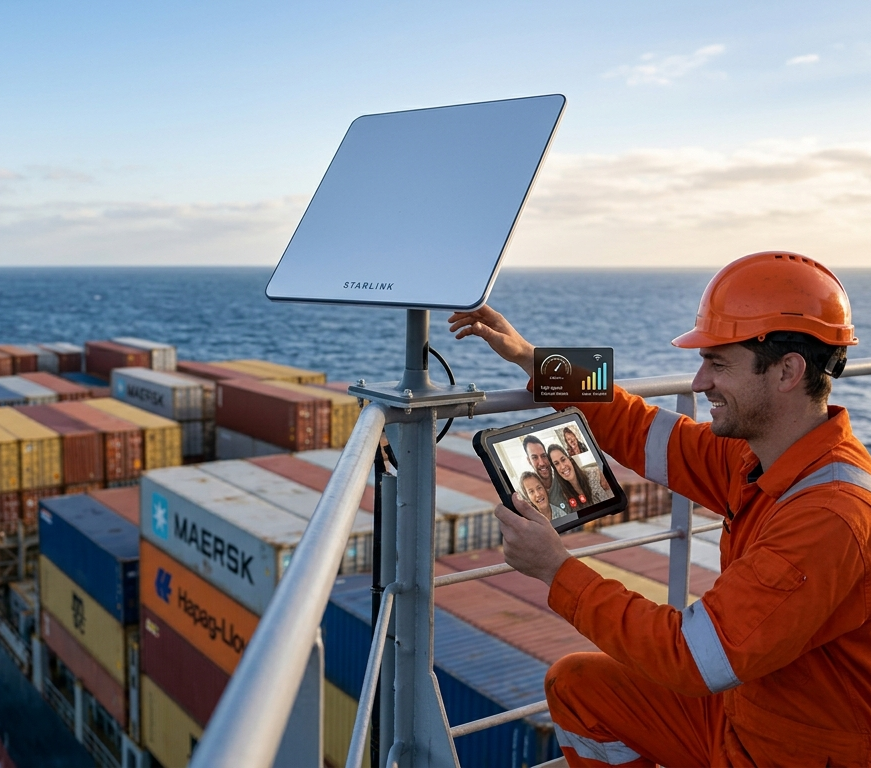
By shifting from traditional, high-latency geostationary satellites (VSAT) to a constellation of Low Earth Orbit (LEO) satellites, vessels can now access high-speed internet that rivals shore-based connections.
Here is how low-latency, high-speed connectivity is reshaping modern shipping operations and crew welfare:
🚀 Key Technological Advantages
- Ultra-Low Latency: Operating just ~550 km above Earth, Starlink drops latency down to 30–60 ms. This enables seamless video calls, instant messaging, and smooth operation of corporate cloud services.
- Broadband Speeds: Crews and operators can experience data transfer speeds frequently exceeding 100–250 Mbps.
- Ruggedized Hardware: The “Flat High Performance” terminals are engineered specifically for motion and harsh environments. With an IP56 rating, they effortlessly withstand extreme temperatures, heavy vibrations, and intense ocean spray.
⚓ Transforming Vessel Operations & Crew Welfare
1. Boosting Crew Morale & Well-being
Long months at sea can take a toll on mental health. Reliable, high-speed internet allows seafarers to stay effortlessly connected with their families, stream content, and manage personal affairs. Investing in Starlink is no longer just a tech upgrade—it is a vital strategy for crew retention and psychological well-being.
2. Real-Time Operational Efficiency
With constant “always-on” connectivity, vessels can stream live weather updates, optimize navigation routes on the fly, and maintain uninterrupted contact with shore management.
3. IoT and Smart Fleet Management
Shipping companies can track cargo sensors and machinery diagnostics in real time. This data-driven approach allows for predictive maintenance and highly optimized voyage planning.
🛠️ Practical Implementation: What to Consider
While Starlink Maritime is a game-changer, seamless integration requires careful planning:
- Line of Sight: Mast shadows, cranes, and superstructure obstructions can cause brief signal drops. Selecting the perfect installation spot on the vessel is critical.
- Smart Network Redundancy: For mission-critical systems, maritime professionals often pair Starlink as the primary channel with backup systems (like Mikrotik routers) to handle traffic distribution and guarantee zero downtime.
- Flexible Data Plans: Regional and global maritime tariffs allow fleet managers to optimize costs based on specific shipping routes and data needs.
🔮 The Bottom Line
Starlink Maritime has officially turned high-speed ocean internet from a luxury into an essential operational standard. It bridges the gap between shore and sea, keeping your fleet efficient and your crew connected.
How has the transition to LEO satellite internet impacted your fleet’s operations? Let’s discuss in the comments! 👇