

Tuesday, August 4
Shadow

Insights

Welcome to INSIGHTS, a curated space at SEAMEN.ES dedicated to the fascinating world beyond the technical daily routine. Here, we dive deep into the culture, history, and curiosities that define the maritime industry.

What you will uncover in our Insights section:

Nautical History & Legends: Discover the stories of legendary voyages, historical turning points, and the traditions that shaped modern shipping.

Fascinating Facts & Curiosities: From mysterious ocean phenomena to surprising trivia about life at sea, we bring you the stories that spark wonder.

Technological Breakthroughs: Learn about the engineering marvels and innovations that are currently transforming the maritime landscape.

Pro Tips & Lifehacks: Practical advice and clever solutions that benefit both maritime professionals and passionate sea travelers.

Our goal is to broaden your horizons and offer a deeper appreciation for the rich heritage and constant evolution of the sea. Whether you are seeking a moment of professional inspiration or just looking to satisfy your curiosity, this is your go-to destination for all things nautical.

Feed your curiosity and explore the secrets of the sea. Join our INSIGHTS community and discover the hidden stories behind the maritime world.

Floating Giants: The Engineering of Semi-Submersible Ships

Floating Giants: The Engineering of Semi-Submersible Ships

Insights
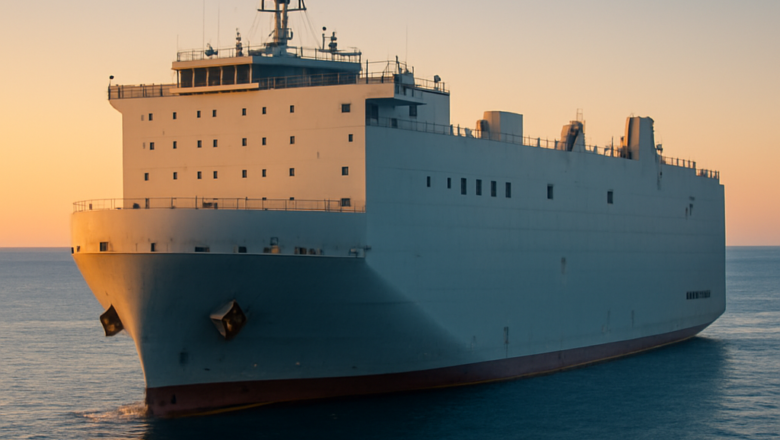
The Anatomy of a Maritime Titan At first glance, a semi-submersible heavy-lift vessel looks like something plucked from the pages of a sci-fi novel—less a ship than a floating industrial fortress. Unlike conventional cargo vessels, which are designed to slice through waves with sleek, streamlined hulls, these maritime titans prioritize raw strength and adaptability over speed or hydrodynamic elegance. Their architecture is a study in controlled contradiction: massive yet precise, rigid yet flexible, built to defy the ocean’s whims while carrying payloads that would make most ships sink like stones. To understand how they function, you must first dissect their three defining structural components—the superstructure, the cargo deck, and the buoyancy towers—each a marvel of engineering in its...
The Logistics of Giants: Loading Oil onto VLCC Supertankers

The Logistics of Giants: Loading Oil onto VLCC Supertankers

Insights
The Arrival: Guiding a 330-Meter Giant to Dock Picture this: a floating skyscraper, longer than the Eiffel Tower laid on its side, inching toward an offshore oil platform with the delicacy of a surgeon’s scalpel. That’s a Very Large Crude Carrier (VLCC) in the final stretch of its journey—a 330-meter behemoth carrying enough crude oil to fuel a small country. But before a single barrel can be pumped aboard, this steel leviathan must perform one of the most nerve-wracking ballets in the maritime world: docking alongside an FPSO (Floating Production Storage and Offloading unit) in the middle of the open ocean. There are no docks here, no calm harbors—just the relentless motion of the sea, the whisper of wind, and the ever-present risk of catastrophe if even a single calculation is off. The ...
From Well to Storage: The Journey of Offshore Oil

From Well to Storage: The Journey of Offshore Oil

Insights
The Raw Reality: What Comes Out of an Offshore Well When a drill bit finally breaches the reservoir thousands of feet beneath the seabed, what rushes to the surface isn’t the glossy black liquid we picture when we think of oil. Instead, offshore wells disgorge a chaotic, pressurized cocktail of hydrocarbons, water, solids, and chemicals—a raw, untamed mixture that bears little resemblance to the refined products that eventually fuel our cars or heat our homes. This is the unfiltered reality of petroleum extraction: a volatile, corrosive, and often unpredictable stream that demands immediate attention before it can even begin its journey through the refining process. The composition of this fluid varies wildly from well to well, but it typically includes the following key components: Cr...
Ocean Megastructures: How Offshore Oil Rigs Work

Ocean Megastructures: How Offshore Oil Rigs Work

Insights
Why Drill for Oil in the Ocean? The ocean isn’t just a vast, empty expanse of water—it’s one of the last great frontiers for energy exploration. Beneath the waves lie some of the planet’s most significant untapped oil reserves, locked away in geological formations that have taken millions of years to form. But why go to the trouble of drilling miles offshore when oil has been extracted from land for over a century? The answer lies in a simple, unavoidable truth: the world’s onshore oil fields are running dry, and the energy demands of a growing global population show no signs of slowing down. The Depletion of Land-Based Oil Fields For decades, the oil industry relied on easily accessible reserves found beneath deserts, forests, and frozen tundras. Fields like Ghawar in Saudi Arabia—the lar...
Safety and Survival on a Supertanker

Safety and Survival on a Supertanker

Insights
Pressure Control: The Role of Mast Risers in Tanker Safety Picture this: a supertanker the length of three football fields, its belly swollen with hundreds of thousands of tons of crude oil, sitting at a terminal while pumps roar to life. In a matter of hours, millions of liters of liquid are either rushing into its tanks or being sucked out. What’s not immediately obvious—but absolutely critical—is the invisible battle happening inside those steel walls. Pressure, that silent and relentless force, is either building up or plummeting, and if left unchecked, it can turn a routine operation into a catastrophe. This is where mast risers come in—not as the most glamorous piece of maritime engineering, but as one of the most vital. These towering structures, often rising 20 meters or more abov...
Inside Tugboat Design: Hull & Auxiliary Systems

Inside Tugboat Design: Hull & Auxiliary Systems

Insights
The Reinforced Hull: Built for Brutal Forces If you’ve ever watched a tugboat at work—muscling a massive container ship into dock or wrestling a stubborn barge through rough currents—you’ve seen raw power in action. But beneath that rugged exterior lies a hull engineered not just for strength, but for survival. Tugboats don’t just push or pull; they collide, grind, and endure forces that would buckle lesser vessels. Their hulls aren’t just built—they’re fortified. The "Deep-Bowl" Shape: Stability When It Matters Most At first glance, a tugboat’s hull looks deceptively simple—short, squat, and almost comically stout compared to sleek cargo ships or streamlined yachts. But that "deep-bowl" design isn’t an aesthetic choice; it’s a calculated response to physics. The wide, rounded bottom and h...
Emergency Fire Pump: Why Weekly Testing Saves You from Diving Services and Drydock

Emergency Fire Pump: Why Weekly Testing Saves You from Diving Services and Drydock

Insights
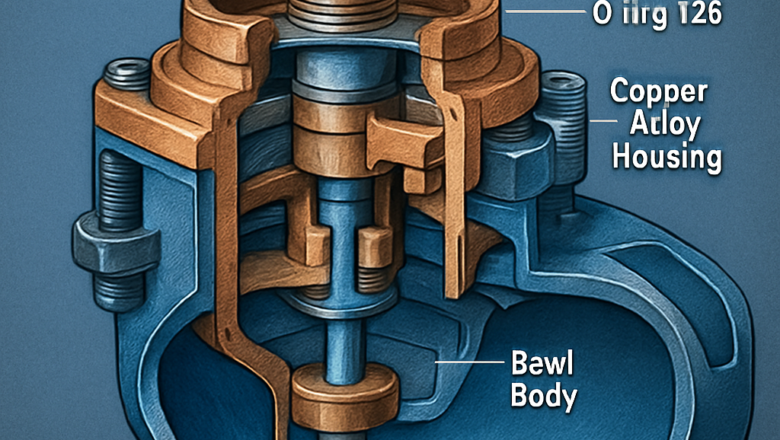
The Emergency Fire Pump is one of the most critical safety systems on any vessel. Its operability is the very first thing PSC, SIRE, and CDI inspectors check. However, in practice, many marine engineers face a situation where the pump simply refuses to deliver water at the most crucial moment. Why does this happen, and how can one simple habit save the shipowner thousands of euros on diving services? Let's break down the technical nuances and real engine room experience. The Main Vulnerability — Its Autonomy The specific design of the emergency fire pump dictates that it operates as a completely independent system. It has a separate suction line, its own non-return valve, and usually a dedicated seachest. Ironically, this exact design feature, intended to ensure reliabilit...
Mastering Maneuverability: The Voith Schneider Propeller

Mastering Maneuverability: The Voith Schneider Propeller

Insights
The Anatomy of a Game-Changer: VSP Design and Mechanics At first glance, the Voith Schneider Propeller (VSP) looks like something plucked from the pages of a steampunk novel—less a propeller and more a mesmerizing dance of metal and motion. But beneath its unconventional exterior lies a masterclass in marine engineering, a system that redefines what propulsion can—and should—be in the most demanding environments. Unlike traditional screw propellers, which rely on brute force and fixed angles, the VSP is a study in precision, adaptability, and mechanical elegance. To understand why it’s a game-changer, we need to dissect its anatomy, piece by intricate piece. The Vertical Revolution: A Disk That Defies Convention The most immediate difference between a VSP and a conventional propeller is it...
Inside Oil Tankers: Engineering the Energy Giants

Inside Oil Tankers: Engineering the Energy Giants

Insights
Crude vs. Product Tankers: The Two Faces of Oil Shipping At first glance, all oil tankers might seem alike—massive, slow-moving vessels hauling liquid energy across the world’s oceans. But beneath the surface, the differences between crude tankers and product tankers are as stark as the cargo they carry. One transports the raw, unrefined lifeblood of the global economy; the other delivers the finished fuels that power cars, planes, and industries. Their roles, designs, and even their routes couldn’t be more distinct. Let’s break down what sets them apart—and why both are indispensable to the oil trade. The Cargo: Black Gold vs. Refined Fuels The most fundamental difference lies in what these ships carry. Crude tankers are built to transport unprocessed crude oil—the thick, dark, and often ...
Power & Precision: The Heart of a Modern Tugboat

Power & Precision: The Heart of a Modern Tugboat

Insights
The Engines: Built for Endurance and Efficiency When you step into the engine room of a modern tugboat, the first thing that strikes you is the sheer controlled chaos of it all—pipes snaking overhead, the deep thrum of machinery vibrating through the deck plates, and the sharp tang of diesel in the air. But beneath that industrial symphony lies something far more deliberate: a pair of engines designed not just to work, but to endure. These aren’t the high-revving, temperamental powerplants you’d find in a sports car. Tugboat engines are built like heavyweight boxers—slow, methodical, and devastatingly effective when it counts. Why Four-Stroke, Medium-Speed Diesels Rule the Tug World If you’ve ever wondered why tugboats almost universally rely on four-stroke, medium-speed diesel engines, th...