

Packing Like a Pro: What to Bring (and What to Leave Behind)
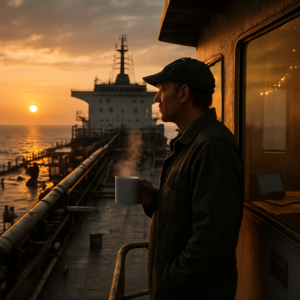 Let me tell you something: packing for a six-month contract isn’t just about throwing clothes into a bag. It’s a high-stakes game of Tetris where the prize is your sanity. Over the years, I’ve learned this the hard way—like the time my suitcase got lost in Dubai during a layover, leaving me in a hotel room with nothing but the clothes on my back and a toothbrush I’d borrowed from the front desk. That was the day I swore I’d never again underestimate the power of a well-packed backpack.
The Great Luggage Debate: Backpack vs. Suitcase
First, let’s settle the eternal question: backpack or suitcase? Officially, you’re allowed 40kg of luggage as a seafarer, but airlines don’t care about maritime rules—they’ll slap you with a 23kg limit faster than you can say “ballast water.” So, you’ve got to play by their rules.
I’m team backpack, and here’s why:
- Mobility: Airports, shuttle buses, and gangways don’t care about your rolling suitcase. A backpack lets you move fast, especially when you’re sprinting to catch a connecting flight in Singapore at 2 AM.
- Durability: Suitcases break. Wheels snap, zippers fail, and handles give up the ghost. A good backpack (I swear by Osprey) can survive monsoons, cargo holds, and the occasional drop from a crane.
- Cabin space: On a tanker, your cabin is tiny. A suitcase takes up precious floor space; a backpack can be stashed under the bed or in a locker.
That said, I don’t travel with just a backpack. I pair it with a medium-sized duffel bag—the kind that fits in the overhead compartment. This combo gives me flexibility: the backpack for essentials, the duffel for everything else. If I’m over 23kg, I can always wear my heaviest jacket or boots to sneak past the airline scales.
The Holy Trinity of Hand Luggage
Here’s the golden rule: your hand luggage is your lifeline. If your checked bag disappears (and it will, at some point), this is what keeps you functional until it resurfaces. Mine is a 40L backpack, and it’s packed like a doomsday kit. Here’s what’s inside:
- Documents: Passport, seaman’s book, visas, contracts, vaccination records, and a USB drive with scanned copies of everything. I keep these in a waterproof pouch—because nothing ruins your day like a soggy passport after a sudden tropical downpour.
- Tech essentials: Laptop, two external hard drives (one for work, one for entertainment), noise-canceling headphones, and a universal adapter. I also throw in a portable SSD with backups of my most important files. Trust me, hard drives fail at sea.
- Clothing: One full change of clothes (underwear, socks, T-shirt, shorts), a lightweight hoodie, and a pair of flip-flops. If my luggage gets lost, I can at least shower and sleep in something clean.
- Toiletries: Travel-sized toothpaste, toothbrush, deodorant, and a bar of soap. I also pack a small first-aid kit—band-aids, painkillers, antiseptic wipes, and seasickness pills. You’d be surprised how often you need these in the first 24 hours.
- Snacks: A few protein bars and a bag of nuts. Airline food is hit or miss, and if you’re stuck in a layover with nothing but overpriced airport sandwiches, you’ll thank me.
I learned this the hard way during a layover in Mumbai. My flight was delayed, then canceled, then rescheduled for the next day. I spent 18 hours in the airport with nothing but the clothes on my back and a half-empty water bottle. Now, my hand luggage is basically a survival kit.
Maximizing the 23kg Limit: The Art of Strategic Packing
So, how do you fit six months of life into 23kg? You don’t. You fit what you’ll actually use, and you leave the rest behind. Here’s how I break it down:
Clothing: Less Is More
- Work clothes: 4-5 sets of coveralls (check if your company provides them—some do, some don’t). I bring two pairs of steel-toe boots (one for work, one for the gym) and a pair of comfortable sneakers.
- Casual clothes: 5-6 T-shirts, 2-3 pairs of shorts, 1-2 pairs of jeans, and a lightweight jacket. I also pack a swimsuit—because if you get a chance to jump off the bow during a rare calm day, you’ll want to take it.
- Cold weather gear: Even if you’re sailing in the tropics, tankers have air conditioning that could freeze a penguin. I bring a fleece hoodie and a beanie for those Arctic-level AC nights.
- Underwear and socks: 10-12 pairs of each. I wash them in the sink and hang them to dry in my cabin—no need to overpack.
Pro tip: Roll your clothes instead of folding them. It saves space and reduces wrinkles. And if you’re really tight on space, wear your bulkiest items (like boots or a jacket) on the plane.
More information on Switching to LPG Tankers: A Starter’s Roadmap
Toiletries: Travel-Sized and Multi-Use
- A microfiber towel (dries fast, takes up no space).
- Travel-sized shampoo, conditioner, and body wash. I also bring a bar of soap—it’s more versatile and lasts longer.
- A razor, nail clippers, and a small mirror. Trust me, you don’t want to rely on the ship’s supply of disposable razors.
- Sunscreen and lip balm. The sun at sea is no joke, and the wind will chap your lips in days.
- Earplugs and an eye mask. Cabins are noisy, and the lights never fully turn off.
What to skip: Hairdryers (most ships have them), full-sized bottles of anything, and anything aerosol. The pressure changes at sea can turn your deodorant into a bomb.
Digital Entertainment: Your 2TB Lifeline
Here’s the truth: you will get bored. Not at first—at first, everything is new and exciting. But after a month, when you’ve watched every sunset the Pacific has to offer and memorized the sound of the engine room, you’ll need something to keep your brain from turning to mush. That’s where your 2TB digital library comes in.
I start curating my library about two weeks before I fly out. Here’s how I do it:
- Movies: I download a mix of new releases, classics, and guilty pleasures. I avoid anything too heavy—no one wants to watch Schindler’s List after a 12-hour watch. I also throw in a few comfort movies—the ones I’ve seen a hundred times but can watch again without thinking. For me, that’s The Big Lebowski and Die Hard.
- TV Shows: I pick 2-3 long-running series (right now, it’s Breaking Bad and The Office) and a few limited series (Chernobyl, True Detective). I avoid anything with too many seasons—if I get hooked on a 10-season show, I’ll burn through it in a month and be left with nothing.
- Books: I load up my Kindle with a mix of fiction and non-fiction. I always bring one massive fantasy series (currently The Stormlight Archive) for when I need to disappear into another world. I also pack a few audiobooks for when I’m too tired to read but can’t sleep.
- Games: I bring a mix of single-player and multiplayer games. Civilization VI is great for solo play, and Among Us or Dota 2 are fun for crew game nights. Warning: Don’t get too into competitive games. I’ve seen guys get so wrapped up in Dota that they start skipping meals. Balance is key.
- Music: I create a few playlists—one for working out, one for relaxing, one for when I need to focus. I also bring a portable speaker for when I want to listen to music in my cabin without headphones.
The 10% Rule: No matter how carefully you curate your library, you’ll only end up watching about 10% of it. The rest will be stuff you thought you’d like but didn’t, or things you’ll save for “later” and never get to. That’s okay. The goal isn’t to watch everything—it’s to have options so you never feel trapped.
Personal Items: The Little Things That Keep You Sane
Your cabin is your home for the next six months, and like any home, it needs a little personality. Here’s what I bring to make it feel less like a metal box and more like my metal box:
- Photos: I print out a few photos of my family and friends and tape them to the wall. It’s a small thing, but seeing their faces every day makes the cabin feel less lonely.
- A favorite mug: The ship’s mess will have mugs, but they’re usually chipped and stained. I bring my own—it’s a small comfort, but it makes my morning coffee feel like my morning coffee.
- A small plant: Okay, this one is hit or miss. I’ve tried bringing succulents, but they usually die within a month. If you’re better at keeping plants alive than I am, go for it. If not, a fake plant works just as well.
- A journal: I write in it every few days—just a few sentences about what I did, how I’m feeling, or what I’m looking forward to. It’s a great way to process the isolation, and it’s fun to look back on later.
- Comfort food: I bring a few snacks from home—things I can’t get on the ship. For me, that’s dark chocolate, spicy chips, and instant ramen. It’s amazing how much a bag of your favorite chips can boost your mood after a long day.
What to skip: Anything that takes up too much space or requires special care. I used to bring a guitar, but it was a pain to store, and I never played it as much as I thought I would. Now, I bring a ukulele instead—it’s smaller, easier to store, and just as fun to play.
The Risks of Overpacking: When More Becomes Less
Here’s the thing about overpacking: it’s not just about the weight. It’s about the mental clutter. Every extra item you bring is something you have to store, organize, and eventually unpack. And when your cabin is the size of a walk-in closet, that clutter becomes overwhelming.
I learned this the hard way on my first contract. I packed like I was moving to a new apartment—clothes for every season, books I’d “probably read,” and enough toiletries to open a pharmacy. By the end of the first month, my cabin looked like a bomb had gone off. I spent more time digging through my stuff than actually using it.
Now, I follow the “one in, one out” rule. If I buy something new on board (like a souvenir or a book from the ship’s store), I have to get rid of something else. It keeps the clutter under control and forces me to think twice about what I really need.
Another risk of overpacking? You forget what you have. I can’t count the number of times I’ve bought something on board (like a new T-shirt or a snack) only to get back to my cabin and realize I already had it. Now, I keep a packing list on my phone and update it every time I use something. That way, I know exactly what I have and what I need to replace.
Final Thoughts: Pack Like You’re Preparing for a Marathon, Not a Sprint
Packing for a six-month contract isn’t about cramming as much as possible into your bag. It’s about curating a life—one that’s portable, adaptable, and resilient. It’s about preparing for the boredom, the loneliness, and the unexpected. And most of all, it’s about making sure that when you step onto that gangway for the first time, you’re not just bringing clothes and gadgets—you’re bringing a piece of home with you.
So, take it from someone who’s been there: pack light, pack smart, and pack for the long haul. Because out here, your bag isn’t just luggage—it’s your lifeline.