

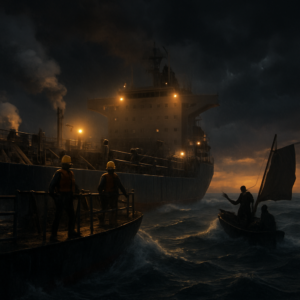
 I still remember the smell of the old Soviet cinema—dusty velvet seats, the faint tang of machine oil from the projector, and the collective gasp of the audience as the screen flickered to life. It was 1979, and I was ten years old, sitting in the fourth row of our local movie theater in a small industrial town, my eyes glued to the grainy image of «Pirates of the 20th Century». For two hours, I was transported into a world of swashbuckling villains, daring escapes, and heroic Soviet sailors outsmarting modern-day buccaneers. The pirates in that film were almost romantic—charismatic, cunning, and, in their own way, almost noble. They wore bandanas, carried cutlasses, and spoke in dramatic, theatrical tones. To my young mind, piracy was a relic of the past, a thrilling adventure confined to the pages of Stevenson’s Treasure Island or the silver screen. The idea that it could ever touch my life seemed as absurd as finding a chest of gold doubloons buried in my backyard.
More information on Switching to LPG Tankers: A Starter’s Roadmap
Fast forward to 2010. I was standing in the engine room of a tanker, my hands greasy from adjusting a fuel pump, when the third mate’s voice crackled over the intercom: «All hands, security alert. Possible pirate skiff approaching from starboard.» My first thought wasn’t fear—it was disbelief. Pirates? Like, actual pirates? The kind with guns and grappling hooks, not the ones from a 1970s Soviet action flick? I wiped my hands on a rag and stepped out onto the deck, squinting against the glare of the Indian Ocean. The sun was a white-hot coin in the sky, and the air smelled of salt and diesel. In the distance, a speck on the horizon grew larger. A small boat, low in the water, cutting through the waves at an alarming speed. My stomach dropped. This wasn’t a drill.
For nine years, I’d worked on merchant ships under foreign flags, sailing from the Black Sea to the Persian Gulf, from Singapore to Rotterdam. I’d heard stories—mostly about petty thieves in Nigerian ports sneaking aboard to swipe paint or mooring lines, or drunken stowaways hiding in cargo holds. But piracy? That was something that happened to other people, in other oceans. The Gulf of Aden, though—we’d all heard the warnings. The news was full of hijacked vessels, ransom demands, and crews held hostage for months in squalid conditions. Still, when you’re in the middle of your routine, checking oil levels and troubleshooting generators, it’s easy to dismiss the threat as something distant, something that won’t happen to you. That day, as the skiff closed in, the reality hit like a rogue wave: this was happening. Now.
The first sign that things were about to go very wrong was the radio silence. The captain, a grizzled Ukrainian with thirty years at sea, ordered all non-essential communications shut down. No chatter, no idle calls to shore. The pirates monitored frequencies, and we couldn’t risk tipping them off that we’d spotted them. Then came the SSAS—the Ship Security Alert System, a so-called «red button» installed under the ISPS Code, which had been in force since 2004. In theory, it was our lifeline: press it, and a silent alarm would shoot straight to the company’s security officer (CSO) in London or Hamburg, triggering a response. In practice? We all knew the truth. By the time the signal reached anyone who could help, the pirates would already be on the bridge, waving their AK-47s in our faces. The red button was a last resort, a Hail Mary. It wasn’t a solution.
The ISPS Code had changed the way we operated. We had security plans, restricted areas, and regular drills. But none of that prepared you for the sound of a speedboat’s engine growing louder, or the sight of armed men standing in the bow, their faces wrapped in scarves, their weapons glinting in the sun. That first time, as the skiff veered away at the last moment—either deterred by our evasive maneuvers or simply choosing an easier target—I felt something I’d never experienced at sea before: raw, primal fear. It wasn’t the fear of a storm or a mechanical failure, where you could fight back with skill and experience. This was the fear of the unknown, of being powerless, of knowing that your life could be decided by a split-second decision from a stranger with a gun.
After that near-miss, everything changed. The romanticized image of piracy I’d carried since childhood—swashbucklers in tricorn hats, treasure maps, and dramatic sword fights—was replaced by something far darker. These weren’t the pirates of the silver screen. They were desperate men, often former fishermen driven to crime by poverty and war, armed with automatic weapons and willing to kill for a payday. The Gulf of Aden wasn’t a playground for adventurers; it was a hunting ground. And we were the prey.
That night, as I lay in my bunk, the ship’s engines humming beneath me, I thought about the contrast between the two versions of piracy I’d known. The first was a fantasy, a story where good always triumphed and the heroes walked away unscathed. The second was the reality: a high-stakes game of cat and mouse, where the stakes were our lives, and the rules were written by men who didn’t care if we lived or died. The ISPS Code and the SSAS button were steps in the right direction, but they weren’t enough. We couldn’t rely on corporate security teams or distant navies to save us. If we wanted to survive, we’d have to save ourselves.
And so, over the next few days, the ship transformed. The easy camaraderie of the crew gave way to a tense, watchful silence. We started preparing in earnest—fortifying doors, stockpiling supplies, and running drills until our responses became instinctive. The fear didn’t disappear, but it sharpened into something useful: vigilance. We weren’t sailors playing at being heroes anymore. We were targets. And for the first time, I understood that the real battle wasn’t against the pirates themselves—it was against the idea of them, the myth that had lulled us into complacency. The Gulf of Aden had stripped away the illusion, and what remained was the truth: in these waters, danger wasn’t just possible. It was inevitable.