
Validation of a Seafarer’s Certificate in Spain: A Step-by-Step Guide
For seafarers looking to work under the Spanish flag or for Spanish shipping companies, the recognition of your foreign maritime certificate is a critical step. This process, known as homologation, is managed by the Ministerio de Transportes (Mitma) through the Dirección General de la Marina Mercante. In this comprehensive guide, we will break down the entire procedure, from gathering documents to dealing with the Capitanía Marítima.
Understanding the Homologation Process
A foreign seafarer’s certificate (CoC – Certificate of Competency) does not automatically grant the right to work on Spanish-flagged vessels. The homologation process verifies that your training meets STCW standards and aligns with Spanish maritime regulations. Once completed, you receive an Endorsement of Recognition (Refrendo de Reconocimiento), allowing you to serve in your certified capacity.
Required Documents for Validation
To initiate the homologation process, you must submit a complete dossier. Missing or improperly formatted documents are the most common cause of delays. The required documents typically include:
- Official Application Form: Available on the Mitma website or at any Capitanía Marítima.
- Passport or NIE: A certified copy of your valid passport or Spanish Foreigner Identity Number (NIE).
- Original Certificate of Competency (CoC): Your national maritime diploma.
- STCW Certificates: Basic safety training, advanced firefighting, survival craft, medical care, etc., relevant to your rank.
- Seaman’s Book (Libreta Marítima): Proving your sea service and experience.
- Proof of Fee Payment (Tasa): The administrative fee must be paid before submission (currently around 40-50 € depending on the specific application).
More information on Fresh Water Generator: Principle, Design, and Maintenance
Translation and Apostille Requirements
Spain strictly requires all official foreign documents to be legally recognized. Your CoC and supporting STCW certificates must carry the Hague Apostille to verify their authenticity. Furthermore, any document not in Spanish must be translated by a Sworn Translator (Traductor Jurado) registered in Spain. Budget approximately 50-80 € per document for sworn translations.
Medical Examination (Reconocimiento Médico)
You must prove you are medically fit for sea service according to ILO/STCW standards. In Spain, this is done through the Instituto Social de la Marina (ISM). You will need to undergo a comprehensive medical check-up at an authorized ISM center. The Spanish medical certificate (Certificado de Aptitud Física) is mandatory and usually costs between 80 € and 120 €.
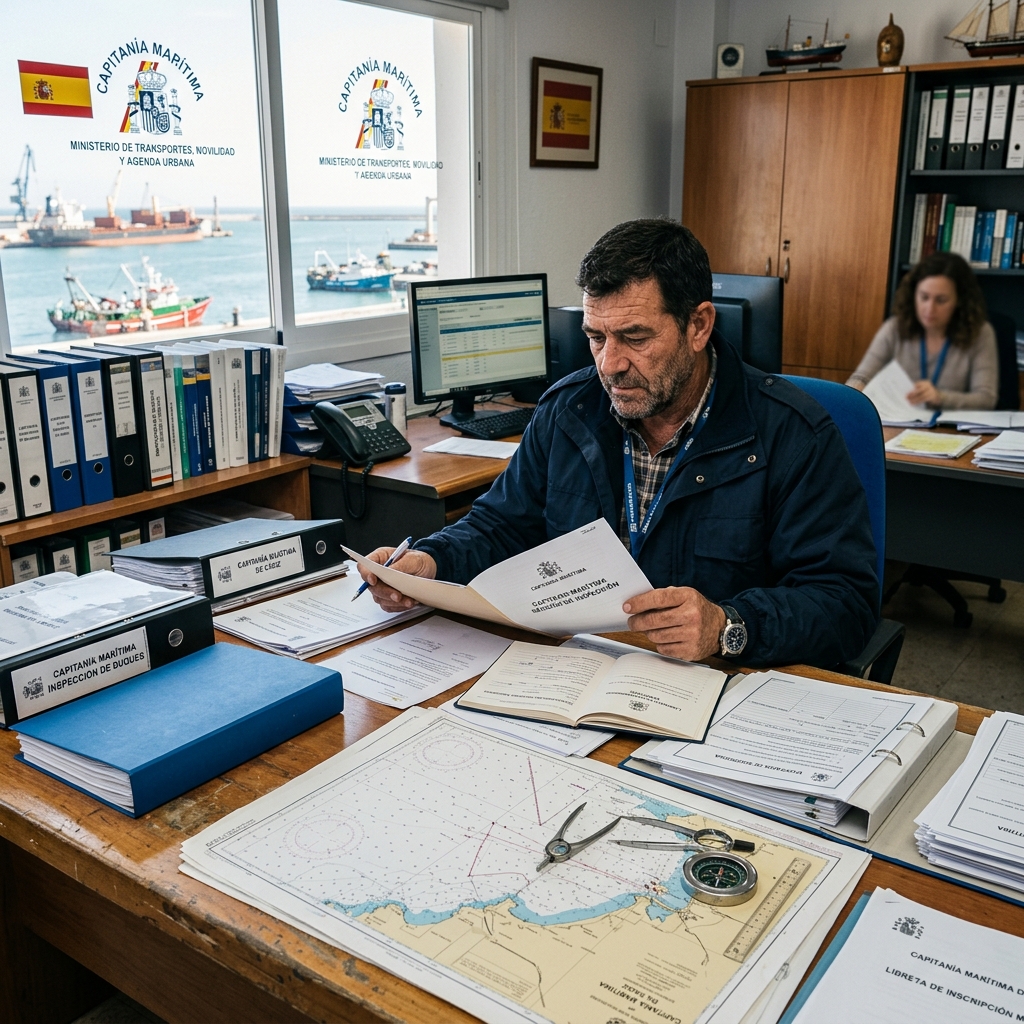
Submitting Your Application: Capitanía Marítima
Once your dossier is complete, you can submit it electronically through the Mitma online portal (requires a Spanish digital certificate or Cl@ve) or in person at a local Capitanía Marítima (e.g., in Alicante, Valencia, or Barcelona). Submitting in person allows the officials to verify the originals and return them to you immediately, keeping only the certified copies.
Processing Time and Potential Pitfalls
The standard processing time for homologation ranges from 1 to 3 months, depending on the workload of the Dirección General de la Marina Mercante. Common pitfalls include:
- Expired STCW Certificates: Ensure all your certificates have at least 6 months of validity remaining.
- Missing Apostille: Without an Apostille, your national diploma will be rejected outright.
- Incorrect Payment: Ensure you pay the exact fee corresponding to the correct “Tasa” form.
By carefully preparing your documents and understanding the requirements of the Spanish maritime authorities, you can navigate the homologation process smoothly and open up new career opportunities in the European maritime sector.