

Monday, August 31
Shadow

Author: Дмитрий

Strait of Hormuz Shipping Traffic Plummets Amid Rising US-Iran Tensions

Latest
Critical Chokepoint Sees Sharp Decline in Vessel TransitsShipping activity in the Strait of Hormuz has dropped to its lowest level since May, with only three commercial vessels recorded crossing the strategic waterway on Thursday, according to latest maritime tracking data.The sharp decline follows a series of Iranian attacks on merchant ships and the subsequent resumption of U.S. military operations in the region. Multiple vessels have either suspended transits or executed abrupt course reversals to avoid the increasingly volatile area.Operational Risks for SeafarersMaritime security analysts warn that the escalating tensions pose significant risks to commercial shipping, including:Heightened threat of vessel seizures or attacksIncreased insurance premiums for transiting shipsPotential de...
Ukrainian Forces Target Russian-Affiliated Oil Tankers in Black Sea Escalation

Latest
Black Sea Operations Intensify as Ukraine Strikes Key Energy AssetsIn a significant escalation of maritime hostilities, Ukrainian naval forces successfully engaged two major oil tankers with ties to Russia in the Black Sea. The strikes reflect the broadening operational scope of both Kyiv and Moscow as they extend their conflict beyond traditional battlefields.The targeted vessels, critical to Russia’s energy logistics, were intercepted using unmanned surface drones, demonstrating Ukraine’s growing capability to disrupt maritime supply chains. This development underscores the strategic importance of the Black Sea as a contested corridor for hydrocarbon transportation.Implications for Global Shipping and Energy MarketsSeafarers and maritime stakeholders should note the heightened risks in t...

Geopolitical Unrest Keeps Oil Prices Volatile Near Multi-Month Highs

Latest
Market Reacts to Red Sea Threat as Middle East Tensions PersistIn early trading on Thursday, oil benchmarks softened marginally yet remained anchored close to their strongest levels since mid-June, reflecting persistent geopolitical risks in key maritime chokepoints.By 1525 UTC, Brent crude futures had eased 19 cents, or 0.2 percent, to settle at USD 84.76 per barrel. The contract had earlier touched USD 85.35, its highest since 14 June, as market participants weighed the potential disruption of Red Sea shipping lanes.Houthi Readiness Raises Supply ConcernsTehran’s call for Yemen’s Houthi movement to prepare for possible closure of the Red Sea corridor has sharpened focus on the Bab el-Mandeb Strait, a critical artery for approximately 6.2 million barrels per day of crude and refined produ...

Iran Directs Houthis to Prepare Red Sea Blockade in Event of U.S. Strikes on Power Grid

Latest
Strategic Warning Issued to Global Shipping CommunityIn a development with significant implications for maritime security and energy transit, Tehran has instructed Yemen’s Houthi forces to prepare for the immediate closure of the Red Sea corridor should the United States launch military action against Iranian critical infrastructure, according to three independent sources briefed on the matter.The directive, communicated earlier this week, positions the Bab el-Mandeb Strait—already a high-risk chokepoint for commercial vessels—as a potential flashpoint in escalating regional tensions. The strait, a 20-nautical-mile-wide passage separating the Horn of Africa from the Arabian Peninsula, facilitates approximately 10% of global seaborne oil trade and serves as a vital artery for containerized ...

Port of Antwerp-Bruges Reports 2.4% Drop in Cargo Throughput for H1 2026

Latest
Throughput Figures Reflect Global Trade PressuresThe Port of Antwerp-Bruges processed 133.9 million tonnes of maritime cargo in the first half of 2026, marking a 2.4 % year-on-year decline.Port authorities attribute the contraction to persistent geopolitical tensions, escalating trade disputes and recurring operational disruptions that have constrained vessel schedules and cargo flows.Detailed breakdowns of commodity segments and terminal performance will be released in the forthcoming half-year report.

Ukrainian Maritime Drone Operations Target 147 Russian-Linked Vessels in 11-Day Surge

Latest
Ukraine Intensifies Black Sea and Sea of Azov Drone StrikesUkrainian defense officials report a significant escalation in unmanned maritime operations, with 147 Russian-affiliated vessels struck in an 11-day period. The campaign has expanded beyond the Sea of Azov, extending deep into the Black Sea to disrupt Russian maritime logistics.The Ukrainian military has not disclosed specific vessel types or tonnage affected but confirmed the strikes targeted both commercial and auxiliary ships supporting Russian naval activities. Analysts suggest the operations aim to degrade resupply capabilities and pressure Moscow’s Black Sea Fleet.Operational Expansion and Tactical ShiftsRecent attacks indicate a shift in Ukrainian tactics, leveraging long-range maritime drones to strike targets farther from ...

EU’s 11th Russia Sanctions Package Stalled Over Greek Arctic LNG Shipping Concerns

Latest
Greek Veto Halts EU Sanctions ProgressThe European Union’s latest round of sanctions against Russia has encountered a significant obstacle, as Greece exercises its veto to protect national maritime interests tied to Arctic LNG transportation.The proposed 11th sanctions package, designed to further restrict Moscow’s energy revenue streams, now faces delays after Athens demanded exemptions for a domestic shipping firm operating specialized ice-class LNG carriers. These vessels, critical for transporting liquefied natural gas from Russia’s Arctic projects, risk becoming non-viable under the new restrictions.Strategic and Economic ImplicationsGreek officials argue that the sanctions, as currently drafted, could render the company’s Arctic-capable fleet obsolete, jeopardizing investments and op...

Escalating Iran-U.S. Hostilities Disrupt Maritime Traffic in the Strait of Hormuz

Latest
Heightened Military Actions Impact Shipping OperationsMaritime security in the Strait of Hormuz has deteriorated further following a fifth consecutive night of U.S. military strikes against Iranian targets. The latest operation included an engagement with a sanctioned oil tanker in proximity to Iran’s primary export terminal, signaling an intensification of the ongoing conflict.Vessel traffic through the critical chokepoint has declined sharply as shipowners and operators reassess risks amid the escalating tensions. Industry analysts report a marked reduction in transits, with many commercial vessels opting for alternative routes or delaying voyages until conditions stabilize.Operational Considerations for SeafarersEnhanced Vigilance: Crews transiting the region must maintain heightened si...

ABB Strengthens Industrial Automation Leadership with $5.5 Billion Acquisition of Rotork

Latest
Strategic Acquisition to Enhance Automation CapabilitiesABB has entered into a definitive agreement to acquire Rotork, a UK-based leader in intelligent flow control solutions, in an all-cash transaction valued at approximately $5.5 billion. The deal, unanimously recommended by Rotork’s Board of Directors, marks a significant expansion of ABB’s automation portfolio and reinforces its position in the industrial automation sector.Key Implications for the Maritime and Industrial SectorsThe acquisition is set to integrate Rotork’s advanced flow control technologies with ABB’s existing automation and electrification solutions. This synergy is expected to deliver enhanced operational efficiency, reliability, and digitalization capabilities—critical factors for maritime operators, shipbuilders, an...
The Logistics of Giants: Loading Oil onto VLCC Supertankers

The Logistics of Giants: Loading Oil onto VLCC Supertankers

Insights
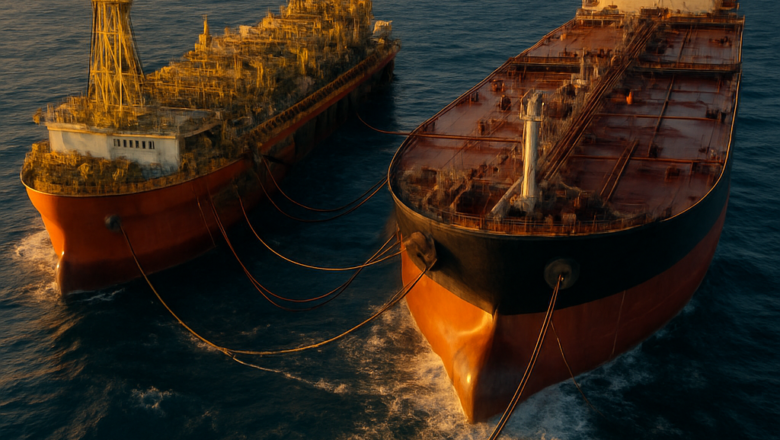
The Arrival: Guiding a 330-Meter Giant to Dock Picture this: a floating skyscraper, longer than the Eiffel Tower laid on its side, inching toward an offshore oil platform with the delicacy of a surgeon’s scalpel. That’s a Very Large Crude Carrier (VLCC) in the final stretch of its journey—a 330-meter behemoth carrying enough crude oil to fuel a small country. But before a single barrel can be pumped aboard, this steel leviathan must perform one of the most nerve-wracking ballets in the maritime world: docking alongside an FPSO (Floating Production Storage and Offloading unit) in the middle of the open ocean. There are no docks here, no calm harbors—just the relentless motion of the sea, the whisper of wind, and the ever-present risk of catastrophe if even a single calculation is off. The ...