
Monday, August 31
Shadow

Author: Дмитрий

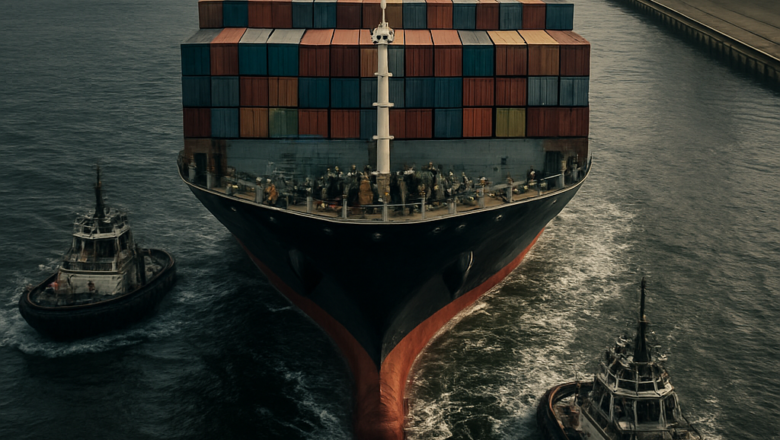
Tugboat Physics: How 300 Tons Controls 200,000 Tons

Tugboat Physics: How 300 Tons Controls 200,000 Tons

Blogs
The Challenge of Inertia: Why Big Ships Can’t Stop on a Dime Picture this: a 220,000-ton container ship slicing through the ocean at 23 knots—roughly 26 miles per hour. To the untrained eye, it might look like a floating skyscraper, serene and unshakable. But beneath that calm exterior lies a physics problem so stubborn it could fill a textbook. That problem is inertia, the unyielding force that keeps objects in motion unless acted upon by an external force. And when that object is a vessel the size of a small city, inertia doesn’t just whisper—it roars. Inertia isn’t just about weight; it’s about momentum, the product of mass and velocity. A Triple E-class ship, the behemoth of modern maritime trade, carries enough momentum at cruising speed to make stopping feel like trying to halt a ru...
USCG Monitors Chinese Icebreakers in U.S. Arctic Waters

Latest
Chinese Research Vessels Navigate Bering Sea En Route to ArcticThe United States Coast Guard (USCG) has confirmed active monitoring of two Chinese research icebreakers transiting northward through the Bering Sea toward Arctic waters. This transit represents the first documented passage of Chinese-flagged icebreakers through this critical U.S. maritime region.USCG officials stated the vessels remain under continuous surveillance as they progress along the designated route. The operation aligns with standard maritime domain awareness protocols, ensuring compliance with international maritime law and U.S. regulations in the Arctic zone.Key Operational Details:Vessel type: Polar-class research icebreakersRoute: Northern transit through Bering SeaObjective: Arctic research operationsUSCG respon...

Heightened Maritime Tensions: US and Iran Target Critical Infrastructure in Retaliatory Strikes

Latest
Escalation in Gulf Region as Strategic Assets HitIn a significant escalation of hostilities, the United States conducted precision strikes on key Iranian infrastructure, including bridges and an airport, on Friday. Tehran swiftly retaliated by targeting a power and desalination facility in Kuwait, marking a dangerous expansion of conflict into civilian-critical assets.Maritime ImplicationsThe latest exchanges raise serious concerns for commercial shipping and regional stability. The Strait of Hormuz, a vital chokepoint for global oil transit, remains under heightened risk as both nations demonstrate willingness to disrupt infrastructure supporting maritime operations.Seafarers operating in the Gulf should maintain strict adherence to security protocols, including:Monitoring NAVAREA warning...

Drone Strike Damages Suezmax Tanker at CPC Terminal in Black Sea

Latest
Incident OverviewA Suezmax-class oil tanker, the MT Nordic Zenith, sustained damage following a drone attack while preparing to load crude at the Caspian Pipeline Consortium (CPC) terminal near Russia’s Black Sea coastline on Friday.Key DetailsThe vessel was under charter for crude oil loading operations at the CPC offshore terminal.Two unmanned aerial vehicles (UAVs) struck the tanker, though the extent of structural or operational damage remains under assessment.No immediate reports of casualties or pollution incidents have been confirmed.CPC officials acknowledged the attack but have not attributed responsibility at this stage.Operational ContextThe CPC terminal, a critical hub for crude exports from Kazakhstan and Russia, has faced heightened security risks amid regional tensions. The ...

EU Adjusts Emissions Trading System to Support Maritime and Industrial Sectors

Latest
Revised ETS Framework Aims to Balance Decarbonization with Operational ViabilityThe European Commission has unveiled a revised proposal for the EU Emissions Trading System (ETS), introducing measures designed to alleviate immediate compliance pressures on energy-intensive industries, including maritime operations.The updated framework extends the timeline for CO₂ emissions allowances, providing vessel operators and industrial stakeholders with additional flexibility to transition toward low-carbon technologies without abrupt financial strain. This adjustment reflects recognition of the sector’s technical and economic challenges in meeting stringent decarbonization targets.Key Provisions for Maritime StakeholdersExtended Compliance Horizon: The proposal delays the phase-out of free emission...

Foreign-Flagged Vessels Hit in Russian Drone Strikes on Ukrainian Black Sea Ports

Latest
Escalation in Black Sea Shipping CorridorsRussian drone strikes targeted two Ukrainian Black Sea port cities on Friday, resulting in the deaths of three seafarers and inflicting damage on foreign-flagged merchant vessels, according to Ukrainian maritime authorities.The attacks mark a significant escalation in Moscow’s campaign to disrupt Ukraine’s critical grain and commodity export routes, further destabilizing regional maritime trade.Casualties and Vessel DamageOfficials confirmed that the strikes occurred in port facilities handling commercial shipping operations. Among the casualties were crew members aboard a Liberian-flagged bulk carrier and a Panamanian-registered general cargo vessel, both of which sustained structural damage.Ukraine’s Southern Operational Command reported that the...

MASS 2024: Atlantic Canada Showcases Strategic Maritime and Arctic Defense Capabilities

Latest
Defense and Technology Leaders Convene in St. John’s for MASS 2024The 13th Maritime and Arctic Security and Safety Conference (MASS), organized by the Atlantic Canada Aerospace & Defense Association (ACADA) and supported by Saab Canada, is now in session in St. John’s, Newfoundland. This year’s event underscores Atlantic Canada’s growing role as a hub for maritime defense innovation and Arctic operational expertise.Key Focus Areas for Industry and Operational ReadinessMASS 2024 brings together senior defense officials, industry stakeholders, and operational commanders to address critical challenges in maritime and Arctic security. Sessions are examining:Advanced surveillance and monitoring technologies for Arctic watersEnhanced domain awareness in contested maritime environmentsInfrast...

Saronic Announces $3 Billion Shipyard Development in Texas to Bolster U.S. Maritime Capacity

Latest
Strategic Expansion in U.S. Shipbuilding InfrastructureSaronic has finalized its decision to establish Port Alpha, a state-of-the-art shipyard, in Brownsville, Texas, marking a significant investment in domestic maritime manufacturing capabilities. The project, valued at over $3 billion, is set to enhance the nation’s shipbuilding capacity with advanced facilities designed for modern naval and commercial vessel construction.Key Project HighlightsLocation: Brownsville, Texas, selected for its strategic access to Gulf Coast shipping lanes and existing maritime infrastructure.Investment: Over $3 billion allocated for construction, equipment, and workforce development.Objective: Address critical gaps in U.S. shipbuilding capacity while incorporating next-generation technologies for efficiency ...

Taihan Expands Fleet with Delivery of Second Cable Laying Vessel, Skandi Connector

Latest
New CLV Enhances Offshore Wind and Subsea Power Cable Installation CapacityTaihan Cable & Solution has taken delivery of its second cable laying vessel (CLV), the Skandi Connector, further bolstering its capabilities in offshore wind farm and subsea power cable installation operations.Built and delivered by DOF Group, the Skandi Connector joins Taihan’s existing fleet, reinforcing the company’s position in the global subsea cable installation market. The vessel is equipped with advanced cable handling systems, dynamic positioning (DP2), and heavy-lift capabilities, ensuring precision and efficiency in complex offshore projects.With the addition of this state-of-the-art CLV, Taihan is poised to meet growing demand for subsea power infrastructure, particularly in the expanding offshore w...
Floating Giants: The Engineering of Semi-Submersible Ships

Floating Giants: The Engineering of Semi-Submersible Ships

Insights
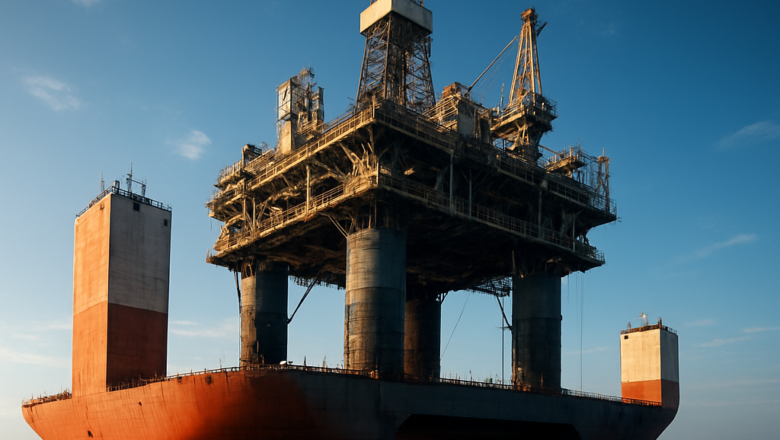
The Anatomy of a Maritime Titan At first glance, a semi-submersible heavy-lift vessel looks like something plucked from the pages of a sci-fi novel—less a ship than a floating industrial fortress. Unlike conventional cargo vessels, which are designed to slice through waves with sleek, streamlined hulls, these maritime titans prioritize raw strength and adaptability over speed or hydrodynamic elegance. Their architecture is a study in controlled contradiction: massive yet precise, rigid yet flexible, built to defy the ocean’s whims while carrying payloads that would make most ships sink like stones. To understand how they function, you must first dissect their three defining structural components—the superstructure, the cargo deck, and the buoyancy towers—each a marvel of engineering in its...