
Wednesday, August 26
Shadow

Author: Дмитрий

Fatal Drone Strike on Panama-Flagged Vessel in Black Sea: One Dead, Two Injured

Latest
Incident OverviewThe Panama Maritime Authority (AMP) has confirmed a deadly drone attack on a Panama-flagged vessel operating in the Black Sea. The assault resulted in one fatality and left two crew members injured.Key DetailsVessel Flag: PanamaLocation: Black SeaCasualties: 1 deceased, 2 injuredNature of Attack: Unmanned aerial drone strikeOfficial ResponseThe AMP is coordinating with relevant maritime security agencies to assess the situation and reinforce protective measures for vessels under its registry. The authority has not released the name of the affected ship or further operational details pending ongoing investigations.Safety AdvisorySeafarers transiting high-risk areas are urged to maintain heightened vigilance, adhere to BMP5 (Best Management Practices) protocols, and ensure r...

Handling Hazardous Cargo: VCM, Butadiene & Ammonia Risks

Handling Hazardous Cargo: VCM, Butadiene & Ammonia Risks

Gas Carriers
VCM: The Silent Carcinogen in Maritime Transport At first glance, vinyl chloride monomer (VCM) is just another chemical in the long list of hazardous cargoes shipped across the world’s oceans. Colorless, with a faintly sweet odor, it doesn’t announce its danger like ammonia’s pungent sting or the visible fumes of benzene. But beneath its unassuming appearance lies one of the most insidious threats in maritime transport—a Group 1 carcinogen, as classified by the International Agency for Research on Cancer (IARC), meaning there is no doubt it causes cancer in humans. For seafarers who handle it, VCM isn’t just a job hazard; it’s a ticking time bomb, one that can detonate without warning in the form of explosions, leaks, or—far worse—slow, irreversible damage to the body. The Chemistry of a K...

Dali Chief Engineer Enters Deferred Prosecution Agreement Over Baltimore Bridge Collision

Latest
Mariner Acknowledges Criminal Violation Under U.S. Ports and Waterways Safety ActFederal authorities have finalized a deferred prosecution agreement with the chief engineer of the MV Dali, the Singapore-flagged containership involved in the catastrophic allision with Baltimore’s Francis Scott Key Bridge in March.The agreement, disclosed in U.S. District Court filings, confirms that the vessel’s senior engineering officer—an experienced Indian national—has admitted to conduct that constitutes a criminal violation of the Ports and Waterways Safety Act. The statute imposes strict operational and reporting obligations on commercial vessels transiting U.S. navigable waters.Key Details of the AgreementDeferred Prosecution Terms: Under the agreement, federal prosecutors will suspend criminal char...

Genco Shipping Secures Board Re-Election in Prolonged Dispute with Diana Shipping

Latest
Dry Bulk Sector Witnesses High-Stakes Corporate ClashThis week, Genco Shipping & Trading Ltd. achieved a decisive victory in its ongoing corporate struggle, as shareholders overwhelmingly re-elected the company’s board of directors. The outcome concludes a months-long confrontation with Diana Shipping Inc., another prominent player in the dry bulk industry.The proxy battle, closely monitored by maritime stakeholders, underscored the intensifying competition for strategic influence within the sector. Genco’s successful defense of its board composition signals a firm stance against external pressures, reinforcing its operational and governance priorities.Implications for Dry Bulk OperationsFor professional seafarers and industry observers, the resolution carries significant weight. The d...

Iran Implements ‘Insurance-Based Toll’ System, Escalating Tensions in the Strait of Hormuz

Latest
Heightened Risks for Commercial Shipping in Critical WaterwayThe security landscape in the Strait of Hormuz has deteriorated further as Iran introduces a new 'toll by insurance' mechanism, targeting commercial vessels transiting the strategic chokepoint. This development compounds existing operational risks for seafarers and shipowners navigating one of the world’s most vital maritime routes.Key Implications for Vessel OperatorsInsurance Premiums Under Pressure: The Iranian regime’s move effectively imposes an unofficial levy on shipping, with insurers likely to pass increased costs to vessel operators. War risk premiums, already elevated due to regional instability, may see further spikes.Operational Disruptions: Masters and crews should anticipate heightened scrutiny, potential delays, a...

Brent Crude Heads for Weekly Loss Amid Middle East Truce and Hormuz Traffic Recovery

Latest
Market OverviewBrent crude futures showed marginal gains early Friday but remained positioned for a significant weekly decline as geopolitical tensions eased and key maritime chokepoints saw improved vessel flow.Price MovementBy 10:55 UTC, Brent crude futures edged up 20 cents (0.25%) to settle at $80.05 per barrel. Despite this modest uptick, the benchmark was on course for an approximate 8% weekly drop—the steepest since early April.Key DriversCeasefire Agreement: A provisional truce between Israel and Hezbollah reduced immediate supply disruption risks in the Eastern Mediterranean and Levantine Basin.Strait of Hormuz: Increased tanker transits through the critical waterway alleviated concerns over potential bottlenecks, with VLCC and Suezmax loadings returning to near-normal levels.Inve...

Post-Blockade Surge: Iranian Crude Exports Rebound with Seven VLCCs Underway

Latest
Iranian Oil Exports Accelerate Following Naval Restrictions EasedProfessional mariners monitoring Middle Eastern crude movements report a marked increase in Iranian oil exports after the United States lifted its extended naval blockade on the Islamic Republic’s key loading terminals.Seven very large crude carriers (VLCCs) have departed Iranian ports in the past 48 hours, signaling a rapid rebound in export activity. Industry tracking platforms confirm that the vessels, each capable of carrying approximately two million barrels, are now fully laden and en route to international markets.This surge contrasts with reduced traffic observed at neighboring export hubs, where vessel movements have slowed in recent days. Analysts attribute the divergence to pent-up demand and logistical repositioni...

NYK Group’s ICO Activates Belgium’s Inaugural Shore Power System for RoRo Vessels at Zeebrugge

Latest
Shore Power Milestone for European RoRo OperationsInternational Car Operators (ICO), a subsidiary of Japan’s NYK Group, has officially commissioned Belgium’s first shore power installation tailored for roll-on/roll-off (RoRo) tonnage at the Port of Zeebrugge.The system completed a rigorous testing programme earlier this month and has now entered full commercial service, enabling berthed RoRo vessels to switch off auxiliary engines and draw clean electrical power from the quayside.Technical Specifications and Environmental GainsLocation: ICO terminal, Zeebrugge outer portVoltage: 11 kV, 50 HzCapacity: 2 × 1.25 MVA transformersConnection points: two dedicated RoRo berthsEmissions reduction: up to 1 800 t CO₂ per annumNoise abatement: elimination of auxiliary-engine noise during layoversOpera...

Insight Marine Launches to Serve Offshore Wind and Subsea Sectors

Latest
Specialist Consultancy Enters Irish Maritime MarketInsight Marine, a newly established engineering design and commercial advisory firm, has commenced operations in Ireland, addressing the rising demand for expert support in offshore wind, subsea transmission, and marine infrastructure projects.The consultancy brings targeted expertise to developers, contractors, and asset owners navigating the complexities of offshore energy and subsea cable systems. With a focus on technical design, regulatory compliance, and commercial strategy, Insight Marine aims to streamline project delivery in Ireland’s expanding offshore renewables sector.Industry analysts note that the timing aligns with Ireland’s accelerated offshore wind targets, which require robust engineering and advisory input to meet ambiti...
Dual-Fuel Engines: The Future of Maritime Power

Dual-Fuel Engines: The Future of Maritime Power

Gas Carriers
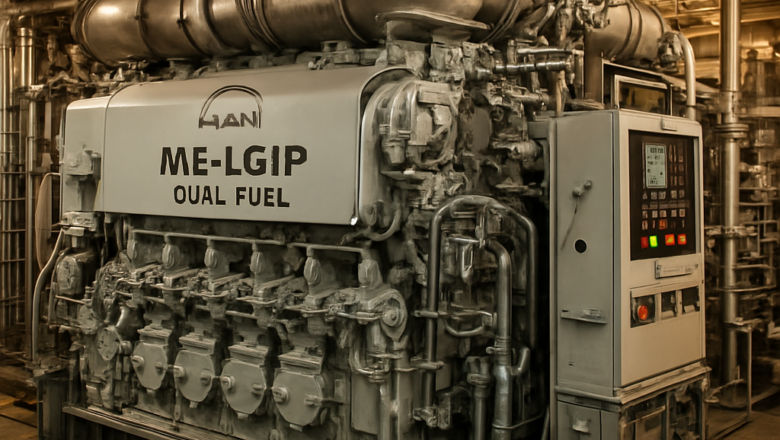
The Rise of Dual-Fuel: Why the Industry Is Switching Let’s be honest—no one in shipping wakes up one morning and decides to overhaul their entire fleet just for fun. The shift to dual-fuel engines, particularly systems like MAN B&W’s ME-LGIP, isn’t a trend. It’s a survival strategy. And if you’re a marine engineer still betting on traditional heavy fuel oil (HFO), you might want to pay attention. The rules of the game have changed, and the industry is moving fast—whether you’re ready or not. So, what’s really driving this push toward dual-fuel? It’s not just one thing. It’s a perfect storm of regulations, economics, and operational necessity. Let’s break it down. The Regulatory Hammer: IMO 2030, 2050, and the Alphabet Soup of Compliance If you’ve been in shipping long enough, you know ...