

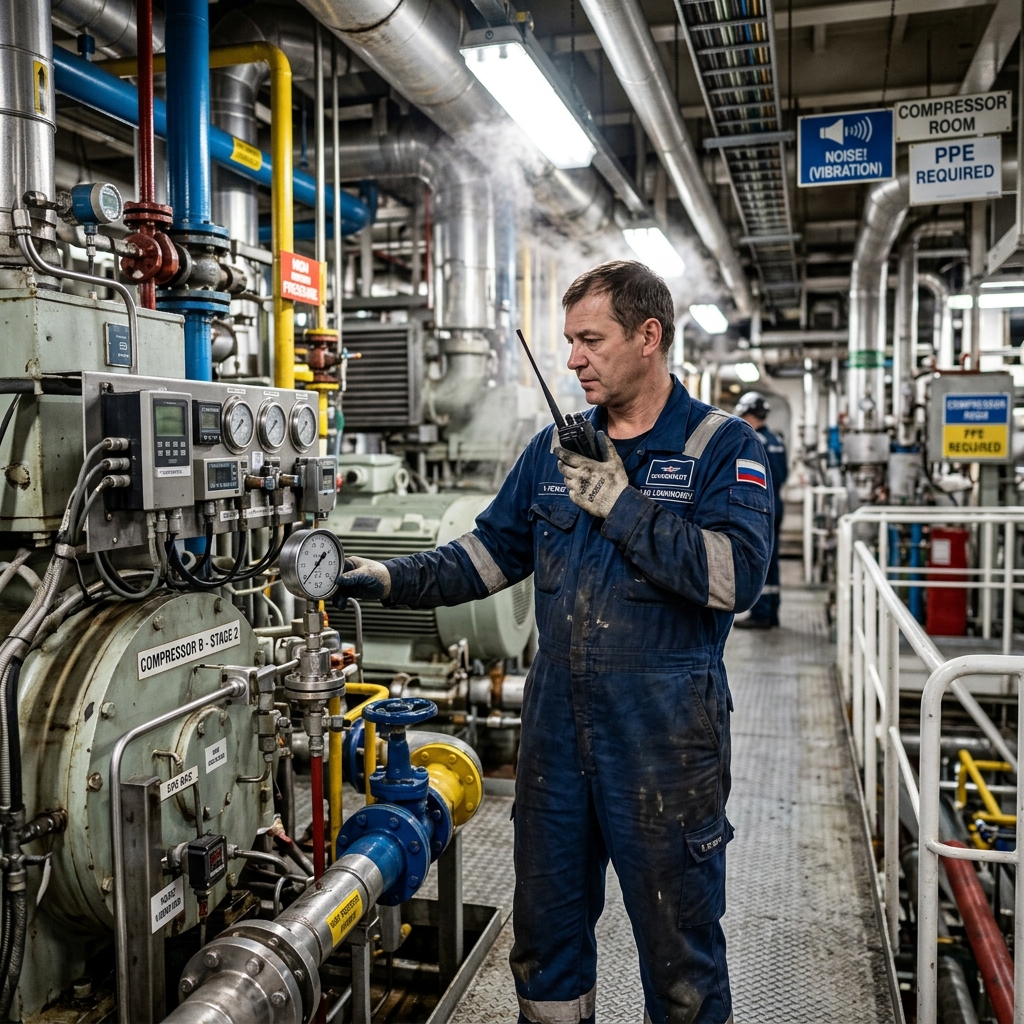
Crewing Interviews for Gas Engineers: How to Succeed
Successfully passing a technical interview is the main hurdle on the way to a high-paying job on LPG and LNG gas carriers. In this guide for seamen.es, we will break down what questions superintendents ask engineers (2nd, 3rd, 4th Engineer) and how to prepare for interviews in crewing agencies (including popular Odessa agencies like CRS).
Typical Tricky Questions from Superintendents
Interviews with representatives of foreign shipowners (Greeks, Chinese, Singaporeans) often go beyond standard tests. You will be tested on your understanding of processes, not just your knowledge of manuals. For those starting out, it’s crucial to show an excellent theoretical foundation.
- “What will you do if the high-pressure alarm in the compressor crankcase goes off?”
- “Explain the physics of the gas liquefaction process. How does a cascade refrigeration plant work?”
- “What is compressor surge and how do you avoid it?”
- “What are your actions in case of an ammonia leak in the compressor room?”
Specifics of Working with Cargo Systems and Refrigeration Plants
A Gas Engineer (or Cargo Engineer, as well as 2nd/3rd Engineers who share these duties) must thoroughly know the cargo equipment:
- Cargo Compressors (Burckhardt, Sulzer): Design, valve maintenance, seal replacement, lubrication control.
- Refrigeration Plants: Understanding the Carnot cycle, working with freon, finding leaks, servicing condensers and evaporators.
- Cargo Pumps (Deepwell pumps – Wartsila, Svanehoj): Principle of operation, starting procedure, mechanical seal control.
- Inert Gas Generators (IGG) and N2 Generators: Nitrogen purity, dew point, membrane maintenance.
Technical Foundation for 2nd, 3rd, and 4th Engineers
For 4th Engineer: Focus on pumps, purifiers, boilers, and fresh water generators. Expect questions on fuel purification, bunkering procedures, and working with Ballast Water Treatment Systems (BWTS).
For 3rd Engineer: Main and auxiliary engines. Detailed questions on fuel equipment, timing, taking indicator diagrams, and oil analysis.
More information on Marine Fuel Separators: Design, Working Principle, Details
For 2nd Engineer: Engine room team management, maintenance planning (PMS – AMOS, BassNet), preparation for vetting inspections, working with main engine electronics (ME/RT-flex).
Technical Interview Preparation Checklist
- ✅ Refresh Theory: Review the design of centrifugal and reciprocating compressors.
- ✅ Learn Abbreviations: ESD (Emergency Shutdown), IGG, BWTS, VGP, MARPOL Annex VI.
- ✅ English Language: Confidently describe technical processes in English. Avoid using native language terms.
- ✅ Safety First: For any question related to a breakdown, start your answer with: “I will inform Chief Engineer, assess the risk, conduct Tool Box Meeting, prepare Risk Assessment and Permit to Work.”
Demonstrate confidence, readiness to learn, and commitment to safety standards, and the crewing agency will gladly send you to a gas carrier.