

The Hierarchy of Decks: From Bridge to Bunks
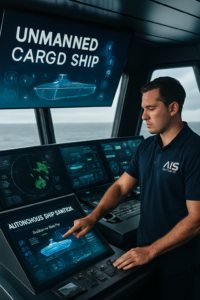 The superstructure of a modern bulk carrier isn’t just a stack of metal floors—it’s a carefully engineered vertical ecosystem where every level serves a distinct purpose, balancing functionality, safety, and the human needs of a crew at sea for months at a time. From the wind-whipped heights of the Compass Deck to the utilitarian comforts of the lower crew quarters, this hierarchy isn’t just about physical elevation; it’s about priority, access, and the unspoken rhythm of life aboard a ship that might spend 40 days crossing an ocean without seeing land. Let’s climb the ladders—literally—and explore how this vertical world keeps a 200,000-ton vessel moving, its crew fed, and its systems humming.
The Compass Deck: Eyes and Ears of the Ship
Perched at the very top of the superstructure, the Compass Deck is where the ship touches the sky—and where the outside world touches back. This is the domain of antennas, radars, and satellite dishes, a forest of steel and electronics that turns the vast, empty ocean into something navigable. On a typical bulk carrier, you’ll find:
- X- and S-band radars: The ship’s primary “eyes,” scanning for other vessels, weather systems, and navigational hazards. The X-band (short-range, high-resolution) is used for close-quarters maneuvering, like entering a port, while the S-band (long-range, lower resolution) keeps watch over the horizon, often up to 96 nautical miles away. During a storm in the South China Sea, it’s the S-band that gives the officer on watch those critical extra minutes to adjust course before waves start breaking over the bow.
- Satellite communication domes: These white, bulbous enclosures house the ship’s link to the rest of the world. Inmarsat, VSAT, and Iridium systems provide everything from email and weather updates to emergency medical consultations. On a recent voyage from Brazil to China, a chief officer recounted how a VSAT dome’s failure mid-Pacific left the crew relying on a single Iridium handset for days—suddenly, the ship’s “always-on” connectivity felt as fragile as a spider’s thread.
- GPS and AIS antennas: The Automatic Identification System (AIS) broadcasts the ship’s position, speed, and course to nearby vessels, a digital handshake that prevents collisions in busy shipping lanes. Meanwhile, GPS—often backed up by older systems like Loran-C—ensures the ship knows exactly where it is, even when clouds obscure the stars. (Yes, some officers still carry sextants, just in case.)
- Wind sensors and anemometers: These spindly instruments measure true wind speed and direction, data that’s critical for everything from calculating fuel-efficient routes to deciding whether it’s safe to load cargo in port. A chief mate once described how a faulty anemometer in the Bay of Biscay led to a tense 12-hour delay while the crew recalibrated the system—every gust of wind felt like a personal insult.
This deck is exposed to the elements in a way few others are. Salt spray crusts the railings; ice forms on antennas in the North Atlantic; and in the tropics, the metal can get so hot that touching a radar housing without gloves is like pressing your palm to a frying pan. Yet it’s here, 30 meters above the waterline, that the ship’s connection to the world is most fragile—and most vital. When a bulk carrier loses its radars in a storm, it’s not just blind; it’s vulnerable in a way that no amount of steel plating can compensate for.
More information on Life at Sea: Internet & Food Realities on LPG Ships
The Bridge Deck: Where the Ship Comes to Life
One level down, the Bridge Deck is the nerve center of the vessel, home to the wheelhouse—a space that’s equal parts high-tech command center and throwback to the age of wooden ships. This is where the captain and officers spend their waking hours (and often their sleeping ones, too), making the thousands of micro-decisions that keep a bulk carrier on course, on schedule, and out of trouble.
The wheelhouse itself is a study in controlled chaos. At its heart is the helm station, where the officer on watch steers the ship using either a traditional wheel or—more commonly these days—a joystick-like control. But the real action happens at the navigation console, a bank of screens displaying:
- ECDIS (Electronic Chart Display and Information System): The digital replacement for paper charts, ECDIS overlays the ship’s position with real-time data on depths, buoys, and restricted zones. A third officer might spend hours here, zooming in on a narrow channel in the Malacca Strait, where a single miscalculation could ground a vessel carrying 180,000 tons of iron ore.
- Conning display: A dashboard showing the ship’s speed, heading, rudder angle, and engine RPM. It’s the maritime equivalent of a car’s instrument cluster, but with one key difference: the “speedometer” might read 14 knots, and the “fuel gauge” could represent 3,000 tons of heavy fuel oil.
- Engine telegraph: A physical lever (or digital replica) that communicates with the engine room, allowing the bridge to request changes in speed. The clunk of the telegraph—”Half Ahead,” “Dead Slow Astern”—is one of the last audible links to the age of steam, a sound that still makes some old-school captains nostalgic.
- Weather routing software: Programs like Bon Voyage System or StormGeo analyze wind, waves, and currents to suggest the most fuel-efficient route. During a voyage from Australia to Europe, a captain might use this to shave 200 nautical miles off the journey—saving $50,000 in fuel costs, but also adding days of rough seas if the system’s predictions are off.
Standing watch on the bridge is a mix of monotony and adrenaline. For hours, the officer on duty might stare at a radar screen showing nothing but empty ocean, the only sound the hum of the air conditioning and the occasional crackle of the VHF radio. Then, suddenly, a fishing boat appears on the horizon, or a storm cell blooms on the weather radar, and the bridge springs to life. The captain is called; the helmsman grips the wheel; the engine room is alerted. In those moments, the bridge isn’t just a room—it’s the beating heart of the ship.
Just aft of the wheelhouse, you’ll often find the chart room, a small, quiet space where paper charts are still kept as a backup (regulations require it). Here, the second officer might plot the day’s position with a pencil and parallel rulers, a ritual that feels almost meditative compared to the frenetic energy of the bridge. Nearby, the radio room (or its modern equivalent, a corner of the bridge with GMDSS equipment) stands ready for distress calls, though these days, most communication happens via email or satellite phone.
Deck D: The Officers’ Domain
Descend one more level, and you reach Deck D, the exclusive realm of the ship’s senior officers. This is where the captain, chief officer (or chief mate), and chief engineer have their cabins—strategically placed for one reason: proximity to the bridge. In an emergency, seconds count, and having the ship’s leadership just a minute’s sprint from the wheelhouse can mean the difference between a controlled response and chaos.
The cabins here are a step up from the crew’s quarters below—larger, quieter, and often with a private bathroom. A captain’s cabin might include:
- A desk with a porthole view (though many captains prefer to face inward, toward the ship, to avoid the distraction of the horizon).
- A small safe for ship’s documents, cash, and personal valuables.
- A mini-fridge stocked with coffee, tea, and the occasional treat (a captain on a Panamax bulker once confessed to hiding a stash of Belgian chocolates for “emergency morale boosts”).
- A daybed or sofa, because even captains need to nap during long watches.
But these cabins aren’t just about comfort—they’re about function. The chief officer’s cabin, for example, is often located directly below the bridge, with a phone line that rings straight to the wheelhouse. If the officer on watch spots something unusual—a drifting container, a suspicious vessel, a sudden change in weather—the chief officer can be on the bridge in under a minute, still pulling on their uniform jacket.
Deck D also typically houses the officers’ mess, a smaller, more formal dining area where the senior crew eat separately from the ratings (the non-officer crew). This isn’t just about hierarchy; it’s about efficiency. Meals here are quieter, often used to discuss the day’s operations, review cargo plans, or debrief after a port call. A chief engineer might sketch out a repair plan on a napkin; the captain might brief the officers on an upcoming inspection. In the officers’ mess, the ship’s strategy is as much a part of the menu as the food.
Decks C, B, and A: The Crew’s World
Below Deck D, the superstructure opens up into the crew’s domain—a vertical neighborhood where 20 or 30 people live, work, and unwind during voyages that can last months. These decks are less about glamour and more about sustaining life at sea, with every square meter optimized for function, comfort, or both.
Deck C: The Heart of Daily Life
This is often where the crew’s mess is located, a communal space that serves as dining hall, living room, and social hub. On a typical bulk carrier, the mess might seat 12–16 people at a time, with a buffet-style serving counter where the cook (or “galley master”) dishes out meals. The walls are usually decorated with:
- Route maps: A laminated chart showing the ship’s current voyage, with pins marking ports of call. Crew members often add their own notes—”Dolphins here!” or “Worst weather of my life ☠️.”
- Safety posters: Reminders about fire drills, lifeboat procedures, and the dangers of alcohol at sea. (Yes, some ships still have a “dry” policy, though enforcement varies.)
- Photos and mementos: Snapshots of families left behind, postcards from previous ports, or even a ship’s mascot (a stuffed toy, a plastic parrot, or, in one case, a taxidermied seagull named “Captain Beaky”).
Adjacent to the mess, you’ll often find the recreation room, a space that tries to replicate the comforts of home. Here, the crew might gather to:
- Watch movies on a DVD player (or, on newer ships, a smart TV with a limited satellite connection).
- Play cards or board games—Uno, Chess, or Ludo are perennial favorites.
- Video call family using a shipboard Wi-Fi system (though bandwidth is often painfully slow).
- Celebrate birthdays or holidays with whatever treats the cook can scrounge up (imagine a Christmas cake made with canned pineapple and powdered milk).
Deck C is also where the laundry room is located, a utilitarian space with industrial washers and dryers. On a long voyage, laundry day becomes a ritual—crew members trade tips on removing grease stains (dish soap works wonders) or debate the best way to dry socks without them turning into cardboard. Nearby, the ironing room (yes, some ships have one) is where uniforms are pressed to regulation sharpness, a small act of pride in an environment where appearances can feel secondary to survival.
Deck B: Fitness, Health, and the “Hotel” Services
One level down, Deck B is where the ship starts to feel more like a floating apartment building. This is where you’ll find:
- The gym: A modest space with a treadmill, stationary bike, and a rack of dumbbells. On a bulk carrier, where space is at a premium, the gym might double as a storage room for spare parts, but it’s still a lifeline for crew members trying to stay fit during months at sea. A Filipino able seaman once joked that his “gym routine” consisted of running up and down the ship’s ladders—”No treadmill needed when you’ve got 10 flights of stairs.”
- The hospital (or “sick bay”): A small medical room stocked with basic supplies—bandages, antibiotics, painkillers, and, on some ships, a defibrillator. The ship’s cook or an officer with first-aid training usually serves as the de facto medic, though serious cases require a satellite call to a telemedicine service. A chief officer recounted treating a crew member’s infected finger with antibiotics from the sick bay, only to have the wound worsen—leading to an emergency evacuation in the middle of the Indian Ocean. “Never underestimate a paper cut at sea,” he said.
- The barber shop: A single chair, a mirror, and a pair of clippers, often operated by whichever crew member has the steadiest hand. Haircuts at sea are a mix of necessity and camaraderie—no one wants to look like a castaway when the ship finally docks.
- The “smoking room”: A small, ventilated space where crew members can light up without setting off the ship’s fire alarms. On some ships, this is just a corner of the deck with a “No Smoking” sign that everyone ignores; on others, it’s a proper room with an ashtray and a sign that reads, “If you must smoke, do it here.”
Deck A: The Bunks and the Basics
At the bottom of the superstructure’s hierarchy is Deck A, where the crew sleeps, showers, and stores their personal belongings. This is the most utilitarian level of the ship, designed for efficiency rather than comfort—but for the ratings (the non-officer crew), it’s home for the duration of the voyage.
The crew cabins
here are small but functional, typically shared by two or four people. A standard cabin might include:
- Bunk beds: Often with thin mattresses and curtains for privacy. On some ships, the top bunk is reserved for the senior crew member in the cabin, a small perk in a world where hierarchy is everywhere.
- A small desk or shelf: For personal items—a laptop, a book, a family photo. Space is so limited that some crew members hang their clothes on hooks or store them in plastic bins under the bed.
- A porthole or window: If you’re lucky. Many lower-deck cabins have no natural light, just a fluorescent bulb that hums like a trapped insect.
- A shared bathroom: Often with a shower that doubles as a toilet (a “wet room”), where the floor is perpetually damp and the drain clogs with hair and soap scum. Hot water is a luxury—some ships only provide it for an hour in the morning and evening.
Despite the spartan conditions, crew members personalize their cabins in small ways. A Filipino oiler might hang a Santo Niño (a statue of the Child Jesus) above his bunk for protection; a Ukrainian cadet might tape a photo of his girlfriend to the wall; a Bangladeshi seaman might keep a small electric kettle for making tea at 3 a.m. after his watch. These tiny acts of domesticity are how the crew stakes a claim on a space that, for all intents and purposes, belongs to the ship.
Deck A is also where the ship’s store (if it has one) is located, a tiny shop selling snacks, toiletries, and the occasional luxury item like chocolate or instant coffee. On a recent voyage, a crew member bought a $10 bag of M&M’s from the ship’s store—only to discover it had expired two years earlier. “Still tasted fine,” he said. “Better than the ship’s coffee, anyway.”
Finally, this deck often houses the changing rooms, where crew members don PPE (personal protective equipment) before heading to the cargo holds or engine room. Hard hats, steel-toe boots, gloves, and high-visibility vests are stored here, a reminder that even in the relative safety of the superstructure, the ship is still a workplace—and a dangerous one at that.
The Unseen Logic of the Vertical Ship
At first glance, the hierarchy of a bulk carrier’s decks might seem like a simple matter of function: navigation at the top, living spaces in the middle, machinery below. But there’s a deeper logic at work here, one that reflects the rhythms of life at sea.
- Proximity equals priority: The captain’s cabin is close to the bridge because in an emergency, leadership can’t be delayed. The officers’ mess is separate from the crew’s because strategy and operations require focus. The gym is on Deck B because after a 12-hour shift in the engine room, the last thing a motorman wants to do is climb five flights of stairs to work out.
- Noise and vibration dictate design: The lower decks are where the crew sleeps because they’re farthest from the bridge’s chatter and the Compass Deck’s wind. The laundry room is on Deck C because the sound of washers and dryers won’t disturb the officers’ rest. The hospital is on Deck B because it’s quiet but still accessible in an emergency.
- Isolation fosters community: The crew’s mess, the recreation room, the smoking area—these are the spaces where the ship’s social life happens, where the Filipino oiler and the Ukrainian cadet and the Indian cook swap stories, share food, and remind each other that they’re not just coworkers, but a makeshift family. On a ship where privacy is a luxury, these communal spaces are essential for morale.
This vertical world isn’t just about steel and systems; it’s about people. A bulk carrier might be a marvel of engineering, but it’s the crew who bring it to life—who climb those ladders at 4 a.m. for their watch, who eat in the mess at midnight after a shift, who stare out of their cabin portholes at an endless expanse of water and wonder, just for a second, what it would be like to step onto solid ground. The decks of a ship are more than just floors; they’re the stages on which the drama of seafaring plays out, day after day, voyage after voyage.