

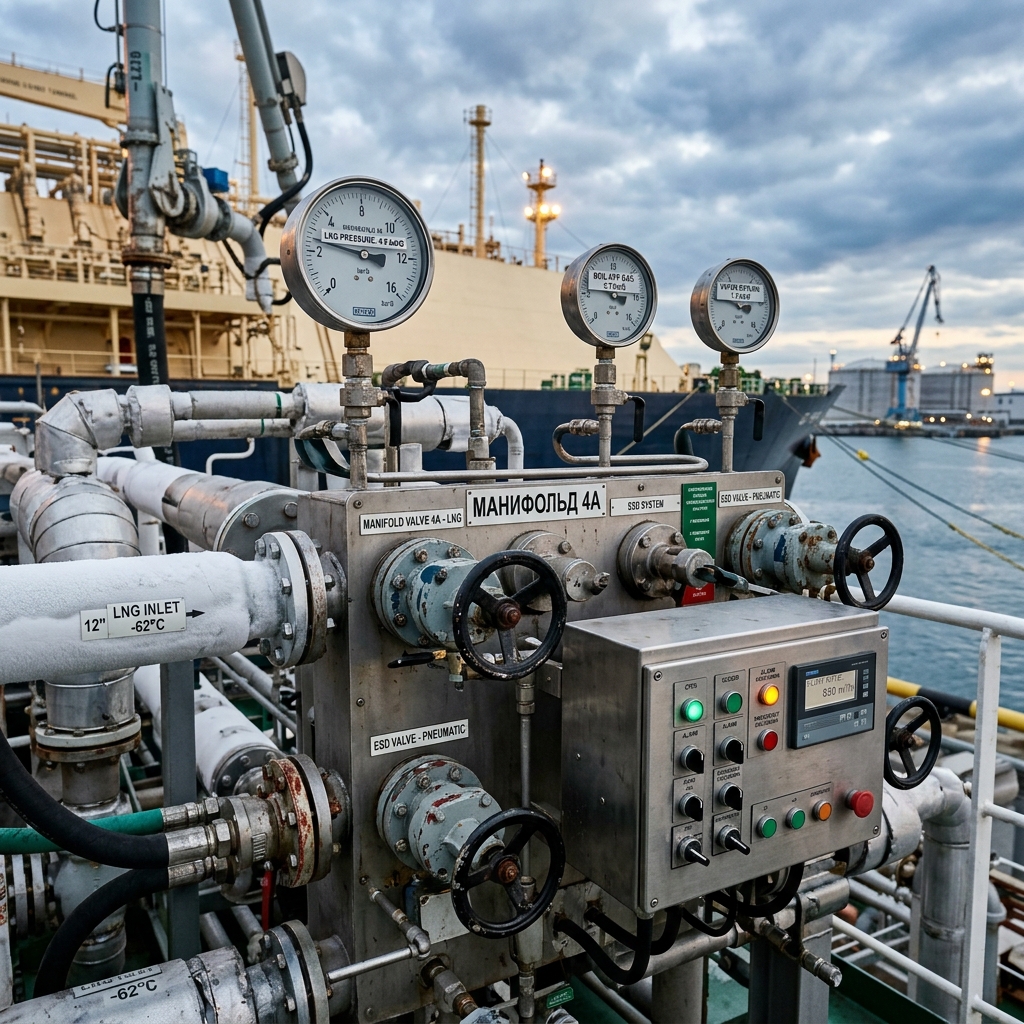
Specifics of Transporting Ammonia and Propylene on LPG Carriers
Transporting chemical gases on LPG (Liquefied Petroleum Gas) vessels requires the highest qualifications from the crew. Unlike standard propane or butane, ammonia and propylene pose a serious threat to both the seafarers’ health and the vessel. In this technical article for seamen.es, we will dissect the specifics of working on Fully Ref (Fully Refrigerated) gas carriers with toxic and reactive cargoes.
Differences Between VLGC Operations and Vessels for Ammonia and VCM
VLGC (Very Large Gas Carrier) type vessels mostly transport exclusively liquefied petroleum gas (LPG) — propane and butane. These cargoes are relatively predictable. However, mid-size (MGC) and small gas carriers often operate in the chemical gas niche (Ammonia, Propylene, Butadiene, VCM).
The main difference lies in the need for strict Tank Preparation when changing cargoes. For example, you cannot load LPG immediately after ammonia, as ammonia causes corrosion in copper alloys and poisons catalysts in oil refineries. Tanks must be thoroughly purged with hot gas, ventilated with fresh air, and then inerted with nitrogen to an oxygen content of less than 2%.
Ammonia Transportation: Safety Requirements
Anhydrous Ammonia (NH3) is a highly toxic, colorless gas with a sharp, suffocating odor. Primary precautions:
- Use of PPE: During any deck operations while loading/discharging ammonia, wearing safety goggles, chemical suits, and having breathing apparatus (EEBD, SCBA) on hand is mandatory.
- Corrosiveness: Ammonia is aggressive towards copper, zinc, and their alloys. The use of brass or bronze fittings in the cargo system is prohibited.
- Leak Detection: An ammonia leak is easily detected by smell (noticeable even at 5-50 ppm), but at high concentrations, it paralyzes the sense of smell and causes severe burns to the respiratory tract (TLV-TWA is only 25 ppm).
More information on Seawater Reverse Osmosis: Principle, Design, and Maintenance
Cargo Engineer’s Workflow
On Fully Ref vessels, the Cargo Engineer (or Gas Engineer) is responsible for the cargo system. Their workflow includes:
- Reliquefaction Plant Control: When transporting propylene and ammonia, compressors run constantly to maintain cargo temperature (ammonia: -33°C, propylene: -47°C).
- Lube Oil Control: Ammonia dissolves many types of oils. The Cargo Engineer must strictly monitor the type of oil used in cargo compressor crankcases and regularly drain condensation.
- Cargo Pump Maintenance: Checking mechanical seals for leaks, as ammonia can crystallize upon contact with moisture.
Opinions of Experienced Seafarers
Experienced Chief Officers and Gas Engineers note that ammonia is a “strict teacher.” It does not forgive haste. Every operation, from connecting the cargo arm to draining the lines, must be performed according to a checklist.
“The hardest part is not the cargo itself, but preparing the tanks for the next voyage. When you change from ammonia to propylene, every hour counts, the compressors run to the limit, and the crew barely sleeps. But it is precisely for this professionalism that we are paid high salaries,” shares a Chief Officer with 10 years of experience on LPG.
Working with such cargoes requires deep knowledge of chemistry, thermodynamics, and iron discipline. This makes gas fleet specialists the most sought-after in the maritime industry.