

Home in 200 Square Feet: Engineering Comfort
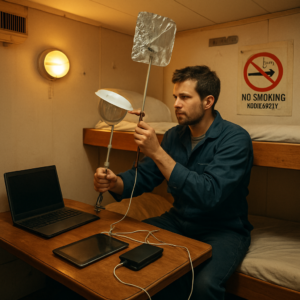 Let’s be real—when most people picture a seafarer’s cabin, they imagine a claustrophobic metal box with a creaky bunk, a flickering lightbulb, and the faint smell of diesel fumes seeping through the walls. And yeah, if we’re talking about a rust bucket from the ‘80s, that’s not entirely wrong. But on a modern vessel—especially one built after 2006—life below deck is a different story. My cabin isn’t the Ritz, but it’s a damn sight better than the horror stories my old man used to tell about his first ship, where the “ventilation” was a porthole you couldn’t open because it was welded shut.
So, what’s it *actually* like? Let’s break it down.
The Layout: Less “Prison Cell,” More “Tiny Apartment”
First off, the space. My cabin is roughly 200 square feet—about the size of a small studio apartment, but with more pipes and fewer windows. The layout is surprisingly functional, designed by someone who (thankfully) understood that engineers need more than just a place to collapse after a 12-hour shift. Here’s the breakdown:
- The Bunk: Not just a slab of foam on a metal frame. Modern bunks have proper mattresses—thick enough that you don’t wake up feeling like you slept on a pile of wrenches. Mine even has a reading light and a small shelf for my Kindle. The only downside? If you’re over six feet tall, your feet *will* hang off the end. (I’ve learned to sleep diagonally.)
- The Desk: A proper workstation with a built-in drawer unit, a fold-down surface (because space is precious), and enough outlets to power a small village. This is where I keep my laptop, a stack of manuals I’ll *probably* never open, and a framed photo of my dog that my girlfriend insists I display. (I rotate it with a picture of my car when she’s not looking.)
- The Wardrobe: A floor-to-ceiling unit with sliding doors—no squeaky hinges here. It’s deep enough to fit my coveralls, a couple of uniforms, and a surprising amount of civilian clothes I never wear. The top shelf is reserved for my “emergency stash”: instant coffee, protein bars, and a bottle of whiskey that’s been there since my last contract. (It’s for “medicinal purposes,” obviously.)
- The “Kitchenette”: Okay, it’s not a kitchen. But there’s a mini-fridge (more on that later), a kettle, and a tiny sink that’s somehow always clogged with tea leaves. The fridge is a godsend for keeping milk fresh and hiding the occasional beer from the chief engineer’s eagle eyes.
The real game-changer? Soundproofing. On older ships, you could hear every cough, snore, and argument from the next cabin over. Here? The walls are lined with some kind of dense foam, and the doors are heavy enough that you have to put your shoulder into closing them. It’s not *perfect*—if the chief mate is having a loud phone call at 3 AM, you’ll still hear it—but it’s a hell of a lot better than the thin metal partitions of the past.
More information on Life Support & Safety Aboard Car Carrier Ships
Ventilation: The Silent Battle
Now, let’s talk about the damper system in the ceiling. If you’ve never worked on a ship, you’ve probably never heard of a “damper,” but it’s one of those things you quickly learn to appreciate (or curse, depending on the day). These are adjustable vents built into the overhead panels that control airflow from the ship’s ventilation system. On a good day, they’re your best friend—crack one open, and fresh air circulates without turning your cabin into a wind tunnel. On a bad day? Well, let’s just say that if the laundry room is directly above you, you’ll know it.
Here’s the thing about ship ventilation: it’s a shared system. That means if someone in the crew decides to cook fish in the galley at 2 AM, the smell doesn’t just stay in the galley. It seeps into the ducts and, eventually, into your cabin. Same goes for laundry. There’s nothing quite like settling into bed after a long shift, only to be hit with the overpowering scent of fabric softener and someone else’s gym socks. My solution? A small USB-powered air purifier that I run on high when the dampers start pushing questionable odors my way. It’s not perfect, but it beats sleeping with a clothes peg on my nose.
Humidity is another constant enemy. In the tropics, your cabin can feel like a sauna if you’re not careful. I keep a dehumidifier running 24/7—it’s a compact, plug-in model that collects about a liter of water a day. Without it, my clothes would never dry, my laptop would start growing mold, and I’d wake up feeling like I’d been marinating in my own sweat. Pro tip: If you’re on a long contract, bring extra dehumidifier tablets. They’re cheap, they work, and they’ll save you from the horror of opening your wardrobe to find your favorite shirt covered in fuzz.
Storage Hacks: Because You Can Never Have Enough Space
Storage on a ship is like storage in a tiny apartment—you have to get creative. Here’s how I make the most of every inch:
- Under the Bunk: This is prime real estate. I’ve got shallow plastic bins down there, each labeled with a purpose: “Electronics,” “Spare Parts,” “Snacks That Won’t Get Stolen.” The key is using low-profile bins—nothing that’ll scrape your back when you roll over in the middle of the night.
- Over-the-Door Organizers: The back of my cabin door is home to a fabric shoe organizer. It holds everything from my hard hat to my headphones to a stash of instant noodles. (Because sometimes, after a 16-hour shift, you don’t have the energy to walk to the mess.)
- Magnetic Strips: I’ve mounted a few of these on the walls to hold tools, scissors, and my pocket knife. It’s a small thing, but not having to dig through a drawer for a screwdriver when you’re half-asleep is a game-changer.
- The “Floating Shelf”: Okay, it’s not actually floating—it’s a narrow shelf bolted to the wall above my desk. But it’s where I keep my most-used items: my multitool, a flashlight, and a stress ball that’s seen better days. The rule is simple: if I use it daily, it goes here. If I haven’t touched it in a month, it gets relocated to the “maybe I’ll need this someday” bin under the bunk.
The mini-fridge deserves its own paragraph because, let’s be honest, it’s the most controversial appliance in my cabin. On one hand, it’s a lifesaver—cold drinks, fresh milk for coffee, and a place to store leftovers from the mess when the cook makes something edible. On the other hand, it’s the size of a shoebox, and fitting anything larger than a six-pack of soda requires Tetris-level skills. I’ve learned to prioritize: one bottle of water, a carton of milk, and whatever perishable snack I’m currently obsessed with. The rest? It goes in the communal fridge in the pantry, where it will either disappear or develop a mysterious new owner.
Creating a Personal Sanctuary (Or At Least Trying To)
Let’s get one thing straight: no matter how well-designed your cabin is, it’s still a metal box floating in the middle of the ocean. There’s no escaping that. But that doesn’t mean you can’t make it feel like your metal box. Here’s how I trick my brain into thinking I’m not living in a glorified storage container:
- Lighting: The overhead fluorescent lights are harsh and unflattering—like a prison interrogation room. I swapped them out for a couple of warm-toned LED strips and a small desk lamp. It’s amazing how much of a difference it makes. Now, when I’m off-shift, I can actually relax instead of feeling like I’m being interrogated by the ship’s AI.
- Bedding: I brought my own sheets and a memory foam mattress topper. It’s a small luxury, but after a long day in the engine room, climbing into a bed that doesn’t feel like it’s made of cardboard is worth its weight in gold. (Also, my girlfriend made me promise to bring a “nice” pillowcase. I don’t know why, but I’m not arguing.)
- Decor: A few personal touches go a long way. I’ve got a small rug by my bunk (because cold feet in the morning are the worst), a couple of posters of places I want to visit, and a whiteboard where I track my days until sign-off. The whiteboard is mostly for motivation, but it also doubles as a place to leave passive-aggressive notes to myself, like “STOP EATING THE CHIEF’S COOKIES.”
- Noise Control: Even with soundproofing, the ship is never truly quiet. There’s always the hum of the engines, the occasional clang of metal, or the sound of someone dropping a wrench three decks above you. I use a white noise app on my phone when I need to sleep, and I’ve got a pair of noise-canceling headphones for when I just need five minutes of silence. (Spoiler: those five minutes usually turn into 20, and then I’m late for my watch.)
One of the biggest misconceptions about seafarers’ cabins is that they’re all identical, soul-crushing boxes. The truth is, modern ships give you a surprising amount of flexibility to make the space your own. Sure, you can’t knock down walls or install a fireplace, but you can control the lighting, the layout, and the little details that make it feel like home. My cabin isn’t going to win any interior design awards, but it’s functional, it’s comfortable, and—most importantly—it’s mine for the next six months.
That said, there are still days when I miss having a proper kitchen, or a couch that isn’t bolted to the floor, or a bathroom that doesn’t double as a steam room. But then I remember that I also don’t have to commute, pay rent, or deal with my neighbor’s terrible taste in music. And honestly? That’s a trade-off I’ll take any day.