

Size Matters: Tonnage and Scale at Sea
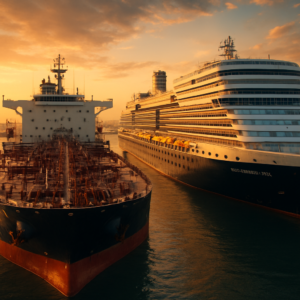 Standing on the deck of a 46,000-ton tanker, you might feel like you’re on top of the world—until a cruise liner glides past, and suddenly, your vessel looks like a toy boat in comparison. The sheer scale of modern maritime engineering is staggering, and nowhere is this more apparent than when you pit a workhorse tanker against a floating resort like those in the Holland America Line fleet. But size isn’t just about visual impact; it’s a complex interplay of measurements, economics, and operational realities that define how these ships function in the real world.
The Numbers Behind the Giants
Let’s start with the basics: deadweight tonnage (DWT) and gross tonnage (GT). These aren’t just arbitrary numbers—they tell entirely different stories about a ship’s purpose.
- Deadweight Tonnage (DWT): This is the bread and butter of cargo vessels. DWT measures a ship’s carrying capacity—how much weight it can safely transport, including cargo, fuel, fresh water, ballast, provisions, and crew. A 46,000 DWT tanker, for example, can haul roughly 46,000 metric tons of oil, chemicals, or other liquid cargo. That’s the equivalent of about 184 million liters of crude oil—enough to fill 73 Olympic-sized swimming pools. For tankers, DWT is king because it directly translates to revenue: the more you carry, the more you earn per voyage.
- Gross Tonnage (GT): This is where passenger ships like Holland America’s Koningsdam or Eurodam come into play. GT measures the total internal volume of a vessel, including all enclosed spaces—from engine rooms to passenger cabins, theaters, and even the grand atriums. The Koningsdam, for instance, clocks in at around 99,500 GT, despite having a DWT of just 8,000 tons. Why the discrepancy? Because GT isn’t about how much the ship can carry; it’s about how much space it occupies. For cruise liners, GT determines everything from port fees to safety regulations, crew requirements, and even the number of lifeboats needed.
The difference between these metrics isn’t just academic—it’s a fundamental divide between two worlds. A tanker’s worth is measured in barrels of oil; a cruise ship’s, in the number of passengers sipping cocktails by the pool. And yet, both are bound by the same immutable laws of physics and economics that make size a double-edged sword.
More information on Loading 9,000 Cars: The Physics of Maritime Logistics
Scale in the Real World: Maneuverability, Docking, and the Cost of Being Big
Size isn’t just about bragging rights—it dictates how a ship moves, where it can go, and how much it costs to operate.
- Maneuverability: A 46,000 DWT tanker is a beast to handle. These ships are long (often over 200 meters), wide, and sit deep in the water—sometimes with a draft of 12 meters or more. Turning one requires space, time, and often the assistance of tugboats, especially in narrow channels or congested ports. Cruise liners, while longer (some exceed 300 meters), are designed with pod propulsion systems and advanced thrusters that make them surprisingly nimble for their size. The Koningsdam, for example, can pivot almost in place, a feat that would be unthinkable for a tanker of similar length. But don’t be fooled—even cruise ships have their limits. The Harmony of the Seas (226,963 GT) is so massive that it can’t dock in many Caribbean ports, forcing passengers to tender ashore in smaller boats.
- Docking and Port Access: Not all ports are created equal. A tanker might call at a specialized oil terminal with deep-water berths, while a cruise liner needs a port with passenger infrastructure—gangways, customs facilities, and enough space to handle thousands of disembarking tourists. The Port of Rotterdam, for instance, can accommodate both, but a smaller port like Santorini can only handle cruise ships up to a certain size. When a vessel exceeds a port’s capacity, the costs skyrocket—tugboat fees, pilotage charges, and even the need for offshore anchoring can add tens of thousands of dollars to a single call.
- Operational Costs: Bigger isn’t always better when it comes to the bottom line. A 46,000 DWT tanker burns roughly 50-60 tons of fuel per day at sea, while a cruise liner like the Eurodam (86,000 GT) can consume 200-300 tons daily—and that’s before accounting for the electricity needed to power casinos, theaters, and thousands of air-conditioned cabins. Port fees are another killer: many ports charge by GT, meaning a cruise ship can pay five to ten times more than a tanker of similar DWT. And then there’s maintenance. A tanker’s hull might need a fresh coat of paint every few years, but a cruise ship’s exterior—with its glass elevators, LED screens, and decorative lighting—requires constant upkeep to maintain its “wow” factor.
The Moment Everything Clicked: A Personal Anecdote
I’ll never forget the first time I saw a cruise ship up close. It was in Piraeus, Greece, and I was standing on the deck of a 37,000 DWT product tanker, watching the Oosterdam (82,000 GT) glide into port. From a distance, my tanker had felt imposing—its towering deck, the hum of the engines, the sheer weight of the cargo below. But as the Oosterdam approached, it was like watching a skyscraper move. The cruise ship’s 12 decks loomed over us, its white superstructure gleaming in the Mediterranean sun. The lifeboats alone—each one the size of a small bus—were bigger than our entire forecastle. And the noise! Not the deep, rhythmic thrum of a tanker’s engine, but the cacophony of a floating city: music drifting from the pool deck, the chatter of passengers lining the railings, the distant clang of dishes from one of the ship’s dozen restaurants.
Our tanker, which had felt so massive just moments before, suddenly seemed fragile. The Oosterdam wasn’t just bigger—it was a different species of ship. As it passed within a few hundred meters, I could see the individual faces of passengers sipping drinks on their balconies, completely unaware of the crew on our deck, craning their necks upward in awe. That’s when it hit me: in the maritime world, size isn’t just a number. It’s a statement. A tanker declares, “I carry the world’s energy.” A cruise ship declares, “I are the world.”
And yet, for all their differences, both vessels share the same challenge: mastering the physics of scale. Whether it’s a tanker’s deep draft limiting its port options or a cruise ship’s windage making it a handful in a storm, size is a constant negotiation between ambition and reality. The sea doesn’t care how big you are—it will test you just the same.