

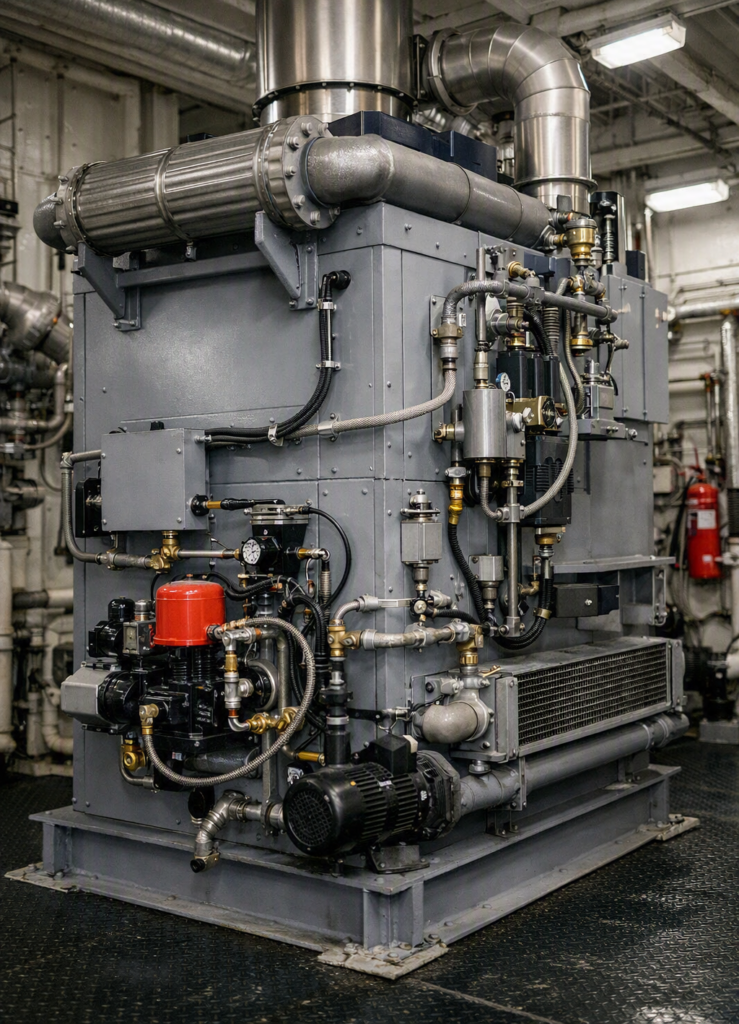
A marine incinerator is a critical environmental protection system on board a vessel, designed for the safe thermal destruction of solid domestic waste, packaging materials, and waste oil (sludge). In accordance with the requirements of the MARPOL Convention (Annexes V and VI) and IMO resolutions, strict standards are enforced regarding the technical condition and maintenance of incineration plants.
Port State Control (PSC) inspectors, representatives of classification societies, and flag state administrations pay close attention to incinerators during annual surveys and unexpected inspections. Below is a detailed guide on how to properly prepare for an inspection and what inspectors examine on marine incinerators.
Preparing the Marine Incinerator for Inspection
Thorough preparation minimizes the risk of deficiencies, vessel detention, or issued warnings. Preparation measures include technical overhauls and documentation management:
- Inspection of Technical Condition and Cleanliness:
- The incinerator room must be kept in absolute cleanliness, free of oil leaks, dust accumulations, and extraneous flammable items.
- The outer casing of the unit and the exhaust gas ducts must not show signs of severe overheating, deformation, or burn-through. Insulation must be intact.
- Testing Safety and Automation Systems:
- It is necessary to test the operation of emergency alarms and safety interlocks, including flame detectors, emergency shutdowns for fuel and sludge supply, and loading door limit switches.
- Check the operability of pressure gauges, air pressure sensors, and thermocouples in the combustion chambers and flue.
- Overhaul of Burner Equipment and Refractory Lining:
- Diesel oil and waste oil sludge burners must be cleaned and tested for proper spray patterns.
- The refractory lining inside the primary and secondary combustion chambers must be inspected for cracks, spalling, and damage.
- Inspection of the Chimney and Draft Systems:
- The smokestack, spark arrestor, and exhaust fan (draft fan) must be cleaned of soot to ensure the required negative pressure inside the combustion chamber.
- Maintenance of Documentation (Record Books):
- All waste and sludge disposal operations must be correctly and timely recorded in the Garbage Record Book and Oil Record Book (Parts I and II).
What PSC Inspectors Check During an Inspection
During an inspection, the officer examines the shipboard unit according to a well-established algorithm covering technical parameters, safety, and regulatory compliance.
More information on Troubleshooting Incinerator:Common Faults, Causes, Solutions
1. Certification and Technical Documentation (IMO Type Approval Certificate)
The inspector verifies the availability and validity of the IMO Type Approval Certificate issued by a recognized classification society. On board, there must be an approved Operation Manual from the manufacturer, as well as confirmation of compliance with IMO MEPC.76(40) (or more recent resolutions depending on the vessel’s build year).
2. Condition of the Refractory Lining and Heat Leaks
The inspector visually and using non-contact thermometers (pyrometers) evaluates the condition of the incinerator casing. Excessive heating of steel plates indicates the breakdown of the internal refractory lining, which is a critical fire safety violation and grounds for issuing a deficiency.
3. Operability of Safety Interlocks
This is one of the most critical points of the inspection:
- Solid Waste Loading Sluice Gate: The inspector checks the operation of the loading door interlock mechanism (non-fire back sluice). The door must not open while the burner is running or when the temperature in the chamber is high, preventing flame blowout and injury to the crew.
- Emergency Stop: Operation of emergency stop buttons is tested; they must instantly cut off liquid fuel and sludge supply.
- Flame and Pressure Sensors: Automatic burner shutdown upon flame failure or low draft in the chimney is monitored.
4. Control of Combustion Parameters and Temperature Regimes
According to international requirements, the temperature in the secondary combustion chamber during waste disposal must be maintained at no less than 850 to 950 for complete gas burnout and prevention of dioxin formation. The inspector compares real instrument readings on the control panel with regulatory requirements.
5. Record Books (MARPOL Compliance)
The inspector thoroughly cross-checks the Oil Record Book and Garbage Record Book with the actual volumes of generated and burned waste on board. Dates, sludge volumes, and entries signed by the Chief Engineer are verified. Discrepancies in records are treated as serious MARPOL violations.
Conclusion
Inspecting a marine incinerator requires the crew to maintain constant readiness, cleanliness, automation reliability, and strict environmental reporting. Proper maintenance of the refractory lining, checking safety interlocks, and procedural knowledge by shipboard engineers guarantee successful completion of any PSC inspections.