

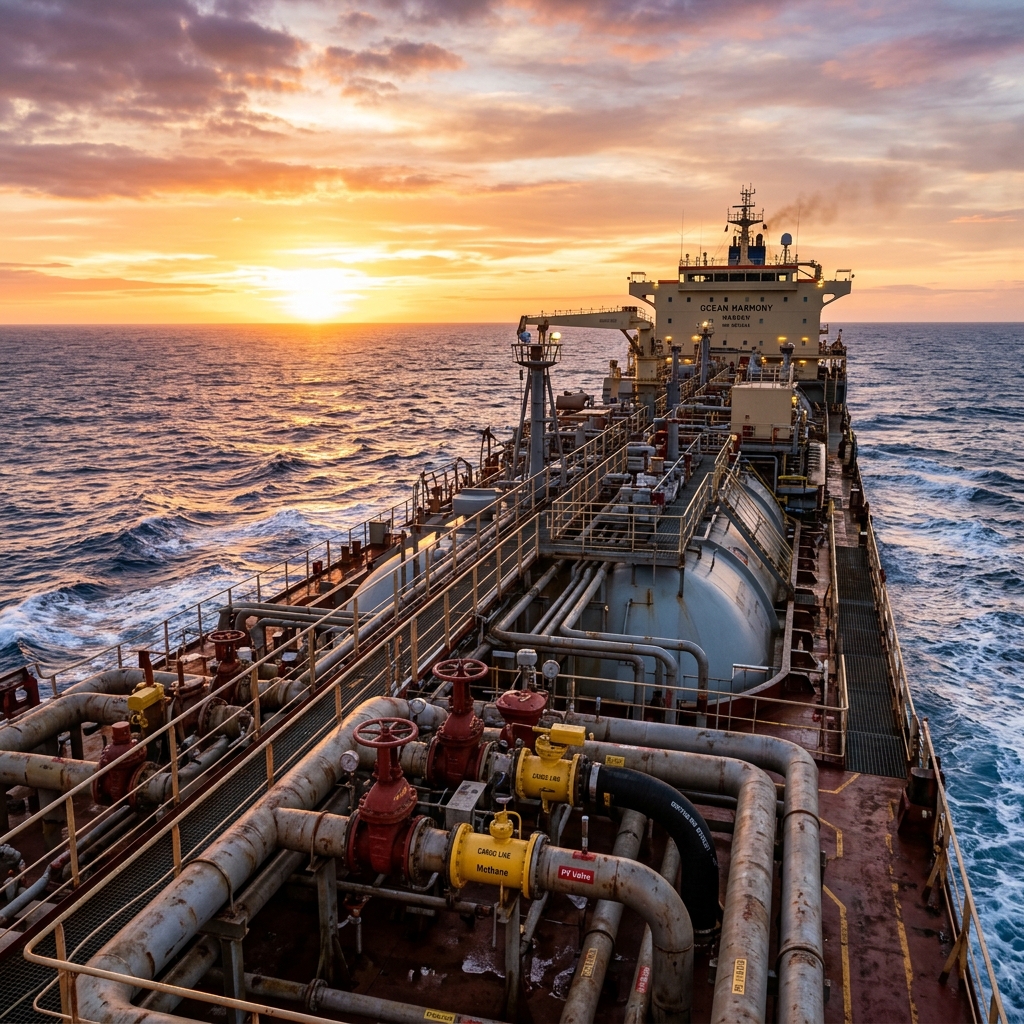
Introduction: The Growing Popularity of the Gas Carrier Fleet
In recent years, the maritime industry has witnessed a significant increase in demand for Liquefied Petroleum Gas (LPG) and Liquefied Natural Gas (LNG) transportation. This is driven by the global transition towards greener fuels and the growing needs of the chemical industry. Working on LPG gas carriers is becoming increasingly attractive for seafarers, offering high salaries, modern vessels, and excellent career prospects. However, this field requires specialized knowledge, strict discipline, and a readiness to handle hazardous cargoes.
Overview of Current Salaries on LPG and LNG Gas Carriers
One of the main reasons seafarers transition to gas carriers is the compensation level, which is traditionally higher than on bulk carriers or container ships. Salaries vary depending on the vessel type, cargo capacity, shipping company, and the seafarer’s experience.
- Master and Chief Engineer (CENG): From $13,000 to $18,000 per month. On specialized LNG vessels, rates can reach up to $20,000.
- Chief Officer and 2nd Engineer: From $10,000 to $14,000.
- 2nd Officer and 3rd Engineer: From $4,500 to $6,500.
- 3rd Officer and 4th Engineer: From $3,500 to $4,500.
- Ratings (Bosun, Pumpman, Motorman, AB): From $1,800 to $3,000, depending on gas certificates.
Comparison of Working Conditions: Bulk Carriers vs. Gas Carriers
For junior specialists and top officers, transitioning from the bulk fleet to gas carriers means not only a salary increase but also a change in working conditions.
More information on Seawater Reverse Osmosis: Principle, Design, and Maintenance
On bulk carriers, contracts often last 6-8 months, work is accompanied by coal or ore dust, and cargo operations can drag on for weeks. On gas carriers, contracts are shorter (usually 3-4 months for officers and 4-6 for ratings), vessels are significantly cleaner, and port stays take only 12-24 hours.
However, working on gas carriers requires constant concentration. Tank pressure, temperature regimes, and compressor operations all require round-the-clock monitoring. Mistakes here are much more costly.
Specifics of Cargo Transportation: Propane, Butane, Ammonia, Propylene, VCM
LPG gas carriers transport not only liquefied gas for domestic needs but also complex chemical raw materials. Each cargo has its own characteristics:
- Propane and Butane: Primary cargoes. Relatively simple to transport but require maintaining proper pressure and temperature (down to -42°C for propane).
- Ammonia: Highly toxic cargo. Requires strict adherence to safety protocols, use of breathing apparatus (SCBA), and special suits.
- Propylene and Butadiene: Chemically active gases. Require perfect tank preparation (nitrogen purging) to prevent polymerization.
- VCM (Vinyl Chloride Monomer): Carcinogenic and highly flammable cargo. Working with it requires the highest qualifications.
Crewing Requirements: Experience, Certificates, US Visa
Getting a job on a gas carrier without experience is difficult, but possible. Crewing companies have strict requirements:
- Gas Certificates (GASCO): Mandatory Basic and Advanced certificates for working on gas tankers.
- Rank Experience: Usually 6 to 12 months of experience on similar vessels is required. For a start, they often offer to join with a demotion in rank.
- US Visa (C1/D): Almost 90% of gas carriers visit US ports (especially in the Gulf of Mexico). Having a valid US visa is a huge advantage.
- English Language: Fluent proficiency required, passing Marlins and CES tests successfully.
Expert Tips for Employment
Seasoned seafarers recommend looking for work through proven crewing agencies in Odessa, Riga, and other European maritime hubs. Pay attention to companies offering cadet programs or matrix requirements transition programs. Do not be afraid to accept a contract in mixed crews with foreign shipowners (Greeks, Norwegians) — this is invaluable experience and a path to high salaries.