

South Korea’s Shipbuilding Supremacy
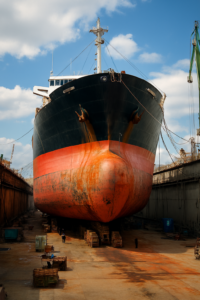 There’s a place where the air hums with the relentless rhythm of industry, where the horizon is carved not by skyscrapers but by the skeletal giants of half-built ships, and where the very ground seems to vibrate with the weight of human ambition. This is the heart of South Korea’s shipbuilding empire—a 3-million-square-meter expanse of steel, sweat, and precision that churns out 75% of the world’s LNG tankers. To understand why these maritime behemoths are born here, and almost nowhere else, you have to step inside the machine.
The first thing that hits you is the scale. Not just the size of the ships—though those are staggering—but the sheer human machinery behind them. Over 20,000 workers move through these yards daily, a small army of welders, engineers, crane operators, and logistics crews, all synchronized in a dance that feels almost choreographed. And in a way, it is. Because in South Korea, shipbuilding isn’t just an industry; it’s a national mission, one that blends the discipline of a military operation with the pride of a centuries-old craft.
More information on Life at Sea: Internet & Food Realities on LPG Ships
The 7:30 AM Symphony
At 7:20 AM, the shipyard is already alive. The night shift is winding down, their faces streaked with grime and exhaustion, but the day shift is just arriving—thousands of workers in hard hats and neon vests, moving with purpose. By 7:30, the yard is fully operational, a well-oiled machine where every second counts. There are no lazy mornings here. No coffee breaks that stretch into half-hours. Time is measured in welds completed, blocks moved, deadlines met.
The logistics of keeping 20,000 people in motion are mind-boggling. The shipyard is so vast that walking from one end to the other would take the better part of an hour—time no one can afford to waste. So instead, the workers move on fleets of bicycles and shuttle buses, a constant stream of human traffic weaving between towering cranes and mountains of steel. Some veterans joke that they’ve pedaled the equivalent of a cross-country trip just getting to their workstations. But no one complains. This is the rhythm of the yard, and everyone falls into step.
A Culture of Pride and Pressure
Walk through the shipyard, and you’ll hear the same phrase over and over: “We build the best ships in the world.” It’s not boasting. It’s a fact. And it’s a burden as much as it is a point of pride. South Korea didn’t just stumble into shipbuilding dominance—it fought for it, clawing its way past Japan in the 1990s and then leaving China in its wake. Now, the pressure to maintain that lead is immense. Miss a deadline, cut a corner, and the reputation of an entire nation’s industry is on the line.
That pressure trickles down to every worker. A welder in his 50s, his hands gnarled from decades of work, puts it bluntly: “If we mess up, the whole world knows. There’s no hiding.” And yet, there’s no resentment in his voice—only determination. Because for these workers, shipbuilding isn’t just a job. It’s a craft, passed down through generations. Fathers teach sons the art of the perfect weld. Apprentices spend years learning to read the subtle cues of steel under their torches. And when a ship finally slides into the water, there’s a collective sense of ownership—a feeling that they built that.
That pride is visible everywhere. In the way workers polish their tools at the end of a shift, even if they’ll be using them again in eight hours. In the handwritten notes left on workstations, reminding the next shift of a tricky joint or a potential weak spot. In the rituals—like the small shrines some crews set up near their work areas, offerings to the gods of the sea for safe voyages. This is where tradition and hyper-efficiency collide. The shipyard moves at the speed of a tech startup, but the mindset is pure old-world craftsmanship.
The Ecosystem That Makes It Possible
So how does South Korea do it? How does it maintain this relentless pace while producing ships that are not just massive, but flawless? The answer lies in the ecosystem—a perfect storm of infrastructure, culture, and sheer willpower.
- Vertical Integration: Unlike shipyards in other countries, which often rely on a patchwork of suppliers, South Korea’s yards are self-sufficient. Need a 300-ton steel block? It’s forged on-site. A specialized valve for the LNG tanks? Built in the next building over. This eliminates delays, reduces costs, and ensures that every component meets the yard’s exacting standards.
- Hyper-Specialization: Workers aren’t generalists. A welder might spend his entire career perfecting a single type of joint. A crane operator might do nothing but move 100-ton blocks, day in and day out. This level of specialization means that when a task needs to be done, it’s done fast and right the first time.
- The “No Excuses” Mentality: Deadlines aren’t suggestions. If a ship is supposed to be delivered in 24 months, it will be delivered in 24 months. Rain, typhoons, supply chain snarls—none of it matters. The yard adapts. Workers pull double shifts. Engineers sleep in their offices. Because in South Korea, failure isn’t an option.
- Government Backing: This isn’t just private industry at work. The South Korean government has long seen shipbuilding as a strategic priority, pouring billions into R&D, offering tax incentives, and even stepping in to prevent foreign takeovers of key yards. The message is clear: This industry is too important to fail.
But perhaps the most critical factor is the culture of collaboration. In many industries, departments operate in silos, each focused only on their piece of the puzzle. Not here. Engineers, welders, logistics teams—they all work in lockstep, because they know that a delay in one area ripples through the entire system. There’s a saying in the yards: “One team, one ship.” And it’s not just a slogan. It’s how they operate.
The Human Cost of Perfection
Of course, this level of intensity comes at a price. The work is brutal. Welders spend hours in cramped, sweltering compartments, their faces inches from 6,000-degree arcs of plasma. Crane operators work 12-hour shifts, their eyes locked on loads that could crush them in an instant. And then there’s the mental toll. The pressure to perform is constant. A single mistake can cost millions. A missed deadline can tarnish a yard’s reputation for years.
And yet, turnover is surprisingly low. Why? Because for many, this isn’t just a job—it’s a calling. The son of a welder becomes a welder. The daughter of an engineer studies naval architecture. There’s a sense of legacy here, a feeling that they’re not just building ships, but building the future. And when a completed tanker finally glides into the water, when the champagne bottle smashes against its hull and the crowd erupts in cheers, it’s not just a ship being launched. It’s a testament to human ingenuity, a monument to what happens when thousands of people push themselves to the absolute limit.
That’s the secret of South Korea’s shipbuilding supremacy. It’s not just about the steel, the cranes, or the cutting-edge technology. It’s about the people—the welders who take pride in a perfect bead, the engineers who lose sleep over millimeters, the logistics crews who keep the whole machine running. It’s about a culture that demands excellence and refuses to accept anything less. And until the rest of the world figures out how to match that, South Korea will keep building the ships that power the planet.