
Friday, September 18
Shadow

Posts

Seafarer Blogs & Maritime Insights: Your Guide to Life at Sea
Welcome to the seamen.es Article Hub! Discover firsthand seafarer blogs, expert maritime career advice, industry updates, and essential tips for upgrading your qualifications. We bridge the gap between greenhorns and experienced mariners by delivering verified, practical knowledge straight from the fleet. Stay informed, upgrade your skills, and navigate your maritime career with confidence.

From Korean Slipways to Chittagong Sands: A Ship’s Life

From Korean Slipways to Chittagong Sands: A Ship’s Life

Blogs
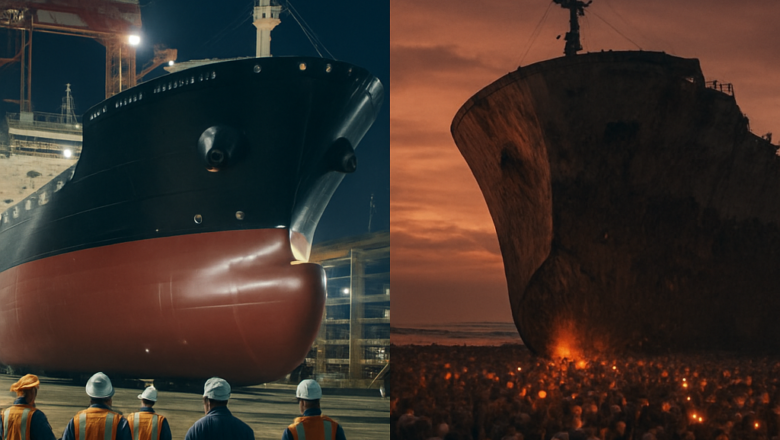
The Birthplace of Giants: Why South Korea Dominates Shipbuilding I still remember the first time I set foot in the dry dock at Hyundai Heavy Industries in Ulsan. The sheer scale of it hit me like a physical force—an open-air cathedral of steel and concrete, stretching farther than my eyes could follow. The dock was 670 meters long, 131 meters wide, and deep enough to swallow a 20-story building. And there, at its center, loomed the skeleton of what would become a 400,000-ton Very Large Crude Carrier (VLCC), its ribs of high-tensile steel rising like the bones of some mythical beast. I’d worked on ships before, but nothing prepares you for the moment you realize you’re standing inside the future hull of a vessel that will carry enough oil to fuel a small country. South Korea didn’t just st...
Inside a Modern Oil Tanker: A Chief Engineer’s Guide

Inside a Modern Oil Tanker: A Chief Engineer’s Guide

Blogs
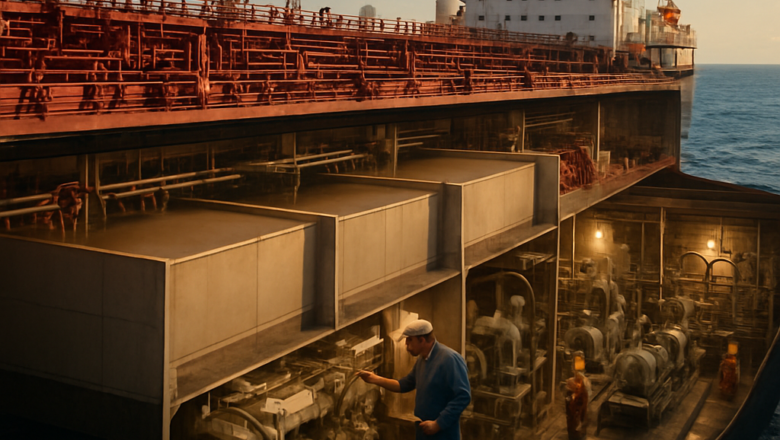
The Hull: Where Cargo Meets Safety The hull of a modern oil tanker isn’t just a steel shell—it’s a meticulously engineered fortress designed to carry volatile cargo while protecting the ocean from disaster. At the heart of this design are the 12 cargo tanks, arranged in a symmetrical grid: six on the port (left) side and six on the starboard (right) side. This layout isn’t arbitrary. It ensures weight distribution remains balanced, preventing the vessel from listing dangerously during loading, unloading, or rough seas. Each tank is a self-contained compartment, isolated by cofferdams—empty spaces that act as firebreaks and contamination barriers. On our vessel, the largest tanks hold up to 12,000 cubic meters of crude oil, while the smaller ones near the bow and stern are tapered to fit th...
Surviving the USCG: A Tanker’s Guide to Inspection

Surviving the USCG: A Tanker’s Guide to Inspection

Blogs
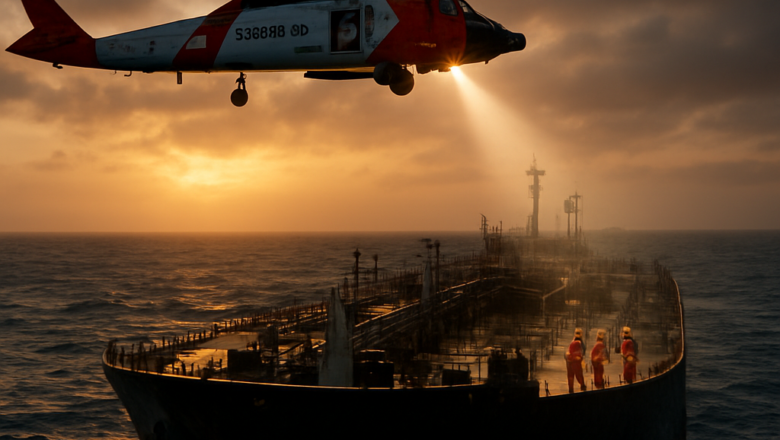
The Cost of Complacency: When Small Mistakes Become Million-Dollar Lessons There’s a moment in every mariner’s career when you realize the ocean doesn’t care about your experience, your rank, or how many years you’ve spent at sea. It’s the moment when a routine operation unravels into chaos, when a split-second oversight becomes a financial and environmental nightmare. I’ve seen it happen twice—once in the sweltering heat of Lomé, where a container ship’s wake nearly turned our tanker into an ecological disaster, and again in Côte d’Ivoire, where a single unsecured accommodation ladder cost the company $150,000 and a black mark on its reputation. These weren’t freak accidents. They were the direct result of complacency, of assuming that just because something *should* hold, it *will*. The ...
Panama Canal: 81 Kilometers Between Oceans

Panama Canal: 81 Kilometers Between Oceans

Blogs
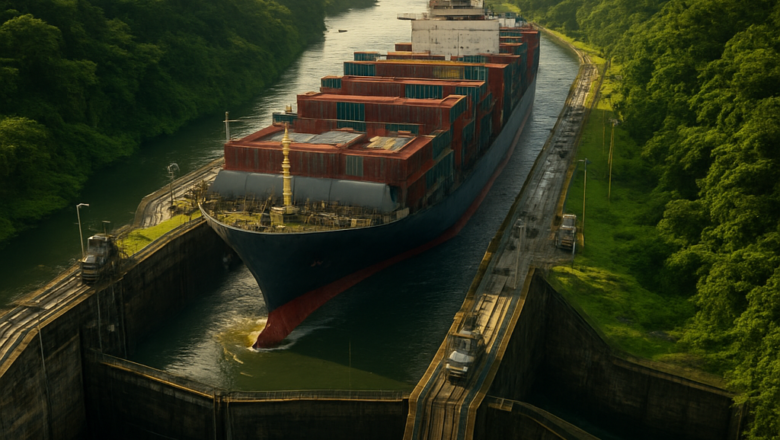
First Transit: A Rookie’s Baptism by Fire The night before our scheduled transit, I barely slept. The ship’s clock ticked toward 0400 like a countdown, each passing minute tightening the knot in my stomach. I’d spent the last three days hunched over charts in the wheelhouse, tracing the same 81-kilometer route with my finger, memorizing the names of the locks—Gatun, Pedro Miguel, Miraflores—like they were stations of the cross. At 22, this was my first real test as a third officer, and the Panama Canal wasn’t just another waypoint. It was the place where the sea’s rules bent to human will, where a mountain range had been carved into submission. And now, somehow, I was supposed to help guide 50,000 tons of steel through it. Dawn broke thick and green over Colón, the air so saturated with h...
USCG Inspection: Breakdowns Before America’s Shores

USCG Inspection: Breakdowns Before America’s Shores

Blogs
Entering the Gulf Stream: When Climate Turns Against You The moment you cross the invisible line into the Gulf Stream, the ship doesn’t just change course—it enters a different world. One minute, you’re cruising in a mild 22°C with a gentle breeze cutting through the engine room vents. The next? The air turns thick, like breathing through a wet blanket, and the thermometer on the bulkhead starts climbing with unsettling speed. Eight hours. That’s all it took for the Gulf Stream to rewrite the rules of our voyage. I remember glancing at the seawater temperature gauge first—13°C to 21°C in a single watch. A jump like that doesn’t just affect the cooling systems; it’s a full-scale assault on the ship’s equilibrium. The engine room, already a furnace under normal conditions, became a pressure...
Ship’s Cook: The Man Behind 80% of Crew Morale

Ship’s Cook: The Man Behind 80% of Crew Morale

Blogs
My First Contract: The ‘Borscht, Please’ Reality Check I still remember the way my boots squeaked against the polished floors of Warsaw Chopin Airport, the weight of my duffel bag digging into my shoulder as I scanned the crowd for familiar faces. It was 2000, and I was about to board my first ship—a rust-streaked bulk carrier bound for the Black Sea. I had no idea what to expect, but I was young, eager, and ready to absorb every bit of wisdom the sea had to offer. Little did I know that my first real lesson wouldn’t come from the chief mate or the grizzled old bosun, but from a woman who called herself the ship’s cook. She was waiting near the check-in counter, a sturdy figure in a faded floral apron, her hair pulled back into a tight bun. Even from a distance, she radiated confidence—no...
New Suez Canal: Egypt’s Gateway for Megaships

New Suez Canal: Egypt’s Gateway for Megaships

Blogs
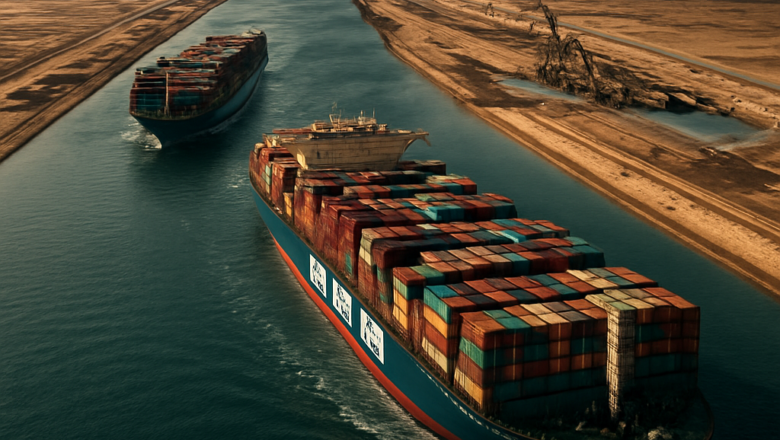
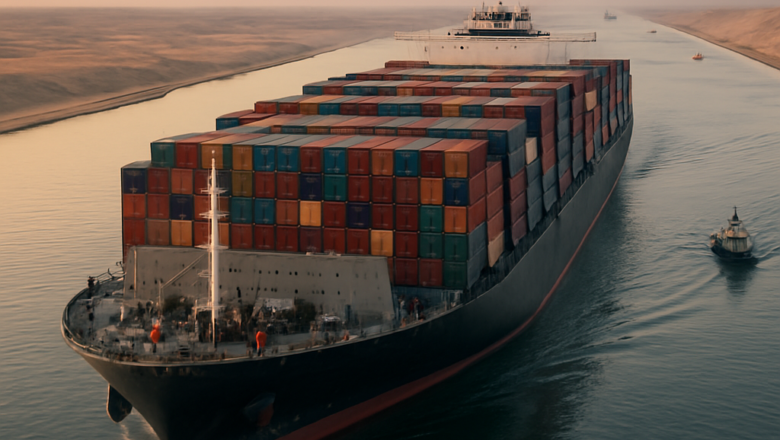
Why the Old Canal Couldn’t Keep Up The Suez Canal, inaugurated in 1869, was a marvel of 19th-century engineering—a 193-kilometer shortcut that slashed the journey between Europe and Asia by thousands of nautical miles. For over a century, it stood as the backbone of global trade, a testament to human ingenuity. But by the early 2000s, the cracks in its design were impossible to ignore. What had once been a revolutionary passage was now a chokepoint, struggling to keep pace with the demands of modern shipping. The old canal, with its narrow lanes and shallow depths, was no longer fit for purpose in an era of megaships and breakneck trade volumes. One of the most glaring limitations was its single-lane configuration. While the canal had passing bays—designated areas where ships could briefl...
Ocean Anomalies: 20 Years at Sea Unveiled

Ocean Anomalies: 20 Years at Sea Unveiled

Blogs
The Bermuda Triangle: Aliens or Physics? The Bermuda Triangle—just the name alone is enough to send a shiver down the spine of anyone who’s ever read a sensational tabloid or watched a late-night documentary about "the world’s most mysterious waters." Bounded by Miami, Bermuda, and San Juan, this patch of the Atlantic Ocean has been blamed for everything from alien abductions to time warps, all thanks to a reputation that’s been carefully cultivated over centuries. But how did this stretch of sea become the poster child for maritime mystery? And more importantly—what’s *actually* going on here? The Birth of a Legend: A Ship Called Rosalie and the Ghosts of History The Bermuda Triangle’s dark fame didn’t appear overnight. It was a slow burn, fueled by a mix of genuine tragedy, human error, ...
Great Desert Build: Suez Canal’s Epic Story

Great Desert Build: Suez Canal’s Epic Story

Blogs
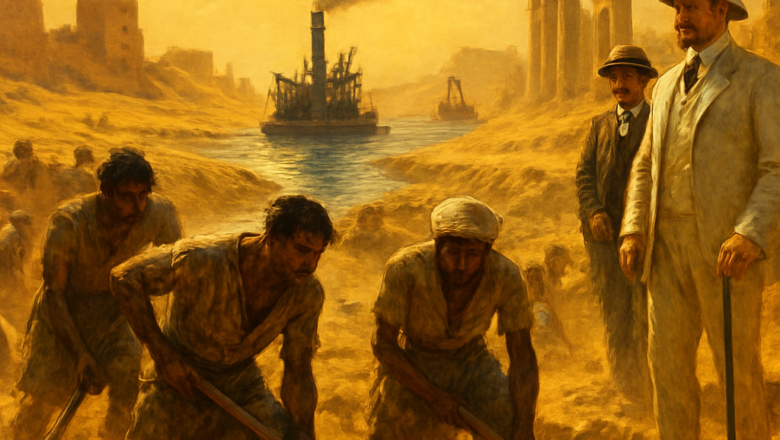
Pharaohs’ Ditch: The First Suez Canal The idea of carving a waterway between the Mediterranean and Red Seas isn’t a 19th-century invention—it’s a dream that flickered to life thousands of years before Ferdinand de Lesseps ever set foot in Egypt. Long before steam shovels and dynamite, the ancient Egyptians, with nothing but copper tools and sheer human muscle, attempted what would become one of history’s most ambitious engineering feats. Their canal wasn’t just a trade route; it was a lifeline, a military artery, and a divine offering—one that would shape the fate of empires for centuries to come. The first whispers of this grand project trace back to the Twelfth Dynasty, around 1850 BCE, under the rule of Pharaoh Senusret III. Unlike the modern Suez Canal, which slices straight through t...
Suez Canal Transit: An Engineer’s Perspective

Suez Canal Transit: An Engineer’s Perspective

Blogs
The Approach: From Pirate Waters to Controlled Transit The last stretch of the Red Sea before the Suez Canal is a study in contrasts—where the raw, unpredictable tension of the Gulf of Aden gives way to the cold, methodical rhythm of controlled transit. For the engine room crew, this shift isn’t just about geography; it’s a fundamental change in priorities, mindset, and even the way you breathe. Just hours earlier, the ship had been a fortress. Lookouts scanned the horizon for suspicious skiffs, the bridge maintained radio silence except for mandatory check-ins with naval patrols, and the engine room operated in a state of heightened readiness. Every knock, every vibration was scrutinized—not for mechanical faults, but for the unthinkable: the sudden loss of power that could leave the ves...