

Friday, September 18
Shadow

Posts

Seafarer Blogs & Maritime Insights: Your Guide to Life at Sea
Welcome to the seamen.es Article Hub! Discover firsthand seafarer blogs, expert maritime career advice, industry updates, and essential tips for upgrading your qualifications. We bridge the gap between greenhorns and experienced mariners by delivering verified, practical knowledge straight from the fleet. Stay informed, upgrade your skills, and navigate your maritime career with confidence.

Drones at Sea: Legal Traps and Why I Changed My Mind

Drones at Sea: Legal Traps and Why I Changed My Mind

Blogs
The Suez Canal Incident: A Wake-Up Call It was supposed to be just another routine transit—another stretch of blue water, another set of coordinates to log, another day closer to the next port. But for one Liberian-flagged vessel, a single decision turned a mundane passage through the Suez Canal into a nightmare that would ripple through maritime circles for months. The incident, later detailed in a flag administration circular, wasn’t just a cautionary tale; it was a brutal reminder of how quickly things can go wrong when assumptions clash with reality. The crew member—let’s call him Alex—had saved up for months to buy a high-end quadcopter. A hobbyist with a passion for photography, he’d spent evenings scrolling through drone footage of sunsets over the ocean, imagining the shots he cou...

USCG Prep: IGS & Crane Tests on a Tanker

USCG Prep: IGS & Crane Tests on a Tanker

Shipping Companies
The Stakes: Why USCG Inspections Can’t Be Failed Let’s be real—no one wakes up excited about a USCG inspection. The moment you see those three letters on the horizon, your stomach does a slow roll, even if you’ve done everything by the book. It’s not just another port state control; it’s the Olympics of maritime compliance, where the judges don’t just hand out medals—they hand out detention notices, fines, and enough paperwork to wallpaper the engine room. I’ve been through enough of these to know the drill: the closer you get to U.S. waters, the tighter the knot in your chest becomes. It’s not just the fear of failing—it’s the knowledge that even if your ship is in near-perfect condition, one overlooked detail can turn a routine inspection into a full-blown nightmare. And trust me, the C...
Tankers vs Cruise Ships: Size & Gear Compared

Tankers vs Cruise Ships: Size & Gear Compared

Blogs
Size Matters: Tonnage and Scale at Sea Standing on the deck of a 46,000-ton tanker, you might feel like you’re on top of the world—until a cruise liner glides past, and suddenly, your vessel looks like a toy boat in comparison. The sheer scale of modern maritime engineering is staggering, and nowhere is this more apparent than when you pit a workhorse tanker against a floating resort like those in the Holland America Line fleet. But size isn’t just about visual impact; it’s a complex interplay of measurements, economics, and operational realities that define how these ships function in the real world. The Numbers Behind the Giants Let’s start with the basics: deadweight tonnage (DWT) and gross tonnage (GT). These aren’t just arbitrary numbers—they tell entirely different stories about a sh...
Surviving the Steel Box: Gadgets & Life at Sea

Surviving the Steel Box: Gadgets & Life at Sea

Blogs
Home in 200 Square Feet: Engineering Comfort Let’s be real—when most people picture a seafarer’s cabin, they imagine a claustrophobic metal box with a creaky bunk, a flickering lightbulb, and the faint smell of diesel fumes seeping through the walls. And yeah, if we’re talking about a rust bucket from the ‘80s, that’s not entirely wrong. But on a modern vessel—especially one built after 2006—life below deck is a different story. My cabin isn’t the Ritz, but it’s a damn sight better than the horror stories my old man used to tell about his first ship, where the "ventilation" was a porthole you couldn’t open because it was welded shut. So, what’s it *actually* like? Let’s break it down. The Layout: Less "Prison Cell," More "Tiny Apartment" First off, the space. My cabin is roughly 200 squar...
STS on a Tanker: An Inside Look at Sea Transfers

STS on a Tanker: An Inside Look at Sea Transfers

Blogs
The Prelude: Planning an STS Operation You don’t just wake up one morning, point two tankers at each other, and start pumping oil. An STS operation is like a high-stakes ballet—every move is choreographed months in advance, and one wrong step can turn the whole performance into chaos. The planning phase isn’t just paperwork; it’s the foundation that keeps two 200,000-ton giants from turning into scrap metal in the middle of the ocean. 1. The Chess Game of Initial Planning Before a single mooring line is thrown, someone has to answer the big questions: Where? When? How? And, most importantly, Will this actually work? Route and Location: Not every patch of water is suitable for an STS. We’re talking about areas with enough depth (so neither ship runs aground), minimal traffic (so we don’t...
Why Your Separator Won’t Discharge or Close: A Tech Guide

Why Your Separator Won’t Discharge or Close: A Tech Guide

Blogs
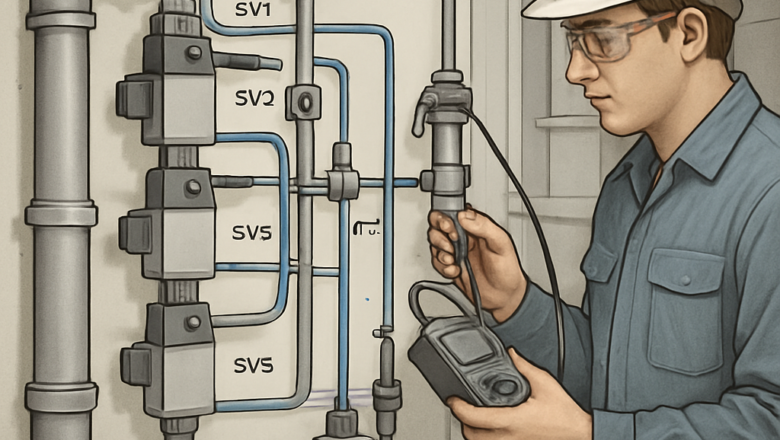
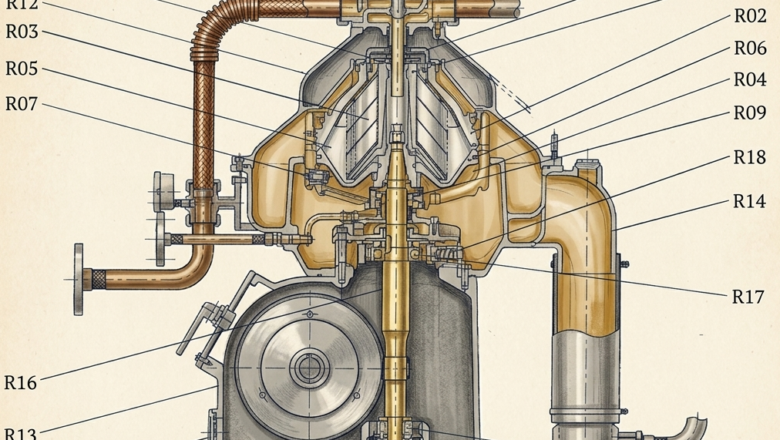
Understanding the Role of Solenoid Valves in Separator Operation At the heart of every separator’s smooth operation lies a trio of unsung heroes: the solenoid valves SV1, SV2, and SV5. These electromechanically operated valves don’t just regulate the flow of control water—they dictate the very rhythm of the separator’s opening and closing cycles. When they work in harmony, the system hums along effortlessly. But when one falters, even slightly, the entire process can grind to a halt. Let’s break down how each valve pulls its weight—and what happens when they don’t. SV1: The Gatekeeper of Full Opening When the separator needs to fully open—whether to discharge accumulated sludge or prepare for a new batch of dirty oil—SV1 takes center stage. This valve is responsible for directing control w...
Vibration in Samgong SJ Separator: Time for Repairs?

Vibration in Samgong SJ Separator: Time for Repairs?

Shipping Companies
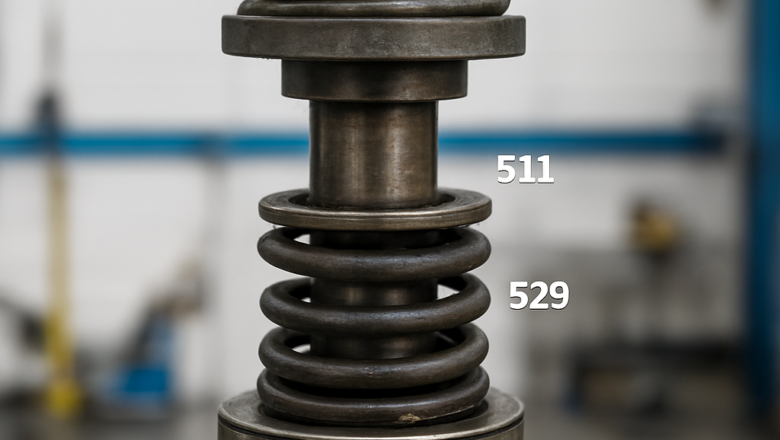
Why Your Samgong SJ Separator Vibrates Excessively Let’s be honest—when your Samgong SJ separator starts shaking like it’s possessed, it’s not just annoying. It’s a red flag. Excessive vibration isn’t just a nuisance; it’s your machine screaming for help before something really bad happens. And more often than not, the culprit lies in a handful of critical components: the vertical shaft, its bearings, and those all-important springs. If you’ve ever ignored a strange rattle or dismissed a slight wobble, this is where things start to unravel. So, why does your separator vibrate like it’s auditioning for a heavy metal band? Let’s break it down. The Vertical Shaft: The Backbone That Can’t Afford to Wobble Think of the vertical shaft as the spine of your separator. It’s what keeps everything a...
WDU-1 Water Detector Errors: Diagnosing & Calibrating

WDU-1 Water Detector Errors: Diagnosing & Calibrating

Port State Control
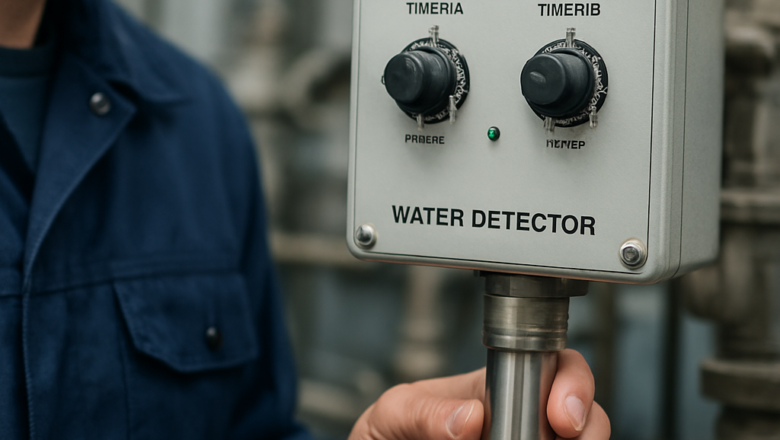
Understanding the WDU-1 System Components The WDU-1 water detection system is more than just a set of sensors and a control box—it’s a carefully engineered solution designed to safeguard your separator from the risks of excessive water contamination. At its core, the system relies on two primary components: the WDU-1 control unit and the stainless steel (SUS-304) sensor with Teflon insulation. Each plays a distinct role in ensuring accurate, reliable monitoring, and when they work together seamlessly, they minimize the chances of false alarms while maximizing protection for your equipment. The Control Unit: The Brain of the Operation The WDU-1 control unit is where the magic happens—or rather, where the data is processed, decisions are made, and alerts are triggered. Housed in a compact, i...
Mastering Samgong Timing to Prevent Fuel Loss

Mastering Samgong Timing to Prevent Fuel Loss

Blogs
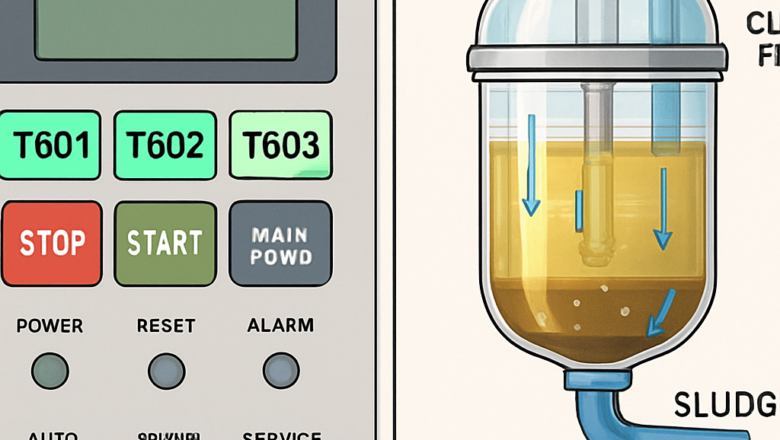
The Samgong control panel doesn’t just flip switches—it orchestrates a tightly synchronized ballet of water and pressure, where every millisecond counts. At the heart of this operation lies the timing chart, a precise sequence of three interdependent phases that dictate how the separator bowl opens, clears, and reseals. Misjudge even one of these intervals, and the system either fails to discharge sludge properly or—worse—dumps perfectly good fuel into the waste tank. Let’s break down how these phases work, why their timing is non-negotiable, and how they map to the physical mechanics of the separator. The Three-Phase Sequence: A Chain Reaction of Precision The FSH-1P-TR’s timing chart is built around three core parameters: T603 (Sealing Water), T602 (Replacement Water), and T601 (Discharg...
Why Your Samgong SJ Separator Dumps Fuel into Sludge

Why Your Samgong SJ Separator Dumps Fuel into Sludge

Blogs
Understanding the Role of the Main Seal Ring The Main Seal Ring is one of those unsung heroes in the Samgong SJ separator—quietly doing its job until, well, it doesn’t. Nestled deep within the drum assembly, this component is the last line of defense against fuel leaking where it shouldn’t. But what exactly does it do, and why does it matter so much? Let’s break it down. The Function: More Than Just a Ring At its core, the Main Seal Ring is a dynamic seal designed to prevent processed fuel from escaping into the sludge outlet. Here’s how it works in practice: Pressure Barrier: During operation, the separator generates significant internal pressure as fuel is forced through the bowl. The Main Seal Ring sits at the interface between the rotating and stationary parts of the drum, maintai...