
Friday, June 19
Shadow

Posts

Seafarer Blogs & Maritime Insights: Your Guide to Life at Sea
Welcome to the seamen.es Article Hub! Discover firsthand seafarer blogs, expert maritime career advice, industry updates, and essential tips for upgrading your qualifications. We bridge the gap between greenhorns and experienced mariners by delivering verified, practical knowledge straight from the fleet. Stay informed, upgrade your skills, and navigate your maritime career with confidence.

Sanctions at Sea: The Hidden Risks of ‘Gray’ Cargo Jobs

Sanctions at Sea: The Hidden Risks of ‘Gray’ Cargo Jobs

Gas Carriers
The Allure of High-Risk, High-Reward Shipping Jobs There’s a reason why the maritime industry has always had its share of gamblers—men and women willing to roll the dice on jobs that promise big payouts but come with even bigger risks. For some seafarers, the decision to sign onto a sanctioned vessel isn’t born out of ignorance or desperation, but a calculated bet on the chance to earn in a few months what others make in a year. The ships may fly under false flags, the cargo manifests might be forged, and the ports of call could be in nations under heavy sanctions, but the money? That’s very, very real. Take the Ullswater, for example—a vessel that’s become something of a legend in certain circles. Officially, it’s just another gas carrier plying its trade in the Mediterranean. Unofficial...
Life at Sea: Starlink, Gyms & Soviet-Era Habits

Life at Sea: Starlink, Gyms & Soviet-Era Habits

Shipping Companies
Starlink at Sea: Breaking the Isolation Barrier For decades, life at sea was defined by isolation. The vast, empty horizon wasn’t just a view—it was a psychological boundary. Communication with the outside world was a luxury, not a given. Crew members on merchant vessels, tankers, and offshore platforms relied on patchy, expensive satellite connections that could vanish with a shift in the weather or a technical glitch. Emails trickled in like Morse code, video calls were a pipe dream, and even basic weather updates arrived with a delay that could mean the difference between smooth sailing and a storm-tossed nightmare. The sea was a place where time moved differently, where the rest of the world felt distant, almost unreal. Then came Starlink. The arrival of SpaceX’s satellite internet con...
VLAC & VLEC Ships: The Next Wave in Gas Transport

VLAC & VLEC Ships: The Next Wave in Gas Transport

Gas Carriers
The Rise of VLAC and VLEC: Why Now? The maritime industry is no stranger to evolution, but the sudden surge in Very Large Ammonia Carriers (VLACs) and Very Large Ethane Carriers (VLECs) feels less like a gradual shift and more like a full-throttle sprint toward the future. These aren’t just bigger ships—they’re vessels built for a world that’s rapidly redefining what it means to move energy. So why now? The answer lies in a perfect storm of market forces, geopolitical upheavals, and an urgent global push toward decarbonization. Let’s break it down. The Ammonia Revolution: More Than Just a Fertilizer For decades, ammonia was the quiet workhorse of the agricultural industry—a critical component in fertilizers, but hardly the stuff of maritime headlines. That’s changed. Today, ammonia is bein...
Life at Sea: Internet & Food Realities on LPG Ships

Life at Sea: Internet & Food Realities on LPG Ships

Gas Carriers
The Digital Divide: Internet Access Across LPG Fleets For seafarers, the ocean isn’t just a workplace—it’s a temporary home. And in 2024, home isn’t home without the internet. Yet, when it comes to connectivity on LPG vessels, the gap between the haves and have-nots is as vast as the waters these ships traverse. Some companies treat Wi-Fi like a basic necessity, while others ration it like a scarce commodity, leaving crews to navigate a frustrating digital divide that shapes everything from morale to mental health. Take Dorian LPG, for example. Their decision to equip vessels with Starlink—offering crews 2–3 GB of data per day—has been a game-changer. For the first time, sailors can video-call their families without buffering, stream a movie after a long shift, or even attend an online co...
Handling Hazardous Cargo: VCM, Butadiene & Ammonia Risks

Handling Hazardous Cargo: VCM, Butadiene & Ammonia Risks

Gas Carriers
The Deadly Chemistry: Why VCM and Butadiene Are Cancer Risks There’s a reason why some chemicals earn the label "silent killers." They don’t announce their danger with immediate burns or choking fumes—no, they work quietly, insidiously, rewriting the body’s blueprint cell by cell until years later, the damage surfaces in ways no one saw coming. Vinyl chloride monomer (VCM) and 1,3-butadiene are two such chemicals. Both are cornerstones of the petrochemical industry, shipped in vast quantities across oceans, yet their true cost isn’t measured in barrels or profits, but in the lives of the workers who handle them. To understand why these substances are so feared, you have to start with their chemistry—and how it turns them into ticking time bombs for human health. The Molecular Menace: How V...
Sanctioned Ships: Iran-China Route & Career Risks

Sanctioned Ships: Iran-China Route & Career Risks

Gas Carriers
The Iran-China Trade Route: A Sanctions Hotspot The maritime corridor stretching from Iran’s oil-rich ports to China’s industrial hubs isn’t just another shipping lane—it’s one of the most heavily contested trade routes in the world. At the heart of this tension lies a simple economic reality: Iran, cut off from much of the global financial system by U.S. sanctions, relies on China as its largest customer for crude oil and condensate. In return, China secures a steady supply of discounted energy, often at prices well below market rates. But this transaction comes with a steep geopolitical cost. Every barrel of Iranian oil that reaches Chinese shores does so in defiance of U.S. sanctions, turning the vessels that transport it into moving targets for enforcement agencies like the Office of F...
Dual-Fuel Engines: The Future of Maritime Power

Dual-Fuel Engines: The Future of Maritime Power

Gas Carriers
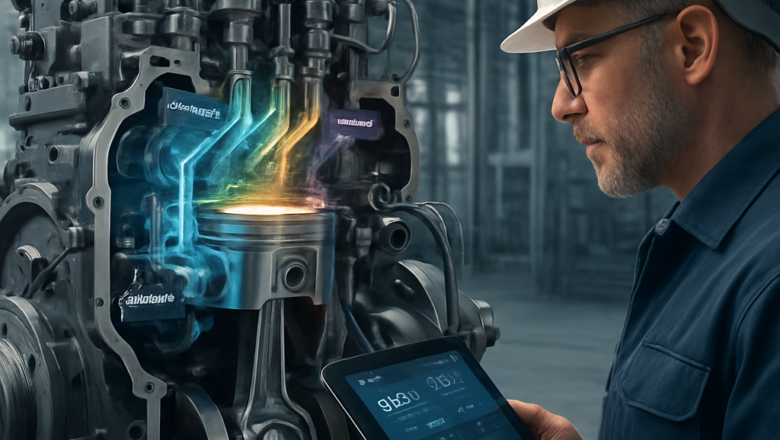
The Rise of Dual-Fuel Technology in Shipping The maritime industry is undergoing one of its most significant transformations in over a century. The once-dominant roar of heavy fuel oil (HFO) engines is gradually being replaced by the quieter, cleaner hum of dual-fuel (DF) systems—a shift driven not just by innovation, but by necessity. As the world tightens its grip on emissions regulations and the clock ticks toward 2030 and 2050 deadlines, shipowners and operators are racing to adopt engines capable of running on both conventional fuels and cleaner alternatives like liquefied petroleum gas (LPG), ethane, and ammonia. This isn’t just a trend; it’s a fundamental reimagining of how ships are powered. The Push for Cleaner Fuels: Environmental and Regulatory Drivers The writing has been on th...
Yanmar SCR:A Complete Guide to Selective Catalytic Reduction

Yanmar SCR:A Complete Guide to Selective Catalytic Reduction

Insights
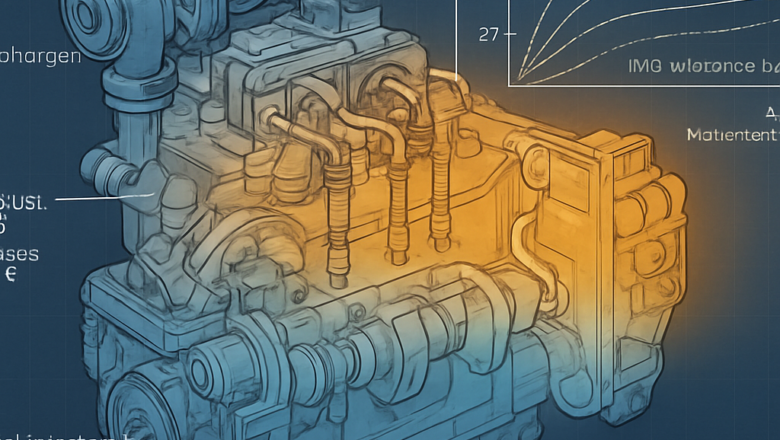
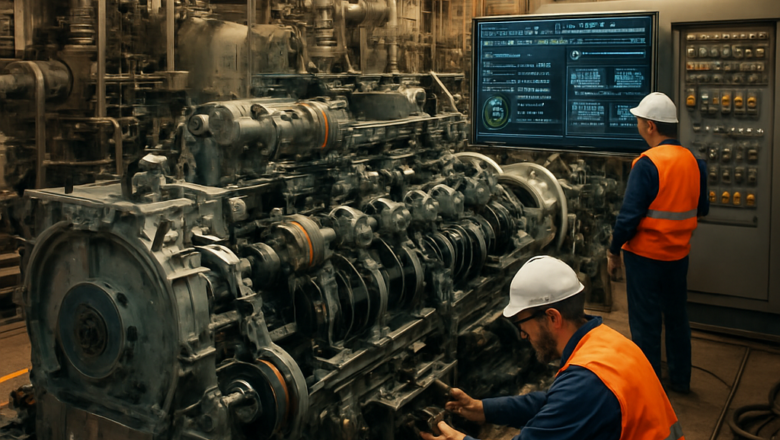
Introduction: The Environmental Challenge for the Modern Fleet The modern maritime industry is undergoing a massive transformation driven by stringent environmental regulations. The International Maritime Organization (IMO) is steadily tightening standards aimed at reducing the anthropogenic impact of the merchant fleet on the Earth's atmosphere. One of the most critical and strictly enforced documents in this area is Annex VI of the International MARPOL Convention (MARPOL Annex VI), which regulates air pollution from ships. The greatest challenge for shipowners and marine engineers is traditionally meeting the IMO Tier III standards. This regulation requires a radical reduction—by approximately 80% compared to Tier I—in nitrogen oxide (NOx) emissions when a vessel operates with...
Marine Fuel Management: From Oil Refining to Engine Efficiency

Marine Fuel Management: From Oil Refining to Engine Efficiency

Insights
In the context of modern environmental regulations and the transition to low-sulfur fuels, a deep understanding of fuel management processes has become critically important for every mariner. The recent two-day fuel management course covered the entire cycle: from crude oil extraction to engine performance optimization. Oil Refining Basics and Fuel Types The production of marine fuel begins at the refinery with distillation, where crude oil is separated by weight when heated. Heavy fractions undergo cracking — a process of breaking down long molecular chains into lighter, more valuable ones. For the maritime industry, the distinction between the main types of fuel is crucial: HFO, VLSFO, LSMGO, and MDO. With the introduction of IMO 2020 regulations, the global fleet's sulfur ...
Life at Sea: The Harsh Reality of Food on Ships

Life at Sea: The Harsh Reality of Food on Ships

Gas Carriers
The Menu No One Asked For Imagine waking up after a grueling 12-hour shift, your body aching, your stomach growling—only to be greeted by a steaming plate of chicken feet, their scaly skin glistening under the fluorescent lights of the ship’s mess. Or perhaps it’s a bowl of pig trotters, the gelatinous texture of the skin sticking to your fork as you poke at it half-heartedly. For many seafarers aboard Pacific Gas and Dorian vessels, this isn’t a nightmare. It’s just Tuesday. The complaints about the food on these ships aren’t just about taste—they’re about survival. When your job demands physical endurance, mental sharpness, and the ability to function in high-stress environments, the last thing you need is a meal that feels like a cruel joke. Yet, time and time again, sailors describe o...