

Understanding Sludge Buildup in Solid-Wall Separators
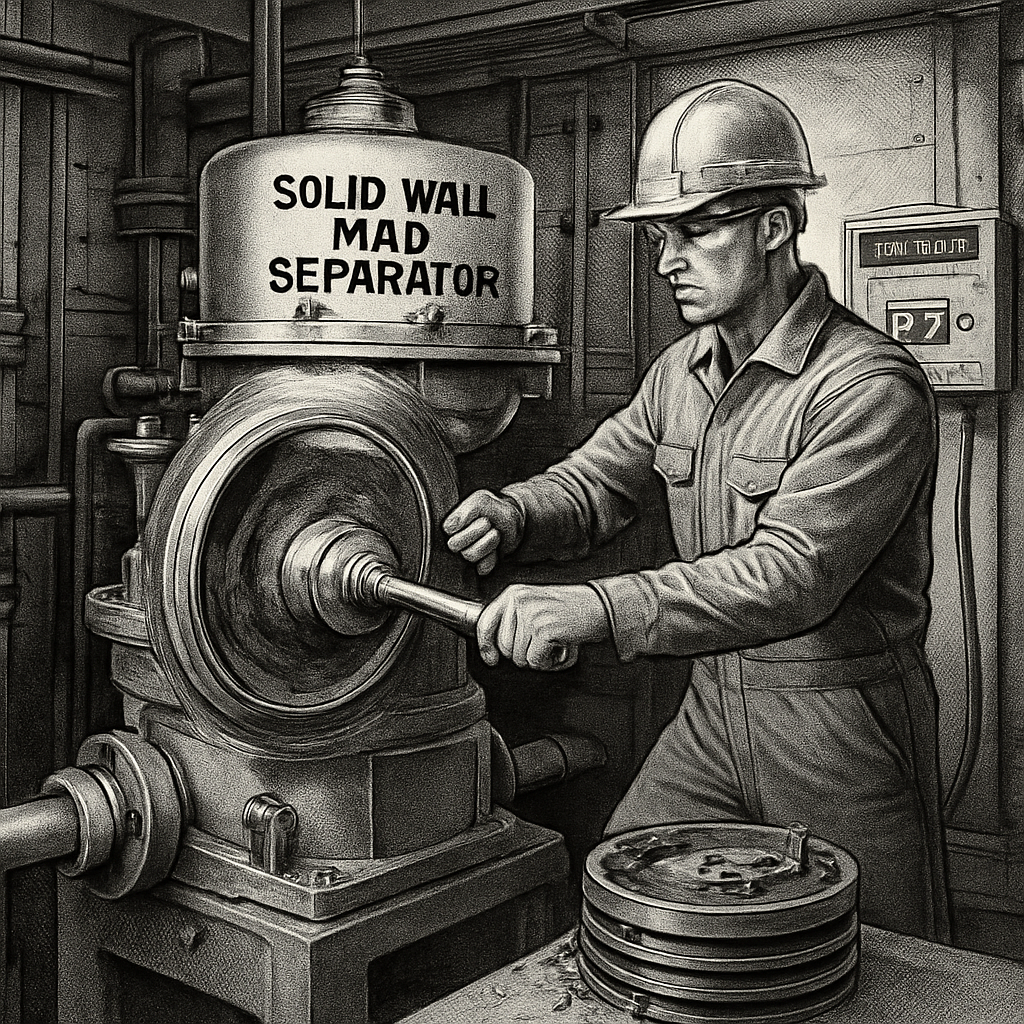 Sludge accumulation in MAB-series separators isn’t just an inconvenience—it’s a ticking time bomb for efficiency and equipment longevity. Unlike self-cleaning models, which periodically eject accumulated solids through hydraulically actuated discharge ports, solid-wall separators like the MAB series rely entirely on manual intervention. This fundamental difference shapes everything from maintenance schedules to operational risks. Here’s what happens inside the bowl—and why it matters.
Where Sludge Takes Hold (And Why It’s Different in MAB Separators)
In self-cleaning separators, sludge collects in a dedicated sludge space before being forcibly expelled during a discharge cycle. The MAB series, however, lacks this mechanism. Instead, sludge clings directly to the inner walls of the bowl, forming a stubborn, uneven layer that thickens with every hour of operation. Over time, this buildup creeps inward, encroaching on the disc stack—the heart of the separator’s efficiency. The geometry of the bowl exacerbates the problem: the conical shape of the MAB’s solid wall means sludge doesn’t just sit at the bottom; it climbs upward, narrowing the effective separation zone and disrupting the carefully engineered flow paths.
This isn’t just a matter of reduced capacity. As sludge accumulates, it alters the hydrodynamics inside the bowl. The liquid’s path through the disc stack becomes turbulent, creating dead zones where separation efficiency plummets. Worse, the sludge itself can harden or stratify, forming layers of varying density. Operators often report finding a tar-like crust near the bowl’s neck, while softer, more fluid sludge pools at the base. This inconsistency makes manual cleaning unpredictable—what comes out easily one week might require chisels and solvents the next.
More information on Why New England Imports Gas Despite U.S. Reserves
Fuel Quality: The Invisible Hand Shaping Sludge Behavior
The type of fuel processed dictates not just how much sludge forms, but what kind. Heavy fuel oil (HFO), for instance, is a notorious sludge producer. Its high asphaltene and sediment content means separators working with HFO will see rapid buildup—often requiring cleaning every 24 to 72 hours, depending on throughput. The sludge itself is dense, sticky, and prone to caking, particularly in cooler operating conditions. Distillates like marine gas oil (MGO) or diesel, by contrast, produce far less sludge, but what does form is often fine and abrasive, acting like sandpaper on the disc surfaces over time.
Real-world operators have learned to read these differences like a language. One chief engineer on a Panamax tanker recounted how switching from HFO to a low-sulfur distillate blend reduced sludge buildup so dramatically that cleaning intervals stretched from daily to weekly. But the relief was short-lived: the distillate’s lighter sludge, while less voluminous, proved far more insidious. It didn’t just coat the bowl—it infiltrated the disc stack, wedging itself into the microscopic gaps between discs. The result? A gradual but relentless decline in separation efficiency, marked by rising water content in the purified fuel and, eventually, a costly overhaul to replace worn discs.
Lubricating oils present yet another challenge. Sludge from lube oil systems often contains metallic particles and oxidation byproducts, which can form a gritty, paste-like layer that’s nearly impossible to remove without disassembly. Operators in power plants using MAB separators for turbine lube oil report that even a 1mm layer of this sludge can reduce flow rates by 15-20%, forcing pumps to work harder and increasing energy consumption.
How Operators Decide When to Clean: The Art of Reading the Signs
There’s no universal rule for cleaning intervals in MAB separators—only guidelines and hard-won experience. Operators rely on a mix of visual inspections, performance metrics, and gut instinct to determine when the bowl has reached its limit. Here’s how they do it:
- Visual Checks (The First Line of Defense):The simplest method is also the most revealing. After shutting down the separator and allowing it to cool, operators remove the bowl cover and inspect the sludge layer. A flashlight and a depth gauge are essential tools here. If the sludge has reached 50-60% of the bowl’s capacity—or if it’s visibly encroaching on the disc stack—it’s time to clean. Some crews keep a reference photo of a “clean” bowl to compare against, noting how the sludge’s color and texture change over time. Dark, tarry sludge suggests heavy fuel contamination, while a lighter, granular buildup often points to distillate or lube oil issues.
- Pressure Drops and Flow Rate Changes:Sludge doesn’t just sit idle—it actively disrupts the separator’s performance. As it accumulates, it restricts the flow path, forcing the feed pump to work harder to maintain throughput. Operators monitor this by tracking the differential pressure across the separator. A sudden spike—say, from 0.5 bar to 1.2 bar—is a red flag that sludge is choking the system. Similarly, a drop in flow rate (e.g., from 5 m³/h to 3.5 m³/h with no change in pump settings) signals that the bowl’s effective volume has shrunk. Some advanced setups use flow meters and pressure transmitters to log this data, but even manual readings taken at regular intervals can reveal trends.
- Vibration and Noise:This is where things get dangerous. Sludge buildup rarely occurs evenly. As it accumulates asymmetrically, it throws the bowl’s balance off-kilter, introducing harmful vibrations. Operators attuned to their equipment will notice a change in the separator’s “hum”—a low-frequency growl or rattle that wasn’t there before. Vibration sensors, if installed, will show readings creeping toward the 9.0 mm/s RMS limit. Ignoring this is a gamble: even a slightly unbalanced bowl can accelerate wear on the spindle bearings, leading to costly failures. One offshore platform crew learned this the hard way when a neglected MAB separator’s vibrations sheared a spindle key, causing the bowl to seize mid-operation and requiring a full replacement.
- Separation Efficiency Metrics:The ultimate proof of sludge’s impact lies in the quality of the separated product. For fuel separators, this means monitoring the water content in the purified fuel (via centrifuge tests or inline water-in-fuel sensors). A rise from 0.1% to 0.5% water suggests the disc stack is compromised. For lube oil systems, operators track particle counts and oxidation levels—a sudden increase in either indicates the separator is no longer doing its job. Some crews run daily “clear and bright” tests on fuel samples, holding them up to the light to check for haze or sediment. If the sample fails, the separator is due for cleaning.
The Risks of Letting Sludge Win
Neglecting sludge removal in a solid-wall separator isn’t just a maintenance oversight—it’s a direct threat to the entire system. The consequences unfold in stages, each more costly than the last:
- Reduced Separation Efficiency:Sludge doesn’t just take up space; it disrupts the centrifugal forces that drive separation. As the sludge layer thickens, it alters the bowl’s internal geometry, creating turbulence and short-circuiting the flow paths. The result? Water and solids that should be ejected end up in the purified product. In fuel systems, this means increased engine wear; in lube oil systems, it accelerates bearing and gear damage. One marine engineering team traced a series of catastrophic cylinder liner failures back to a single MAB separator that hadn’t been cleaned in over a month. The sludge buildup had allowed abrasive particles to slip through, scoring the liners and leading to a $250,000 repair bill.
- Disc Stack Damage:The disc stack is the separator’s most delicate component, and sludge is its nemesis. As sludge encroaches on the stack, it wedges between the discs, forcing them apart and misaligning their precise spacing. Over time, this causes permanent deformation—discs warp, surfaces become pitted, and the stack’s ability to create the thin, laminar flow layers essential for separation is destroyed. Replacing a disc stack isn’t just expensive (often 20-30% of the separator’s cost); it’s a time-consuming process that can take a system offline for days. Operators who’ve been through it describe the discs as “potato chips”—once bent, they’re nearly impossible to restore to their original flatness.
- Bowl Imbalance and Catastrophic Failure:This is the nightmare scenario. Uneven sludge distribution creates an imbalance in the bowl’s mass, which, when spinning at thousands of RPM, generates destructive centrifugal forces. The first sign is usually excessive vibration, followed by a telltale metallic screech as the spindle bearings begin to fail. If the separator isn’t shut down immediately, the imbalance can cause the bowl to detach from the spindle, turning it into a high-speed projectile. In one documented case, an unchecked MAB separator on a cargo ship sheared its mounting bolts, sending the bowl crashing into the engine room bulkhead. The damage? Over $500,000 in repairs, not to mention the lost revenue from the vessel being out of service for six weeks.
- Increased Energy Consumption:A sludge-choked separator forces the feed pump to work harder, drawing more power to maintain the same throughput. In large industrial setups, this can translate to thousands of dollars in additional energy costs annually. One refinery calculated that a single MAB separator running with excessive sludge buildup consumed an extra 12 kW/h—adding up to $10,000 per year in wasted electricity. The fix? A simple cleaning schedule that took less than an hour per week.
Sludge in a solid-wall separator isn’t just dirt—it’s a dynamic, destructive force that reshapes the entire system if left unchecked. The key to managing it lies in understanding its behavior, monitoring its impact, and acting before it crosses the line from nuisance to disaster. For operators, that means treating sludge not as an inevitable byproduct, but as a critical variable in the separator’s performance—and one that demands respect, vigilance, and a willingness to get their hands dirty.