

The Bermuda Triangle: Aliens or Physics?
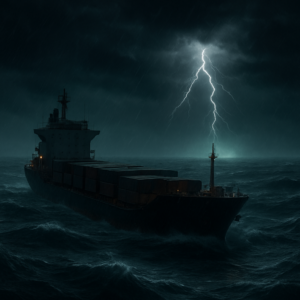 The Bermuda Triangle—just the name alone is enough to send a shiver down the spine of anyone who’s ever read a sensational tabloid or watched a late-night documentary about “the world’s most mysterious waters.” Bounded by Miami, Bermuda, and San Juan, this patch of the Atlantic Ocean has been blamed for everything from alien abductions to time warps, all thanks to a reputation that’s been carefully cultivated over centuries. But how did this stretch of sea become the poster child for maritime mystery? And more importantly—what’s *actually* going on here?
The Birth of a Legend: A Ship Called Rosalie and the Ghosts of History
The Bermuda Triangle’s dark fame didn’t appear overnight. It was a slow burn, fueled by a mix of genuine tragedy, human error, and a healthy dose of myth-making. One of the earliest recorded incidents that set the tone for the Triangle’s eerie reputation dates back to 1840, when the French merchant ship Rosalie was found adrift near the Bahamas. The vessel was in perfect condition—sails set, cargo intact—but its crew had vanished without a trace. No distress signals, no signs of struggle, just… silence. The case was never solved, and in the absence of answers, the imagination of the public ran wild. Was it pirates? A mutiny? Or something far more sinister?
Fast forward to the 20th century, and the Triangle’s notoriety exploded. The 1945 disappearance of Flight 19, a squadron of five U.S. Navy bombers on a routine training mission, became the stuff of legend. The planes vanished mid-flight, and a rescue aircraft sent to find them suffered the same fate. Then there was the USS Cyclops, a massive Navy cargo ship that disappeared in 1918 with 309 souls on board—still the largest non-combat loss of life in U.S. Naval history. No wreckage, no bodies, no explanations. Just… gone.
By the 1970s, the Bermuda Triangle had become a cultural phenomenon, thanks in no small part to books like Charles Berlitz’s The Bermuda Triangle, which leaned heavily into the supernatural. Aliens, Atlantis, time portals—you name it, the Triangle was blamed for it. But here’s the thing: for all the hype, the Triangle isn’t even the most dangerous stretch of water in the world. Statistically, it’s no more deadly than any other heavily trafficked shipping lane. So why does it hold such a grip on our collective imagination?
More information on Toxic Voyages: The Hidden Dangers of VCM and Butadiene
A Sailor’s Perspective: Calm Seas and a Near-Miss with a Rich Kid’s Plane
I’ll never forget the first time I sailed through the Bermuda Triangle. It was 2008, and I was serving as a junior engineer on a bulk carrier making the run from Houston to Rotterdam. When the captain announced we’d be passing through the infamous zone, I’ll admit—I felt a flicker of unease. Would the compass spin wildly? Would the engines cut out without warning? Would we see strange lights in the sky?
The reality? It was one of the most uneventful legs of the voyage.
The weather was picture-perfect: a gentle swell, a sky so blue it hurt to look at, and a breeze that carried the faintest hint of salt and something floral—maybe the distant scent of Bermuda’s oleander blooms. The crew was relaxed, joking about how we’d all be abducted by aliens before our next paycheck. The only “unusual” thing that happened was when the captain decided to run a surprise emergency drill as we approached the U.S. coast. Just as we were mustering on deck, a private jet roared overhead, so low we could see the pilot’s sunglasses glinting in the sun. Turns out, it was some trust-fund kid buzzing the ocean for fun. No UFOs, no rogue waves, no vanishing acts—just another day at sea.
Over the years, I’ve crossed the Triangle more times than I can count. I’ve seen it in all its moods: glassy calm, storm-tossed, and everything in between. But never once have I witnessed anything that couldn’t be explained by the laws of physics or human error. So why do the myths persist? Maybe it’s because the ocean is vast, unpredictable, and humbling. Maybe it’s because we *want* to believe in the unexplained. Or maybe it’s because, for all our technology, the sea still has a way of reminding us that we’re not as in control as we’d like to think.
The Science Behind the Sinkings: Methane, Monster Waves, and the Sound of Madness
If aliens and Atlantis aren’t to blame, what *is* causing ships and planes to disappear in the Bermuda Triangle? As it turns out, the ocean has plenty of tricks up its sleeve—none of them supernatural, but all of them terrifying in their own right.
1. Methane Hydrate Eruptions: The Ocean’s Invisible Trapdoor
One of the most compelling scientific explanations for the Triangle’s disappearances involves methane hydrates—frozen deposits of methane gas trapped beneath the ocean floor. Under the right conditions (a shift in pressure or temperature), these hydrates can destabilize and erupt in massive bubbles, rising to the surface like a giant, invisible belch.
Here’s why that’s a problem: when methane displaces water, it drastically reduces the water’s density. A ship floating in that patch of ocean suddenly finds itself in a liquid that’s more like a frothy milkshake than the sea. Buoyancy plummets, and the vessel can sink in a matter of seconds—no time for distress calls, no time to abandon ship. In 2003, Australian researchers successfully demonstrated this effect in a lab, showing how a model boat could be sent to the bottom in an instant by a methane bubble. It’s not hard to imagine how a real ship, caught in the wrong place at the wrong time, could suffer the same fate.
2. Rogue Waves: The Ocean’s Silent Assassins
For centuries, sailors have told stories of “walls of water” appearing out of nowhere, swallowing ships whole. Until recently, these tales were dismissed as exaggerations—until science proved them right. Rogue waves, also known as “killer waves,” are massive, solitary waves that can reach heights of up to 30 meters (100 feet). They form when smaller waves combine under the right wind and current conditions, creating a monstrous surge that can snap a ship in half like a twig.
The Bermuda Triangle is a hotspot for these waves, thanks to its location in the path of powerful Gulf Stream currents and frequent storm systems. In 1995, the Queen Elizabeth 2 encountered a rogue wave in the North Atlantic that towered over 29 meters (95 feet). The ship survived, but not all are so lucky. Modern cargo vessels and tankers are built to withstand extreme conditions, but older ships—or those caught off guard—stand little chance. A rogue wave doesn’t need to be supernatural to be deadly; it just needs to be in the right place at the right time.
3. Infrasound: The Invisible Terror That Drives Men Mad
This one is perhaps the most chilling of all. Infrasound refers to low-frequency sound waves that are below the range of human hearing but can still affect the body in profound ways. Natural sources of infrasound include storms, earthquakes, and even the movement of large waves. When these waves resonate at certain frequencies, they can induce feelings of dread, nausea, and even hallucinations in those exposed to them.
In the 1990s, researchers at the National Oceanic and Atmospheric Administration (NOAA) proposed that infrasound generated by the Triangle’s turbulent weather could be responsible for some of the “inexplicable” disappearances. Imagine a crew suddenly overwhelmed by panic, convinced they’re seeing ghosts or hearing voices. In their terror, they might abandon ship—or worse, turn on each other. It’s not hard to see how a vessel could be found adrift with no signs of struggle, the crew vanished into the sea. Infrasound doesn’t leave a trace, but its effects can be devastating.
Why the Myth Endures: The Allure of the Unexplained
So if the Bermuda Triangle’s mysteries can be explained by science, why does it still captivate us? Why do we keep reaching for the supernatural when the natural world offers plenty of horrors of its own?
Part of it is human nature. We’re wired to seek patterns, to fill in the gaps when answers elude us. The ocean is the last great frontier on Earth, a place where we’re still discovering new species, new geological formations, and new ways to die. It’s vast, it’s unpredictable, and it doesn’t care about our schedules or our sense of control. When something goes wrong out there, it’s easier to blame aliens or Atlantis than to accept that the sea is simply indifferent to our existence.
But there’s another reason, too: the Bermuda Triangle is a story. It’s a narrative that’s been passed down through generations, embellished with each retelling. It’s a cautionary tale, a reminder that no matter how advanced our technology becomes, the ocean will always have the upper hand. And maybe, just maybe, that’s why we keep coming back to it. Because in a world where so much is known, the Triangle offers something rare: a sense of wonder, a hint of the unknown.
For sailors like me, the Triangle is just another stretch of water—one that demands respect, sure, but not fear. The real danger isn’t aliens or time warps; it’s complacency. It’s assuming that because we have GPS and satellite weather reports, we’re somehow immune to the ocean’s whims. The sea doesn’t play favorites. It doesn’t care if you’re a seasoned captain or a first-time deckhand. It will take you if you’re not paying attention.
So the next time you hear a story about the Bermuda Triangle, take it with a grain of salt. The truth is out there—but it’s not hiding in the stars. It’s in the methane bubbles, the rogue waves, and the eerie silence of a crew driven mad by the sound of the deep.