
The Approach: From Pirate Waters to Controlled Transit
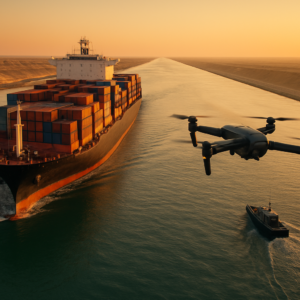 The last stretch of the Red Sea before the Suez Canal is a study in contrasts—where the raw, unpredictable tension of the Gulf of Aden gives way to the cold, methodical rhythm of controlled transit. For the engine room crew, this shift isn’t just about geography; it’s a fundamental change in priorities, mindset, and even the way you breathe.
Just hours earlier, the ship had been a fortress. Lookouts scanned the horizon for suspicious skiffs, the bridge maintained radio silence except for mandatory check-ins with naval patrols, and the engine room operated in a state of heightened readiness. Every knock, every vibration was scrutinized—not for mechanical faults, but for the unthinkable: the sudden loss of power that could leave the vessel dead in the water, a sitting duck in pirate-infested waters. The chief engineer’s nightly rounds included not just temperature checks on the main engine but also ensuring the emergency fire pumps were primed, the fuel transfer systems were locked down, and the blackout procedures were fresh in everyone’s mind. The Gulf of Aden doesn’t forgive hesitation.
More information on Inside PCTC & PCC Ships: Engineering the Ocean Giants
Then, almost imperceptibly, the mood begins to shift. The first sign is the increase in radio traffic. Instead of terse, coded exchanges with warships, the VHF crackles with the measured, bureaucratic cadence of the Suez Canal Authority (SCA). “Vessel *Ocean Pride*, this is Port Said Control. Confirm your ETA at anchorage Point Charlie. Over.” The words are mundane, but their weight is unmistakable: you’re entering a different world now. The second sign is the slowing of the ship. The main engine, which had been thrumming at near-full load to outpace potential threats, now eases back to a deliberate, economical pace. The chief engineer watches the RPM gauge like a hawk, knowing that the canal’s shallow draft and narrow confines demand precise speed control—too fast, and the vessel risks squat effect or bank suction; too slow, and the convoy behind will start breathing down your neck.
The Engine Room’s New Battlefield
In the Gulf of Aden, the engine room’s job was to keep the ship moving at all costs. Now, the challenge is to keep it moving just right. The transition begins with a flurry of preparations:
- RPM Mapping: The canal’s pilots will demand frequent speed adjustments—sometimes every few minutes—as the vessel navigates bends, passes other ships, or enters wider sections. The engineers pre-calculate the optimal fuel rack settings for each RPM range, ensuring the main engine responds instantly to bridge commands. A lag of even 30 seconds could mean the difference between smooth transit and a costly delay.
- Auxiliary Systems on Standby: The canal’s rules require vessels to be ready for sudden stops—whether due to a mechanical failure ahead or an emergency order from the pilot. The engineers test the crash stop procedure, ensuring the main engine can go from full ahead to full astern in under two minutes. They also verify that the steering gear is in perfect working order; in the canal’s tight quarters, a rudder failure isn’t just an inconvenience—it’s a disaster.
- Ballast and Trim Adjustments: The canal’s depth is a constant concern. The engineers work with the bridge to fine-tune the ship’s trim and ballast, ensuring the vessel sits as high in the water as possible without compromising stability. For a fully laden tanker, this might mean transferring hundreds of tons of ballast water in the hours before entry, a process that requires careful coordination to avoid stressing the hull.
- Redundancy Checks: The SCA doesn’t tolerate breakdowns. The engineers run through a checklist of critical systems—generators, pumps, compressors—ensuring that if one fails, another can take over seamlessly. The last thing you want is to lose power mid-transit and drift into the path of an oncoming convoy.
The psychological shift is just as stark. In the Gulf of Aden, the crew’s focus was outward—what’s coming at us? Now, it’s inward—are we ready? The constant hum of the engine, which once felt like a lifeline, now becomes a metronome, counting down the hours until the canal’s jurisdiction takes hold. The engineers who spent weeks sleeping with one ear tuned to the sound of the main engine now find themselves listening for different cues: the whine of the bow thruster testing, the clank of the anchor being prepared for a potential emergency drop, the steady rhythm of the pumps adjusting ballast.
From Vigilance to Precision
For the officers on the bridge, the transition is about handing over control. In the Gulf of Aden, the captain’s word was law; now, the pilot’s instructions are gospel. For the engine room, it’s about anticipating needs before they’re voiced. The chief engineer stands in the control room, watching the RPM trends on the digital display, ready to adjust the fuel supply at a moment’s notice. The second engineer hovers near the main engine, listening for the telltale signs of strain—an unusual vibration, a slight drop in oil pressure—that could signal trouble ahead.
The most surreal moment comes when the ship crosses the invisible line into the canal’s jurisdiction. There’s no fanfare, no marker in the water—just the sudden realization that the rules have changed. The pirates, the warships, the endless tension of the open sea: they’re all behind you now. Ahead lies a different kind of challenge—one where the stakes are just as high, but the threats are measured in meters of clearance and degrees of rudder angle rather than AK-47s and grappling hooks.
And yet, for all the relief of leaving the pirate zone behind, there’s a new kind of pressure. In the Gulf of Aden, you could always outrun trouble. In the Suez Canal, there’s nowhere to run. The ship is committed, the convoy is moving, and the only way out is forward. The engine room’s job is no longer about survival—it’s about perfection.