

Friday, September 18
Shadow

Insights

Welcome to INSIGHTS, a curated space at SEAMEN.ES dedicated to the fascinating world beyond the technical daily routine. Here, we dive deep into the culture, history, and curiosities that define the maritime industry.

What you will uncover in our Insights section:

Nautical History & Legends: Discover the stories of legendary voyages, historical turning points, and the traditions that shaped modern shipping.

Fascinating Facts & Curiosities: From mysterious ocean phenomena to surprising trivia about life at sea, we bring you the stories that spark wonder.

Technological Breakthroughs: Learn about the engineering marvels and innovations that are currently transforming the maritime landscape.

Pro Tips & Lifehacks: Practical advice and clever solutions that benefit both maritime professionals and passionate sea travelers.

Our goal is to broaden your horizons and offer a deeper appreciation for the rich heritage and constant evolution of the sea. Whether you are seeking a moment of professional inspiration or just looking to satisfy your curiosity, this is your go-to destination for all things nautical.

Feed your curiosity and explore the secrets of the sea. Join our INSIGHTS community and discover the hidden stories behind the maritime world.

Power & Precision: The Heart of a Modern Tugboat

Power & Precision: The Heart of a Modern Tugboat

Insights
The Engines: Built for Endurance and Efficiency When you step into the engine room of a modern tugboat, the first thing that strikes you is the sheer controlled chaos of it all—pipes snaking overhead, the deep thrum of machinery vibrating through the deck plates, and the sharp tang of diesel in the air. But beneath that industrial symphony lies something far more deliberate: a pair of engines designed not just to work, but to endure. These aren’t the high-revving, temperamental powerplants you’d find in a sports car. Tugboat engines are built like heavyweight boxers—slow, methodical, and devastatingly effective when it counts. Why Four-Stroke, Medium-Speed Diesels Rule the Tug World If you’ve ever wondered why tugboats almost universally rely on four-stroke, medium-speed diesel engines, th...

Balancing Giants: Tech Behind Tanker Cargo Control

Balancing Giants: Tech Behind Tanker Cargo Control

Insights
The Physics of Stability: Why Tankers Can’t Be One Big Tank Imagine a half-filled bathtub. Now, try tilting it slightly from side to side. The water inside doesn’t just sit there—it surges, slamming against the walls with surprising force. This simple experiment demonstrates the free surface effect, one of the most dangerous phenomena in naval architecture. On a supertanker, where thousands of tons of crude oil slosh inside cavernous holds, the stakes are exponentially higher. Left unchecked, this seemingly harmless movement of liquid can turn a stable vessel into a capsizing nightmare. The Free Surface Effect: A Ticking Time Bomb At its core, the free surface effect is a battle between physics and geometry. When a tank is only partially filled, the liquid inside has room to move. As the s...
From Crude Oil to Ship Fuel: The Refining Secrets

From Crude Oil to Ship Fuel: The Refining Secrets

Insights
The First Step: Distillation and Fractional Separation Crude oil, in its raw form, is a thick, dark, and complex mixture of hydrocarbons—each with its own boiling point, molecular weight, and potential use. The journey from this unrefined sludge to the precise, high-performance fuels that power global shipping begins with one critical process: distillation. This isn’t just heating oil in a pot; it’s a carefully engineered dance of temperature, pressure, and chemistry, unfolding inside towering steel columns that dominate the skyline of any refinery. Here, crude oil is broken down into its fundamental components, or fractions, each of which will later be transformed into the marine fuels that keep vessels moving—from the heavy, tar-like HFO (Heavy Fuel Oil) to the cleaner, low-sulfur altern...
ALCAP vs Traditional Separators: End of Gravity Discs Era

ALCAP vs Traditional Separators: End of Gravity Discs Era

Insights
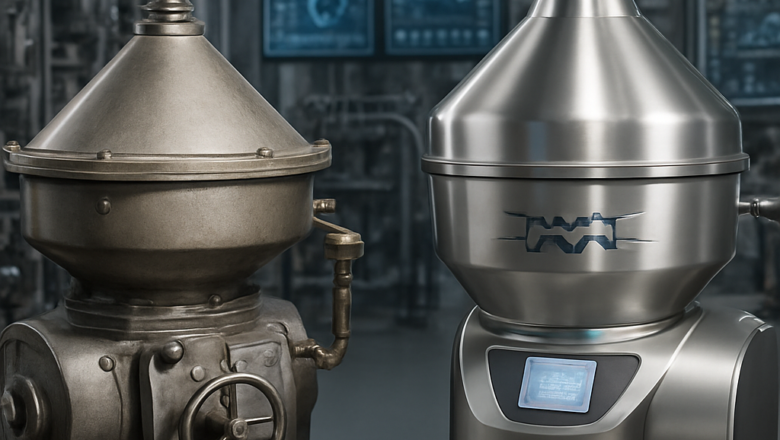
The Limitations of Gravity Disc Separators For decades, gravity disc separators were the workhorse of fuel purification—reliable, if not exactly elegant. Their design is rooted in a simple principle: centrifugal force flings heavier contaminants outward while lighter, purified fuel stays closer to the center. The gravity disc, a seemingly unremarkable metal ring, sits at the heart of this process, acting as a barrier to control the interface—the critical boundary where fuel and water meet inside the separator bowl. But here’s the catch: that disc isn’t one-size-fits-all. Its diameter must be precisely matched to the density and viscosity of the fuel being processed. Too large, and water slips through with the fuel; too small, and fuel gets lost with the waste. This isn’t just a minor incon...
Real-Time Fuel Savings: Beyond Paper Reports

Real-Time Fuel Savings: Beyond Paper Reports

Insights
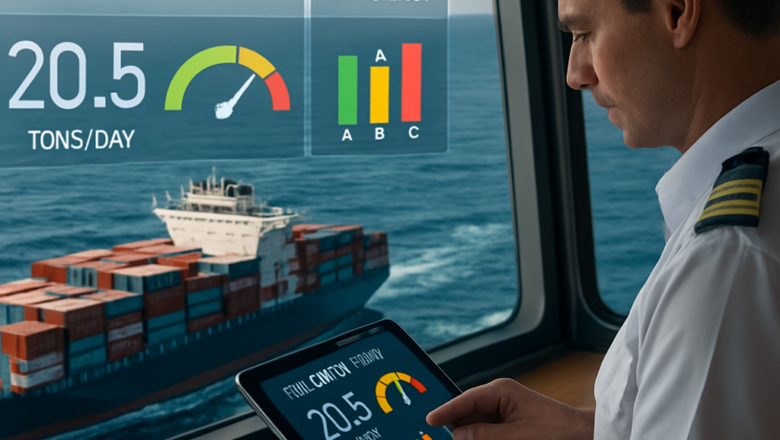
The Problem with Paper: Why Delayed Reports Fail There’s a quiet frustration that lingers in the engine rooms and wheelhouses of ships still tethered to paper logs. It’s the kind of frustration that builds slowly—like the steady burn of excess fuel slipping through the cracks of outdated systems. For decades, maritime operations have relied on manual, paper-based reporting to track fuel consumption, engine performance, and operational efficiency. But in an industry where every drop of fuel counts and every minute of inefficiency translates to lost revenue, paper logs are less a tool and more a relic of a slower, less precise era. The problem isn’t just that these reports are analog; it’s that they arrive too late to matter. Imagine a chief engineer standing on the deck after a week-long v...
Mastering Bunkering: Calculations, Sampling & Lab Control

Mastering Bunkering: Calculations, Sampling & Lab Control

Insights
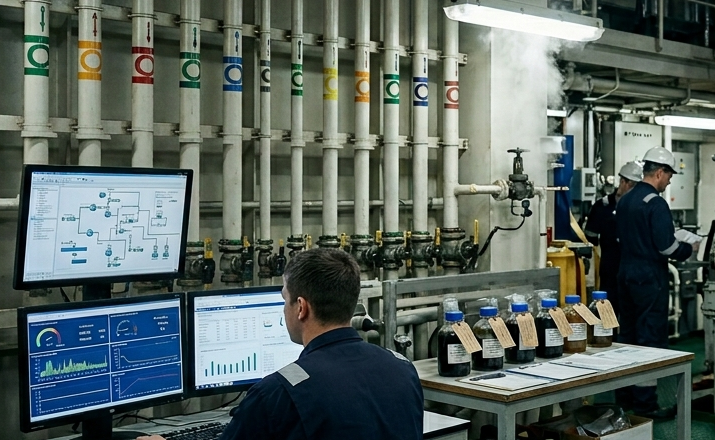
The Fundamentals of Bunker Quantity Calculations Calculating the right amount of bunker fuel isn’t just about filling the tanks and hoping for the best. It’s a precise science—one that balances vessel performance, regulatory compliance, and operational efficiency. Get it wrong, and you’re looking at costly delays, engine wear, or even non-compliance with environmental regulations. Here’s how the process breaks down, step by step, and why every detail matters. The Step-by-Step Process: From Consumption to Confirmation Bunker quantity calculations start long before the fuel hose is connected. The process typically follows this sequence: Determine the Voyage ProfileEvery calculation begins with the basics: where the vessel is going, how far it’s traveling, and what conditions it will face....
Yanmar SCR:A Complete Guide to Selective Catalytic Reduction

Yanmar SCR:A Complete Guide to Selective Catalytic Reduction

Insights
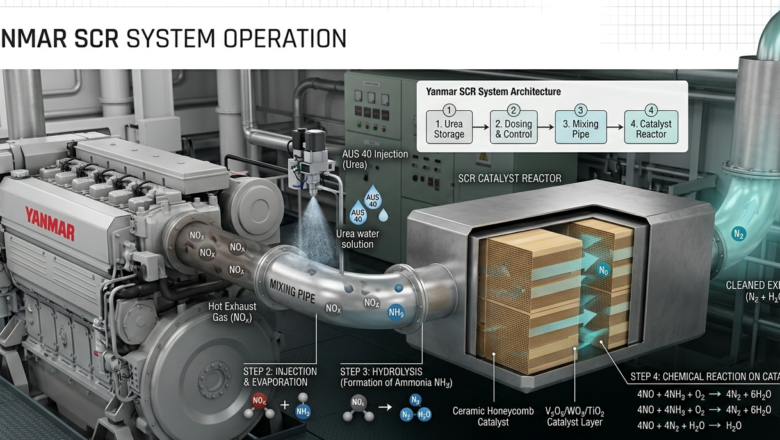
Introduction: The Environmental Challenge for the Modern Fleet The modern maritime industry is undergoing a massive transformation driven by stringent environmental regulations. The International Maritime Organization (IMO) is steadily tightening standards aimed at reducing the anthropogenic impact of the merchant fleet on the Earth's atmosphere. One of the most critical and strictly enforced documents in this area is Annex VI of the International MARPOL Convention (MARPOL Annex VI), which regulates air pollution from ships. The greatest challenge for shipowners and marine engineers is traditionally meeting the IMO Tier III standards. This regulation requires a radical reduction—by approximately 80% compared to Tier I—in nitrogen oxide (NOx) emissions when a vessel operates with...
Marine Fuel Management: From Oil Refining to Engine Efficiency

Marine Fuel Management: From Oil Refining to Engine Efficiency

Insights
In the context of modern environmental regulations and the transition to low-sulfur fuels, a deep understanding of fuel management processes has become critically important for every mariner. The recent two-day fuel management course covered the entire cycle: from crude oil extraction to engine performance optimization. Oil Refining Basics and Fuel Types The production of marine fuel begins at the refinery with distillation, where crude oil is separated by weight when heated. Heavy fractions undergo cracking — a process of breaking down long molecular chains into lighter, more valuable ones. For the maritime industry, the distinction between the main types of fuel is crucial: HFO, VLSFO, LSMGO, and MDO. With the introduction of IMO 2020 regulations, the global fleet's sulfur ...
Проект налогообложения украинских моряков: что изменится и как это повлияет на отрасль?

Проект налогообложения украинских моряков: что изменится и как это повлияет на отрасль?

Blogs, Insights, Latest
Привет всем, кто в теме! Сегодня мы разберемся, как новые законопроекты о налогообложении украинских моряков могут изменить условия их работы и конкурентоспособность на мировом рынке труда. Если вы хотите быть в курсе последних новостей морской индустрии, обязательно загляните на seamen.es. Введение: новые правила для украинских моряков Недавно были обнародованы два законопроекта, которые должны улучшить условия работы украинских моряков. Первый касается отсрочки от мобилизации, а второй — налогообложения. Однако, как это часто бывает, дьявол кроется в деталях. Давайте разберемся, что предлагают новые законопроекты и как они могут повлиять на украинских моряков. Отсрочка от мобилизации: условия и нюансы Законопроект об отсрочке от мобилизации для моряков стал результ...
Перспективы развития и инновационные тренды в морском транспорте

Перспективы развития и инновационные тренды в морском транспорте

Insights
Перспективы развития и инновационные тренды в морском транспорте сжиженных газов становятся важнейшим фактором для повышения эффективности и безопасности газовых танкеров. Новейшие технологические решения, интегрированные с цифровыми платформами и автоматизированными системами, уже сегодня формируют будущее морских перевозок. На seamen.es публикуются аналитические обзоры и исследования, раскрывающие ключевые инновации в отрасли. Новые технологические решения в морском транспорте сжиженных газов Современные инновационные тренды в морском транспорте сжиженных газов включают внедрение систем интеллектуального мониторинга, автоматизированных систем управления и оптимизации энергоэффективности. Разработка новых теплоизоляционных материалов, высокопрочных сталей и конструктивных реш...