

The Roman Corbita: The Birth of Bulk Shipping
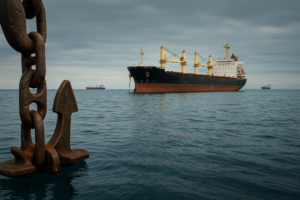 The Mediterranean sun beat down on the docks of Ostia, Rome’s bustling port city, where the air was thick with the scent of salt, sweat, and grain. Here, at the heart of the empire’s lifeline, corbitae—the workhorses of ancient maritime trade—creaked under the weight of their precious cargo. Without these unassuming wooden vessels, Rome would have starved. The empire’s insatiable appetite for grain, the very foundation of its power, depended on a steady stream of ships arriving from Egypt, North Africa, and Sicily. By the 1st century AD, Rome’s population had swelled to over a million, and feeding them required an estimated 150,000 to 200,000 tons of grain annually. The corbita wasn’t just a ship; it was the backbone of an empire.
The corbita’s design was a masterclass in practicality, born from centuries of Mediterranean shipbuilding tradition. Unlike the sleek warships that dominated naval battles, this was a vessel built for one purpose: to carry as much grain as possible, as safely as possible. Its hull, crafted from sturdy oak and pine, was broad and flat-bottomed—a deliberate choice to maximize stability in the often-temperamental waters of the Mediterranean. At around 30 meters (100 feet) in length and 8 to 10 meters (26 to 33 feet) in beam, it was no small feat of engineering, though by today’s standards, it would barely register as a “ship” at all. Yet in its time, the corbita was revolutionary.
More information on Handling Hazardous Cargo: VCM, Butadiene & Ammonia Risks
A Design Built for Cargo, Not Speed
The corbita’s most striking feature was its single, towering mast, rigged with a massive square sail made of flax or hemp. This wasn’t a ship built for speed—it relied on the mercy of the winds, averaging a sluggish 4 to 5 knots on a good day. But what it lacked in velocity, it made up for in capacity. A typical corbita could haul just over 200 tons of grain, a staggering amount for the ancient world. To put that into perspective, that’s roughly the equivalent of 10,000 sacks of wheat, enough to feed a Roman legion for months or a city’s worth of citizens for weeks.
The ship’s flat-bottomed design wasn’t just about stability—it was about maximizing cargo space. Unlike the V-shaped hulls of warships, which cut through water with ease, the corbita’s shallow draft allowed it to navigate the silty harbors of the Nile Delta or the shallow ports of North Africa. Below deck, the hold was a cavernous, unobstructed space, divided only by a few bulkheads to prevent the grain from shifting dangerously in rough seas. There were no refrigeration units, no automated loading systems—just wood, rope, and the brute strength of men.
The Backbreaking Work of Loading and Unloading
Imagine, if you will, the scene at Alexandria’s harbor as a corbita prepared for its journey to Rome. Hundreds of dockworkers—many of them slaves or low-paid laborers—formed a human chain, passing sacks of grain weighing up to 50 kilograms (110 pounds) each from the granaries to the ship’s hold. There were no forklifts, no conveyor belts, just muscle, sweat, and the occasional pulley system to hoist the heaviest loads. The process was agonizingly slow. Loading a single corbita could take three to five days, depending on the size of the crew and the efficiency of the port. Unloading in Ostia was no faster—once the ship arrived, the same grueling process played out in reverse, with sacks of grain transferred to barges that would carry them up the Tiber to Rome’s granaries.
This manual labor wasn’t just physically demanding; it was dangerous. Sacks could tear, sending grain spilling into the hold or, worse, onto the docks. Workers risked crushed fingers, broken bones, or being swept overboard in the chaos. And then there was the ever-present threat of spoilage. Grain was susceptible to moisture, rats, and insects. If a ship encountered a storm or was delayed at sea, the cargo could rot, turning a profitable voyage into a financial disaster. The Roman historian Pliny the Elder wrote of the risks in his Natural History, noting that grain shipments were often “lost to the sea or to the greed of men,” a nod to both the perils of piracy and the corruption that could plague the supply chain.
Navigating Peril: Piracy, Storms, and the High Stakes of Ancient Trade
The Mediterranean of the ancient world was far from the peaceful “Mare Nostrum” (“Our Sea”) that the Romans liked to claim. For every corbita that made it safely to port, there were others that vanished without a trace. Piracy was a constant menace, particularly in the waters off Crete, Sicily, and the North African coast. Pirates—often former sailors or disgruntled soldiers—would lie in wait, ambushing merchant ships with brutal efficiency. A corbita, slow and heavily laden, was an easy target. The Roman statesman Cicero once railed against the “Cilician pirates” who plagued the eastern Mediterranean, calling them a “scourge” that threatened Rome’s very survival. It wasn’t until Pompey the Great’s naval campaigns in the 60s BC that piracy was temporarily suppressed—but the threat never truly disappeared.
Then there were the storms. The Mediterranean, for all its beauty, is notorious for its sudden, violent tempests. A corbita caught in a gale had little chance. Its square sail, while efficient in fair winds, was nearly useless when the seas turned against it. Without modern weather forecasting, ships relied on the experience of their captains and the whims of the gods. The poet Horace captured the terror of such moments in his Odes, writing of sailors who “pray to the winds” and “tremble at the thunder’s roar.” Many corbitae were lost this way, their hulls splintering against the rocks or their cargoes swallowed by the waves.
Even if a ship survived the journey, there was no guarantee its cargo would arrive intact. Grain was a living, breathing commodity—it could ferment, mold, or attract vermin. To mitigate this, Roman merchants employed a few clever tricks. Some ships carried amphorae of vinegar to sprinkle over the grain, a primitive form of preservation. Others packed the hold tightly to minimize air circulation. But these were imperfect solutions. The Roman grain supply was a delicate, high-stakes gamble, one that required constant vigilance from the empire’s administrators.
The Corbita’s Legacy: Feeding an Empire, Shaping a World
The corbita may seem like a humble vessel, but its impact on history cannot be overstated. Without it, Rome’s annona—the state-run grain distribution system—would have collapsed. The empire’s ability to feed its citizens, its soldiers, and its bureaucrats hinged on the reliable operation of these ships. When the grain supply faltered, so too did Rome’s stability. The historian Suetonius recounts how the emperor Claudius, facing a grain shortage in 51 AD, personally oversaw the construction of a new harbor at Ostia to accommodate more corbitae. He even offered financial incentives to shipowners willing to brave the winter seas—a testament to how critical these vessels were to Rome’s survival.
But the corbita’s influence extended beyond Rome’s borders. The trade routes it established—from Egypt to Italy, from North Africa to Greece—shaped the economic and political landscape of the Mediterranean. Cities like Alexandria and Carthage flourished as hubs of grain production, their fortunes tied to the ebb and flow of the corbitae. The ship also set a precedent for future bulk carriers. Its flat-bottomed design, optimized for cargo rather than speed, would echo through the centuries, from the cogs of medieval Europe to the bulk carriers of the modern era. Even the concept of state-subsidized shipping, which Rome pioneered with its grain fleets, has parallels in today’s global supply chains.
In the end, the corbita was more than just a ship. It was a lifeline, a symbol of ingenuity, and a testament to the lengths an empire would go to feed its people. It laid the groundwork for the bulk shipping industry we know today, proving that even the most unassuming vessels can change the course of history. And though the corbitae themselves have long since rotted away, their legacy endures—every time a modern bulk carrier cuts through the waves, it does so on the shoulders of these ancient giants.