
The Prelude: Meeting in Open Waters
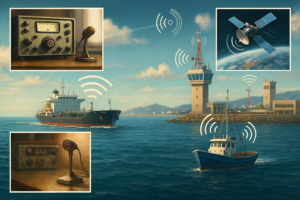 The ocean doesn’t announce its intentions. One moment, the container ship is a solitary giant cutting through the swell, its hull groaning under the weight of 20,000 steel boxes. The next, two squat, muscular shapes emerge from the haze—tugboats, their exhaust plumes curling like question marks against the horizon. This is the first act of a carefully choreographed ballet, where the stakes are measured not in applause, but in inches and seconds. The ship hasn’t slowed for sentiment. It maintains a steady four knots—not fast enough to outrun the tugs, not slow enough to surrender control. This speed is the sweet spot: enough momentum to keep the rudder effective, but not so much that the tugs would struggle to match pace or risk being dragged like a child’s toy on a string.
The lead tug, often the most powerful in the fleet, edges closer to the bow, its captain standing in the wheelhouse with one hand on the throttle and the other gripping a radio. There’s no room for hesitation here. The ship’s bow wave, a rolling wall of water, threatens to push the tug aside like a leaf in a storm. The tug’s engines roar in response, not to overpower the current, but to dance with it. The captain knows that if he misjudges the approach, the tug could be swept under the bulbous bow, its hull crushed like an aluminum can. Or worse, the towline could snap taut, sending a shockwave through the system that might jerk the ship off course—or worse, capsize the tug itself.
Attaching to the bow isn’t about brute force. The lead tug doesn’t hook on to pull the ship forward; that’s not its job. Instead, the towline is secured to a bow stopper, a reinforced fitting designed to handle lateral loads. The tug’s role here is to act as a dynamic stabilizer, counteracting the invisible forces that would otherwise nudge the ship off course: crosscurrents, wind shear, even the subtle pull of the Earth’s rotation. Imagine trying to walk a straight line while someone shoves you from the side—except the “someone” is a 3-knot current, and the “line” is a 300-meter-long steel behemoth. The tug’s job is to be the steadying hand, the counterbalance that keeps the ship’s nose pointed where the pilot wants it.
Communication in this phase isn’t just important—it’s oxygen. The pilot, perched in the ship’s bridge with a bird’s-eye view of the unfolding drama, speaks in a shorthand honed by years of repetition. “Tug One, come to 0-9-0, half ahead,” he might say, his voice calm but carrying the weight of a man who knows that a single misheard word could mean disaster. The tug captain acknowledges with a terse “Copy, adjusting to 0-9-0,” his hands already moving the controls before the last syllable leaves his lips. There’s no time for pleasantries, no room for ambiguity. Every command is a contract: the pilot promises to steer the ship true, and the tug captain promises to be where he’s needed, when he’s needed.
This phase sets the tone for the entire operation because it’s where trust is forged in real time. If the tugs are late to the rendezvous, the ship may have to circle, burning fuel and losing precious time in a schedule that’s already measured in minutes. If the lead tug attaches too aggressively, the towline could part, sending the ship drifting while the crew scrambles to reattach—a delay that ripples through the port’s entire schedule. And if the tugs misjudge the current, the ship could start its turn too early or too late, forcing the entire docking sequence to be recalculated on the fly. In 2018, a miscommunication during this exact phase in the Port of Rotterdam led to a container ship colliding with its own tug, shearing off the tug’s wheelhouse and delaying operations for hours. The cause? A last-minute change in wind direction that wasn’t relayed clearly between the pilot and the tug captain. The ship wasn’t damaged, but the incident served as a stark reminder: in open water, the margin for error is measured in feet, not miles.
More information on Handling Hazardous Cargo: VCM, Butadiene & Ammonia Risks
Then there’s the matter of the invisible battlefield: the currents. In some ports, like the Mississippi River or the Strait of Malacca, currents can shift direction in minutes, turning a routine escort into a high-stakes game of tug-of-war. The lead tug’s captain must anticipate these changes, adjusting the angle of his vessel to compensate before the current even registers on the ship’s instruments. It’s a skill that can’t be taught in a classroom—only learned through years of feeling the water’s mood, of knowing when to push and when to yield. In 2020, a container ship in the Port of Savannah ran aground after its tugs failed to account for a sudden tidal surge during the initial escort. The ship wasn’t moving fast, but the current was—strong enough to pivot the vessel like a door on a hinge. By the time the tugs reacted, it was too late. The ship’s hull scraped the riverbed, and the port was closed for nearly a day while salvage teams worked to refloat it. The cost? Millions in delays, not to mention the environmental risk of a fuel spill.
This is why the meeting in open waters isn’t just a prelude—it’s the foundation. Every subsequent maneuver, from the delicate pivot in the turning basin to the final nudge against the dock, depends on this initial alignment. The ship’s speed, the tug’s position, the angle of the towline—these aren’t just details. They’re the difference between a smooth docking and a logistical nightmare. And in a world where a single delayed ship can cost its operators $50,000 an hour, the stakes couldn’t be higher.
Out here, in the open water, the tugs aren’t just boats. They’re the first line of defense against chaos. And chaos, as every mariner knows, is always waiting just beneath the surface.