
Sunday, July 19
Shadow

Gas Carriers

Welcome to the GAS CARRIERS section at SEAMEN.ES, your specialized hub dedicated to one of the most dynamic and high-tech segments of the maritime industry. We provide in-depth analysis, expert reports, and the latest news covering the transportation of Liquefied Natural Gas (LNG), Liquefied Petroleum Gas (LPG), and other specialized gas cargoes.

Why explore our Gas Carrier resources?

Advanced Technology & Innovation: Discover the latest developments in containment systems, cargo handling equipment, and propulsion technologies used in modern gas shipping.

Operational Excellence: Learn from industry experts about the technical nuances of managing gas carriers, including cargo operation procedures and maintenance best practices.

Safety & Environmental Standards: Stay informed on the rigorous safety protocols (SIGTTO guidelines, etc.) and environmental regulations essential for the carriage of hazardous gas cargoes.

Market Trends: Gain insights into the global LNG/LPG market, key industry players, and the future outlook of the energy shipping sector.

Our mission is to bridge the gap between technical expertise and industry intelligence. Whether you are a crew member looking to expand your technical knowledge or a professional following market developments, our Gas Carriers section offers the critical data you need.

Stay at the forefront of the gas shipping industry. Follow our GAS CARRIERS section to keep up with the technical and operational advancements shaping the future of energy transportation.

Loading LNG: From Tank Prep to Thermodynamic Control

Loading LNG: From Tank Prep to Thermodynamic Control

Gas Carriers
Why Tank Preparation is Non-Negotiable Imagine pouring a glass of ice-cold water into a scalding hot mug. The sudden temperature shock doesn’t just crack the ceramic—it shatters it. Now scale that up to a 150,000-cubic-meter LNG tank, where the stakes aren’t just a broken dish but catastrophic structural failure, explosions, or million-dollar losses. That’s why preparing an LNG tank isn’t just a box to tick—it’s the difference between a smooth operation and a disaster waiting to happen. And at the heart of this preparation? Two silent killers: moisture and oxygen. The Invisible Threats Lurking in an Unprepared Tank An empty LNG tank isn’t truly empty. It’s filled with ambient air—humid, oxygen-rich, and loaded with problems. Left unchecked, this air becomes a ticking time bomb for three ma...
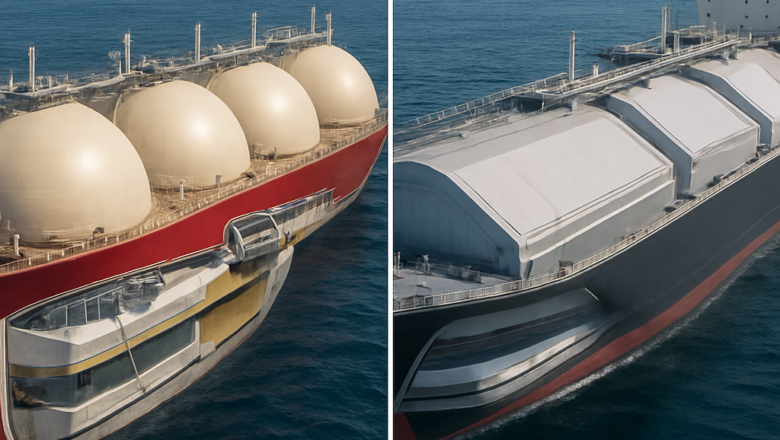
LNG Carrier Designs: Moss vs Membrane Tankers Explained

LNG Carrier Designs: Moss vs Membrane Tankers Explained

Gas Carriers
The Evolution of LNG Carrier Designs Few vessels in maritime history have demanded as much ingenuity—or faced as many existential challenges—as the LNG carrier. The story of these ships isn’t just one of steel and engineering; it’s a tale of human persistence, of engineers staring down temperatures colder than the vacuum of space, of shipbuilders wrestling with materials that had never before been pushed to such extremes. To understand how we arrived at today’s floating fortresses of cryogenic technology, we have to go back to an era when the very idea of transporting liquefied natural gas across oceans was considered borderline reckless. The Birth of an Industry: The 1950s and the *Methane Pioneer* It all began in 1959 with a converted World War II cargo ship named the *Methane Pioneer*. ...
Future of Gas Shipping: Inside Modern LNG Tankers

Future of Gas Shipping: Inside Modern LNG Tankers

Gas Carriers
The Birth of Cryogenic Shipping: A Historical Perspective It all began in a cluttered laboratory in London, where a man with wild hair and a relentless curiosity tinkered with glass tubes and open flames. In 1823, Michael Faraday, then just 31 years old, was already making waves in the scientific community with his work on electromagnetism. But it was his experiments with chlorine that would accidentally plant the first seed for an industry that would one day move entire economies across oceans. Faraday managed to liquefy chlorine by cooling it under pressure—a seemingly small feat, but one that cracked open a door no one had even realized was there. If chlorine could be turned into a liquid, why not other gases? The question lingered, but the world wasn’t ready to answer it. Not yet. For...
LNG Carrier Safety: Myths vs. Reality

LNG Carrier Safety: Myths vs. Reality

Gas Carriers
The Myth of Inherent Danger: Why LNG Shipping Defies Expectations Walk into any port city where liquefied natural gas (LNG) tankers dock, and you’ll likely hear the same hushed concerns: “Isn’t that stuff dangerous?” “What if it explodes?” “Aren’t we one accident away from disaster?” These fears aren’t baseless—they’re just misplaced. The public imagination has long conflated LNG with the catastrophic imagery of oil spills, chemical fires, or industrial explosions. But here’s the uncomfortable truth for doomsayers: LNG shipping doesn’t just meet safety expectations—it shatters them. For an industry that moves a cargo chilled to -162°C—a temperature at which steel becomes brittle and human flesh freezes in seconds—LNG shipping boasts a safety record so pristine it borders on the surreal. Z...
From Well to Liquid: The LNG Transformation Journey

From Well to Liquid: The LNG Transformation Journey

Gas Carriers
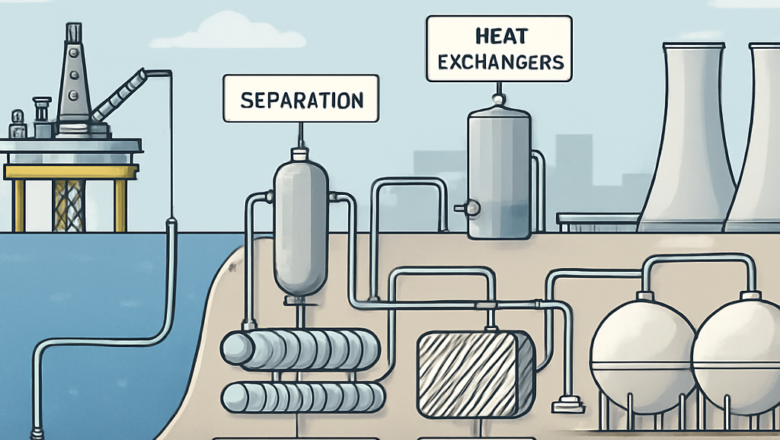
Extraction and Initial Separation The journey of liquefied natural gas (LNG) begins long before it reaches the cryogenic temperatures that turn it into a liquid. It starts deep beneath the Earth’s surface—or even deeper, under the crushing weight of the ocean—where vast reservoirs of natural gas lie trapped in porous rock formations. Extracting this gas is a feat of engineering that balances brute force with precision, raw power with delicate control. And the first critical step? Getting it out of the ground—or the seabed—without letting the chaos of the underground world sabotage the entire operation. The Drill: Breaking Into the Reservoir Whether onshore or offshore, the extraction process begins with a well—a narrow, meticulously engineered tunnel that acts as a lifeline between the sur...
Why New England Imports Gas Despite U.S. Reserves

Why New England Imports Gas Despite U.S. Reserves

Gas Carriers
The Jones Act: A Century-Old Law with Modern Consequences In the wake of World War I, as the United States grappled with the economic and strategic vulnerabilities exposed by the conflict, Congress passed the Merchant Marine Act of 1920. Nestled within its provisions was Section 27—better known today as the Jones Act—a law designed to bolster the nation’s maritime industry and ensure its self-sufficiency in times of crisis. The act’s architects, led by Senator Wesley Jones of Washington, envisioned a robust domestic shipping fleet capable of supporting both commercial trade and military logistics. At its core, the Jones Act was a protectionist measure, one that mandated only U.S.-built, U.S.-flagged, and U.S.-crewed vessels could transport goods between American ports. The logic was straig...
How the U.S. Became the World’s Top LNG Exporter

How the U.S. Became the World’s Top LNG Exporter

Gas Carriers
The Shale Revolution: The Foundation of America’s LNG Boom It wasn’t an overnight transformation. The story of how the United States went from a nation dependent on foreign energy to the world’s top exporter of liquefied natural gas (LNG) begins deep underground, in rock formations that geologists had long dismissed as unproductive. The shale revolution didn’t just change the game—it rewrote the rules entirely. And at the heart of that revolution were two technologies that turned skepticism into staggering abundance: hydraulic fracturing (fracking) and horizontal drilling. For decades, natural gas production in the U.S. followed a predictable, if uninspiring, trajectory. Conventional wells tapped into porous rock formations where gas flowed freely, but these reserves were finite. By the e...
Thermodynamics at Sea: Managing Cargo Pressure & Temp

Thermodynamics at Sea: Managing Cargo Pressure & Temp

Gas Carriers
The Physics of Boil-Off: Heat Transfer in Transit At its core, the formation of boil-off gas (BOG) is a relentless battle against the laws of thermodynamics—a silent tug-of-war between the cryogenic cargo and the world around it. Even the most advanced insulation systems can’t completely halt the march of heat into a liquefied gas tank. Instead, they slow it down, buying time for the cargo to reach its destination before too much of it slips away as vapor. To understand why boil-off happens—and how to manage it—we need to dissect the forces at play: the sources of heat, the mechanics of phase change, and the stubborn physics that make evaporation inevitable. The Heat That Won’t Be Stopped: Sources of Thermal Influx Every liquefied gas carrier is a floating thermos, but unlike your morning ...
Gas Transport Modes: Pressurized vs. Refrigerated Ships

Gas Transport Modes: Pressurized vs. Refrigerated Ships

Gas Carriers
The Basics: Why Gas Transport Differs from Liquids At first glance, moving gas from point A to point B might seem like a simpler task than transporting liquids. After all, gases don’t slosh, don’t spill in the same messy way, and don’t require the same level of structural reinforcement to keep them contained—or so the thinking goes. But here’s the catch: gases are far more finicky than liquids when it comes to storage and transport. Their behavior under pressure, temperature, and even minor environmental changes can turn a routine shipment into a high-stakes logistical puzzle. To understand why, we need to peel back the layers of what makes gases so uniquely challenging—and why the ships, tanks, and pipelines that carry them look nothing like those used for oil, water, or even liquid chemi...
Reviving US LNG Fleet: A Strategic Necessity

Reviving US LNG Fleet: A Strategic Necessity

Gas Carriers
The Rise and Fall of America’s LNG Shipping Legacy There was a time when the United States didn’t just dominate the global energy market—it defined how the world moved liquefied natural gas across oceans. The 1970s were the golden age of American LNG shipping, a decade when U.S. shipyards didn’t just build tankers; they built the future. These weren’t just vessels; they were floating fortresses of innovation, designed to carry one of the most volatile cargoes on earth at temperatures colder than the surface of Mars. And for a brief, shining moment, no one did it better than America. The story begins not in the halls of Congress or the boardrooms of oil majors, but in the salt-stained shipyards of Newport News, Virginia, and Quincy, Massachusetts, where the first generation of American LNG...